
Military Courts Remain Essential, Not Merely to Protect the Institution
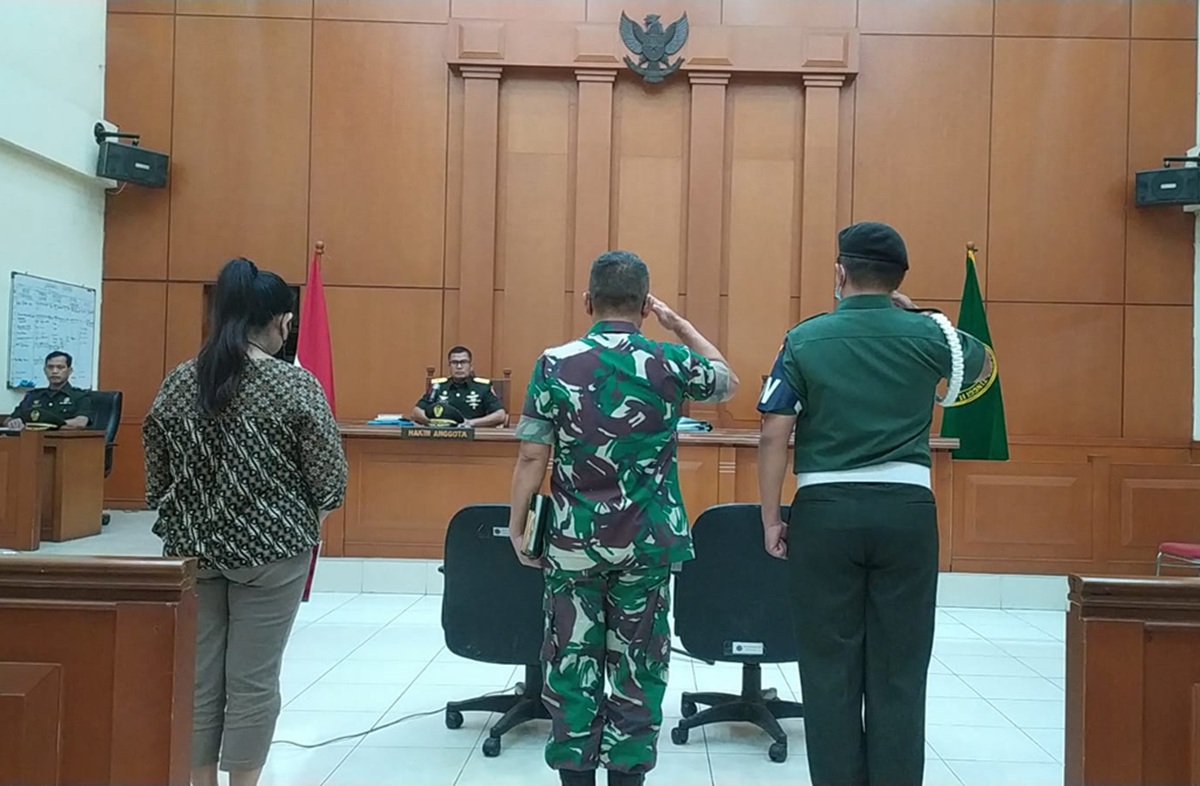
Military observer Selamat Ginting assesses that the military justice system still holds an important role within Indonesia’s legal structure. He emphasises that TNI soldiers are bound not only by the general Criminal Code (KUHP) but also by the military Criminal Code, disciplinary regulations, operational doctrines, and national defence interests.
Ginting explains that military law has unique characteristics that cannot be fully accommodated by general courts. Every action by a soldier, in his view, must be viewed in a broader context, including superior orders, assignments, and operational conditions in the field.
“Military courts are able to assess the legality of orders, ensure whether or not there were instructions from superiors, and understand the impact of soldiers’ actions on combat readiness and defence duties. These matters cannot be fully reached by general courts,” Ginting stated, as quoted on Friday (27/3).
He also added that similar practices are applied in advanced countries such as the United States and the United Kingdom, which continue to maintain military justice systems.
“In those countries, military courts have even demonstrated firmness in imposing heavy punishments in recent years,” he added.
As an example, Ginting mentioned several heavy verdicts, such as life sentences for Brigadier General Teddy and Brigadier General Yus Adi Kamarullah, as well as the death penalty for Colonel Irvan. He also alluded to cases involving an officer in Garut and Kopaska members who received similar punishments.
“In history, figures like Omar Dhani and Subandrio were even sentenced to death. This shows that military courts do not hesitate to impose strict sanctions,” he explained.
According to Ginting, the notion that military courts merely protect the institution needs to be corrected. He assesses that in practice, punishments in the military environment can be even heavier due to additional sanctions such as dismissal or demotion.
“Military courts are not a tool for protecting violators, but rather an instrument to maintain discipline and the honour of the institution. Even in certain conditions, law enforcement processes can proceed more quickly,” he stated.
He also compared it to several cases in the civilian realm, such as the Kanjuruhan tragedy and KM 50, which in his view have not yet fully addressed aspects of comprehensive accountability.
“Public pressure does play a role in driving law enforcement, as in the Ferdy Sambo case. However, its handling still has not fully answered aspects of complete accountability,” he said.
On the other hand, Ginting appreciates the steps taken by the Military Police in detaining four suspects in the latest case. In his view, this shows that the military institution is not defensive and is willing to take firm action against its members.
He assesses that one of the advantages of military courts is their ability to thoroughly trace the chain of command, including determining the most responsible party, as well as considering aspects of combat discipline and humanitarian law.
“In the military context, individual errors can have systemic impacts on the institution and even the state. Therefore, their handling cannot be simplified,” he revealed.
Ginting also added that supervision in military courts is conducted in layers. If there is a verdict deemed too lenient, the inspectorate can evaluate the military judges or prosecutors.
Nevertheless, he acknowledges that criticism regarding transparency still needs to be accepted as part of system improvement. “What is needed is not the abolition of military courts, but rather improvements to make the system increasingly transparent and accountable,” he concluded.