
Military Courts Deemed Potential Courts of Impunity
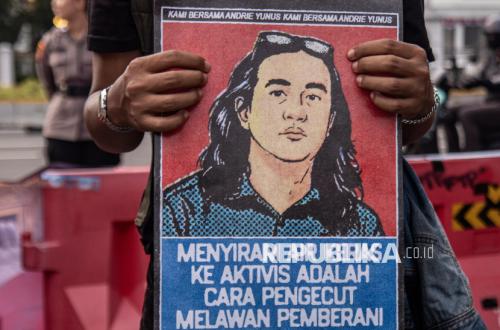
JAKARTA — Director of Amnesty International Indonesia, Usman Hamid, stated that military courts are historically inseparable from the context of past political power. That mechanism was used to protect regime interests and provide privileges for the military.
This was conveyed by Usman during a public discussion titled “Challenging Military Accountability: The Need for Transformation from Military Courts to General Courts”. The event was organised by Imparsial together with FISIP UIN Jakarta.
The discussion highlighted the resurgence of militarism in civilian life and the weakness of legal accountability for military members. The speakers emphasised that security sector reform, particularly the transformation of the military justice system, is an important prerequisite for strengthening civilian supremacy and the quality of democracy in Indonesia.
According to Usman, in practice, military courts are problematic not only in terms of equality before the law but also in aspects of independence and accountability. This is particularly due to internal mechanisms such as the chain of command and rank hierarchy that influence the legal process.
He assessed that constitutionally, military personnel who commit general criminal acts should be subject to general courts, as regulated in the Constitution and the TNI Law, but its implementation is still hindered by the existence of the outdated Military Justice Law.
As long as general criminal acts involving the military are still processed through military courts, according to him, it is difficult to ensure comprehensive disclosure of the truth. Including identifying the most responsible actors.
“This condition contributes to the strengthening of impunity and shows that the democratisation process in Indonesia still faces serious challenges,” said Usman, in a press release issued by Imparsial.
In addition to Usman, the speakers agreed that the existence of military courts in their current form not only hinders law enforcement but also weakens civilian supremacy and the quality of democracy. Reform of military courts, particularly through revisions to Law No. 31 of 1997, is a crucial step to ensure that all citizens, including the military, adhere to the principle of equality before the law.
All speakers in this discussion also assessed that the military must be subject to general courts if involved in general criminal acts. In the case of Andrie Yunus, the state must provide justice for Andrie Yunus through a process in the general courts.