
Military challenges and the economic impact of closing the Strait of Hormuz
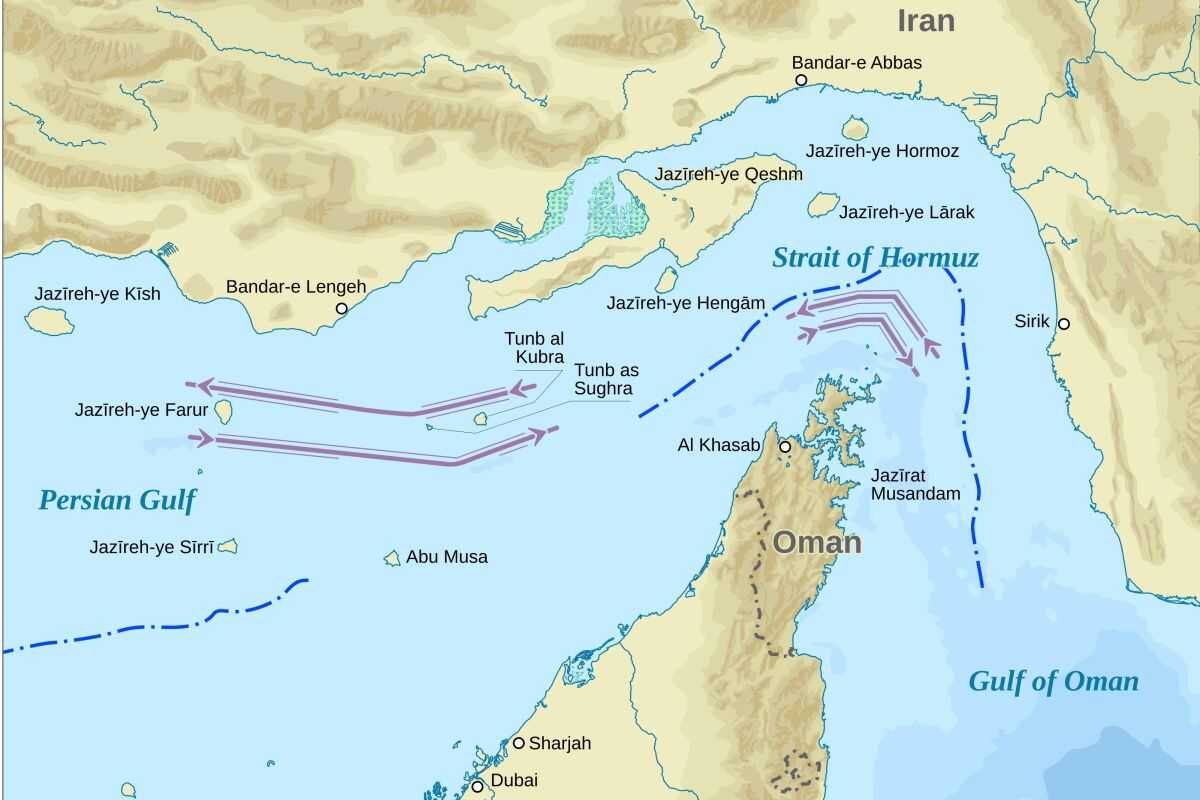
Prices rises stemming from the Iran conflict also pose a political threat to Trump and the Republican Party. Before being attacked by the US and Israel, Iran had long threatened to close the Strait of Hormuz. And the country has indeed done so now, although the US claims the Iranian navy is crippled and thus unable to close the strait. But since the outbreak of the Iran–US war last weekend, at least four tanker ships have been struck by Iranian drones. As a result, according to maritime data tracker Lloyd’s List Intelligence, traffic into the Persian Gulf has fallen by as much as 80 percent since 1 March. President Donald Trump subsequently pledged to deploy the US Navy to safeguard commercial shipping to and from the Persian Gulf, which obviously must pass through the Strait of Hormuz. “If necessary the US Navy will escort tanker ships passing through the Strait of Hormuz, as soon as possible,” Trump wrote on Truth Social some time ago. The Strait of Hormuz is the gateway to the Persian Gulf. About 20 million barrels of oil are shipped through this strait each day. The figure is also 20 percent of global oil trade. Nearly all oil exports from Saudi Arabia, Iraq, Kuwait, Qatar, and the United Arab Emirates pass through this strait. Those countries, together with Qatar, Bahrain, and Oman, are also leading gas producers in the world. India, Japan, China, Europe, and Africa are among their major energy markets. The Strait is a narrow chokepoint.