
Military Analyst: Iran Prepares Trap, Kharg Island Could Become Mass Grave for US Troops
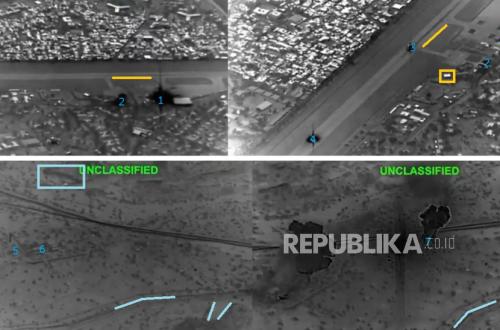
REPUBLIKA.CO.ID, JAKARTA — The United States’ plan to seize Kharg Island, Iran’s central oil export hub, has drawn sharp criticism from international military analysts. The amphibious operation under consideration by the Trump administration is deemed a high-risk move that threatens the safety of US forces amid Iran’s barrage of advanced weaponry.
Mikael Valtersson, a former officer in the Swedish Armed Forces and air defence, describes aggression against Iran as a direct result of “major US intelligence and planning failures.” According to him, the attempt to seize Kharg Island is a hasty operation that does not adequately consider the opponent’s defensive capabilities, as reported by Sputnik.
Military experts warn that Iran has built a massive and lethal inventory of anti-ship missiles. At least four systems pose major threats to the US fleet attempting to approach Kharg Island:
Khalij Fars can reach 300 km at speeds of Mach 3–4. This is an anti-ship ballistic missile with a 650 kg warhead.
Next is the Zolfaghar Basir missile with a 700 km range. Its supersonic speed is equipped with an optical seeker for moving targets.
Then there is the Abu Mahdi missile with a range of over 1,000 km. This is a low-altitude cruise missile using AI, flying at a height of several metres.
With speeds up to Mach 4, these missiles can reach targets in the Gulf in less than five minutes after launch. US warships operating near the coast would be sitting ducks without sufficient reaction time.
Light Anti-Aircraft Missiles: Silent Threat from the Air
In addition to sea threats, Iran also possesses short-range air defence systems that are difficult to detect. Systems like Khordad-15, Tor-M2, and Pantsir-S1 pose serious threats to transport helicopters and supporting aircraft that are the lifeline of landing operations.
Valtersson emphasises that US air power excels at striking large strategic targets but struggles to neutralise Iran’s small and mobile units armed with surface-to-air missiles. Close air support using helicopters is considered too dangerous due to vulnerability to these light missiles.