
Middle East War Update: Global Economy Shaken!
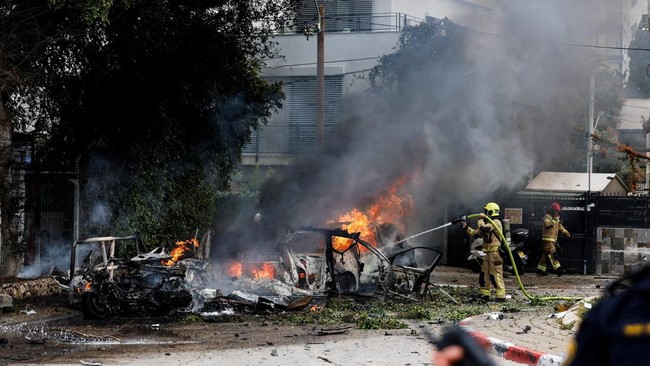
The war in the Middle East is intensifying and beginning to shake the global economy. The escalation of the conflict, which involves attacks on energy infrastructure, has triggered a surge in world oil prices, increasing inflation risks and disrupting supply chains in various countries.
As a result, several governments and industry players are quickly taking emergency steps to curb the mounting pressures. Here are the latest facts regarding the impact of the war between the United States (US) and Israel versus Iran, as reported by AFP on Thursday (19/3/2026).
Oil Prices Surge
Global oil prices have jumped sharply following Israel’s attack on Iran’s main gas field in the Gulf. Brent oil prices rose more than 6% to approach US$110 per barrel before closing at US107.38, orapproximatelyRp1.67millionperbarrel(assuminganexchangerateofRp15, 600/US), up 3.8%.
The attack targeted the giant South Pars/North Dome gas field, which supplies around 70% of Iran’s domestic gas needs.
US Inflation Potentially Rising
The US Federal Reserve has raised its inflation forecast amid the uncertainty caused by the conflict. Interest rates remain unchanged.
Fed Chair Jerome Powell stated that the rise in energy prices could push inflation in the near term.
“We expect higher energy prices to increase inflation in the near term,” he said, adding that the longer-term impacts remain uncertain.
Energy Tensions Heighten
Iran has launched retaliatory strikes targeting oil and gas facilities in the Gulf region. QatarEnergy reported that a fire caused by the attack has been brought under control, though it caused extensive damage.
Meanwhile, Saudi Arabia intercepted five drones heading towards energy facilities, while the United Arab Emirates faced missile threats.
US and European Emergency Policies
US President Donald Trump has temporarily revoked the Jones Act for 60 days to curb the surge in energy costs. This policy allows foreign ships to transport cargo between US ports.
In Europe, Italy has acted swiftly by reducing fuel prices by around 0.25 euros, or approximately Rp4,200 per litre, and providing tax incentives for truck drivers.
Energy Supply Routes Disrupted
Iraq has begun limited oil exports through Turkey at a volume of around 250,000 barrels per day, far below its normal capacity of 3.5 million barrels per day.
Meanwhile, Iraq’s gas imports from Iran have reportedly come to a complete halt, exacerbating energy pressures in the region.
Industry and Logistics Under Pressure
Ship fuel prices have surged to nearly double due to the logistics crisis in the Middle East. This situation is described as “unprecedented”.
In Asia, major petrochemical companies such as Mitsubishi Chemical, Mitsui Chemicals, and LG Chem have begun cutting production due to disrupted naphtha supplies.
Global Efforts to Curb the Crisis
The International Maritime Organization (IMO) has held an emergency meeting to discuss shipping security, including the possibility of establishing safe maritime corridors in the Persian Gulf.
Meanwhile, South Korea has secured an additional 18 million barrels of oil from the United Arab Emirates via alternative routes that avoid the Strait of Hormuz.
In South Asia, Sri Lanka has even asked the public to stop charging electric vehicles at night to maintain electricity supply stability.
Overall, the Middle East conflict is now not only affecting the region but has spread to the global economy through surging energy prices, inflationary pressures, and supply chain disruptions.