
Middle East War Tests Indonesia's Economic Resilience
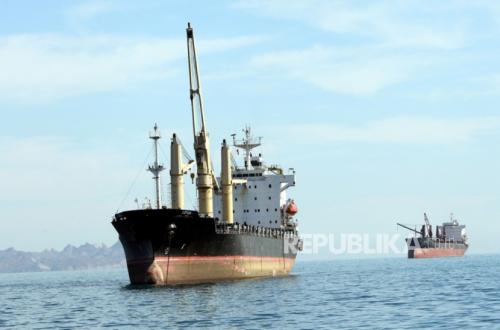
The Middle East war between Iran and the United States and Israel has entered its fourth week without signs of abating. Its intensity has even increased as it now involves the Houthi group in Yemen, which over the past three days announced its participation in aiding Iran and began firing missiles at Israel.
To date, the Middle East war has disrupted the logistics chain for around 20-25% of global oil and gas trade. Iran’s closure of the Strait of Hormuz has caused world oil prices for West Texas Intermediate (WTI) crude to reach $103.38 per barrel on Monday, 30 March 2026 (Trading Economics, 2026).
WTI crude oil has risen by about 44.14% year-on-year and 78.74% year-to-date compared to December 2025 prices. Similarly, Brent crude has reached $112.42 per barrel on Monday, 30 March 2026, up about 43.91% year-on-year and over 76.17% year-to-date.
A prolonged and expanding Middle East war will push global oil prices even higher, approaching the five-year high of $119.02 per barrel on 6 June 2022.
If the Middle East war lasts another three months until June 2026 and damages oil and gas infrastructure in the Persian Gulf, global oil prices could reach $120-140 per barrel. Thus, the average annual global oil price would be around $90-100 per barrel.
The rise in global oil prices due to disrupted supplies from the Middle East via the Strait of Hormuz will directly negatively impact the national economy and several Asian countries. Asian countries have a high dependence on oil supplies from the Persian Gulf through the Strait of Hormuz.
The three Asian countries with the best economic performance in 2025—India, Indonesia, and China—import oil from the Middle East via the Strait of Hormuz at around 46% for India, 38% for China, and 20% for Indonesia.
The Asian countries most affected by the Strait of Hormuz closure are the Philippines and Japan, which import over 90% of their oil needs from the Middle East. South Korea imports more than 60% of its oil via the Strait of Hormuz.
This trend has a very serious impact on domestic fuel oil (BBM) prices. In particular, non-subsidised BBM prices for the industrial sector and middle-to-upper income groups.
The rise in BBM prices will directly lead to higher inflation due to swelling BBM and logistics costs for industry. These increased BBM and logistics costs will be passed on as higher prices for goods and services at the consumer level.
Up to the first quarter of 2026, global inflation trends have been declining, both in Emerging Market Economies (EMEs), including Indonesia, and in advanced economies. However, inflation rates in EMEs and advanced economies remain higher than their respective targets.
In line with the interim report from the Organization for Economic Cooperation and Development (OECD), inflation trends shifted in the second quarter of 2026, with expectations of rising inflation aligned with increasing global oil prices. Inflation expectations in the US, Eurozone, and EMEs are higher than the targets set by their respective central banks.
As a result, the era of high interest rates since Covid-19 and Russia’s war against Ukraine will not end soon. Rising inflation expectations will cause central banks in EMEs and advanced economies to delay interest rate easing, disrupting credit flows and hindering real sector expansion, thereby curbing economic growth.
National economic growth slowdown in 2026 is projected at around 4.8% based on the OECD interim report, March 2026. This figure is much lower than the government’s target in the 2026 State Budget of 5.4%.
The most concerning aspect is the increasing fiscal risk for governments in several Asian countries, including Indonesia. Rising global oil prices will increase allocations for subsidies, both energy and non-energy, in the State Revenue and Expenditure Budget (APBN).
One component of subsidies expected to rise significantly in the APBN with average oil prices above $90 per barrel is BBM subsidies, electricity, special transportation—particularly economy-class trains—and fertiliser subsidies due to rising fertiliser raw material costs, which could impact rising agricultural product prices.
Additionally, heightened global economic uncertainty increases risks for EME economies, including Indonesia. This affects the ability of EME countries to obtain fiscal financing through the sale of Government Securities (SBN).
Increased fiscal risk causes EME government bond prices, including Indonesia’s, to drop sharply with high yields or returns. In Indonesia’s case, foreign capital outflows from government bonds have been very large over the past five years, reducing foreign ownership to less than 20%.
This means that without delaying strategic government programmes, it will lead to an increase in the fiscal deficit ratio to Gross Domestic Product (GDP), exceeding the 3.0% allowed under the law.
An increase in the fiscal deficit ratio to GDP to around 4.0-4.5% will heighten perceptions of risk to the Indonesian economy. This will cause SBN prices to fall, while yields and interest rates rise.
The most worrying impact is that average annual BBM prices of around $90-100 per barrel directly affect household expenditures, particularly for poor households. Energy spending accounts for more than 8.0% of household expenditures in Indonesia (OECD, March 2026).
The proportion of energy expenditure for poor households is higher than for the middle class. Thus, the price increase