
Middle East War Causes Global Panic, Central Banks Face Difficult Choices
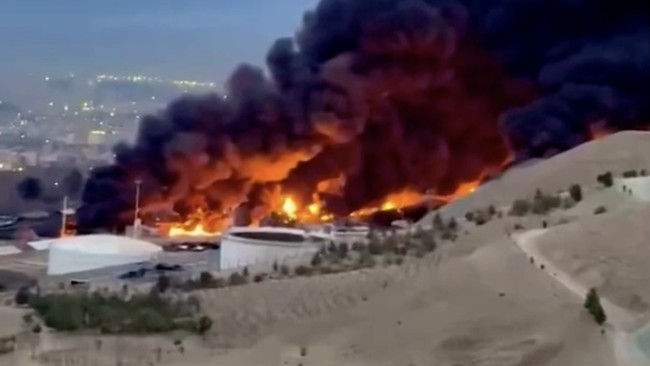
Escalating tensions in the Middle East that increasingly involve Iran are beginning to shake the course of global monetary policy. The conflict has triggered surging energy prices and economic uncertainty, forcing central banks across various nations to reassess their strategies amid renewed inflation risks.
The surge in oil prices represents one of the primary drivers of concern. Oil prices briefly breached US$113 per barrel, a spike that has sparked fears of disruptions to global energy supplies and the potential for greater inflationary pressures across many countries.
Toru Nishihama, Chief Economist for Emerging Markets at Dai-ichi Life Research Institute, stated that this situation places many central banks in a difficult position. According to him, pressure comes both from markets and governments, both seeking economic stability.
“Many central banks will face difficult decisions because they are under pressure from both markets and governments,” Nishihama said, as quoted by Reuters. “With no clear end to the conflict in sight, the risk of stagflation increases daily.”
The impact is directly felt in Asian financial markets. Equity markets have weakened whilst the US dollar strengthened as investors seek safer assets.
This situation adds pressure on central banks, particularly in developing countries that must contend with rising energy costs alongside risks of capital outflows.
In Asia, several central banks are expected to adjust their policy direction. Sources familiar with policy plans indicated that the Reserve Bank of India will likely remain focused on promoting growth by keeping interest rates low.
However, surging demand for the US dollar amid geopolitical uncertainty could potentially force Indian monetary authorities to intervene more significantly to support the rupee’s exchange value.
Pressure is also felt in manufacturing-dependent economies such as South Korea and Japan, which rely heavily on global trade stability and low raw material costs.
Citigroup economist Kim Jin-wook assessed that the Bank of Korea is unlikely to raise interest rates in the near term solely due to higher oil prices.
“For now, we remain confident that the Bank of Korea is unlikely to raise its policy rate in response to higher-than-expected oil prices,” Kim said.
He noted that government efforts to control fuel prices help limit the impact of oil price increases on inflation.
In developed economies, the policy dilemma is also intensifying. The Bank of Japan, for instance, faces additional pressure as inflation has exceeded its 2% target for nearly four years.
If oil prices remain around US$110 per barrel throughout the year, Nomura research estimates that Japan’s economic growth could decline by approximately 0.39 percentage points.
International Monetary Fund Managing Director Kristalina Georgieva warned that surging energy prices could trigger broader global inflationary pressures. According to her, a 10% increase in oil prices sustained throughout the year could raise global inflation by around 40 basis points.
“We see economic resilience being tested once again by this new conflict in the Middle East,” Georgieva said during a symposium in Tokyo. “My advice to policymakers in this new global environment is to think the unthinkable and prepare to face it.”