
Middle East Tensions: Will Indonesia's Exports Suffer Heavily? Here's What the Trade Minister Says
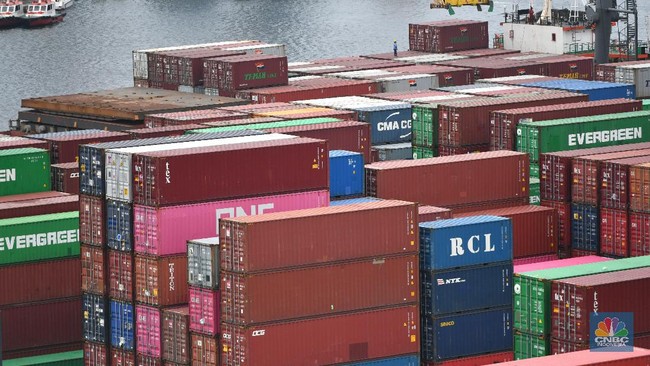
Jakarta, CNBC Indonesia - Trade Minister Budi Santoso assesses that the unrest in the Middle East has not yet had a significant impact on Indonesia’s exports. This is because the contribution of that region to the total national exports is relatively small.
In 2025, the value of Indonesia’s exports to the Middle East was recorded at around US$9.87 billion, or just 3.49% of Indonesia’s total exports to the world.
“Our exports to the Middle East in 2025 were US$9.87 billion, or a market share of 3.49% of our total exports to the world,” Budi told reporters at his office in Jakarta on Friday (27/3/2026).
In terms of composition, Indonesia’s exports to that region are dominated by shipments to the United Arab Emirates (UAE) at around 40% and Saudi Arabia at around 29%. Meanwhile, Iran only contributes about 2.5%, or around US$250 million.
Amid the heating up of the region, Budi emphasised that the main impact is actually felt in the logistics aspect, not in the demand for goods.
“The real impact is more on the logistics factor. The costs might be higher for transportation costs,” he explained.
The rise in oil prices and route diversions due to the closure of several ports are causing distribution costs to increase. Nevertheless, export demand from the Middle East is said to still be running normally.
However, if the conflict drags on, the government acknowledges there is a risk of slower export growth.
“If this doesn’t resolve, our export growth could be lower than last year,” he stated.
Nevertheless, the government remains optimistic, supported by the rising prices of Indonesia’s main commodities, particularly crude palm oil (CPO) and coal.
Budi said that CPO prices had previously fallen by around 16% and coal by around 19%. Now, both are showing an upward trend that could boost export values.
“Now the prices of both commodities this year are starting to rise. That means if they rise, our export values will definitely increase,” said Budi.
He stated that the rise in commodity prices could compensate for the increase in logistics costs, even though exports of commodities like CPO do not rely heavily on the Middle East market.
To maintain momentum, the government is pushing for diversification of export markets to other regions such as Southeast Asia, Regional Comprehensive Economic Partnership (RCEP) countries, Latin America, and Africa. Shifts in the global trade landscape are seen as opening new opportunities amid the crisis.
In addition, business matching strategies are being strengthened to accelerate export contracts, including for MSME players.
Domestically, improvements in the logistics sector are a focus to make distribution costs more efficient and enhance export competitiveness.
Despite risks of pressure from global factors, the government still sees opportunities for Indonesia’s exports to continue growing, especially if the rise in commodity prices persists and new markets are successfully tapped.
“Yes, we’re optimistic; in conditions like this, we actually have opportunities to find new markets,” Budi concluded.