
Middle East Tensions Escalate as 1,000 US Elite Soldiers Prepare to Deploy
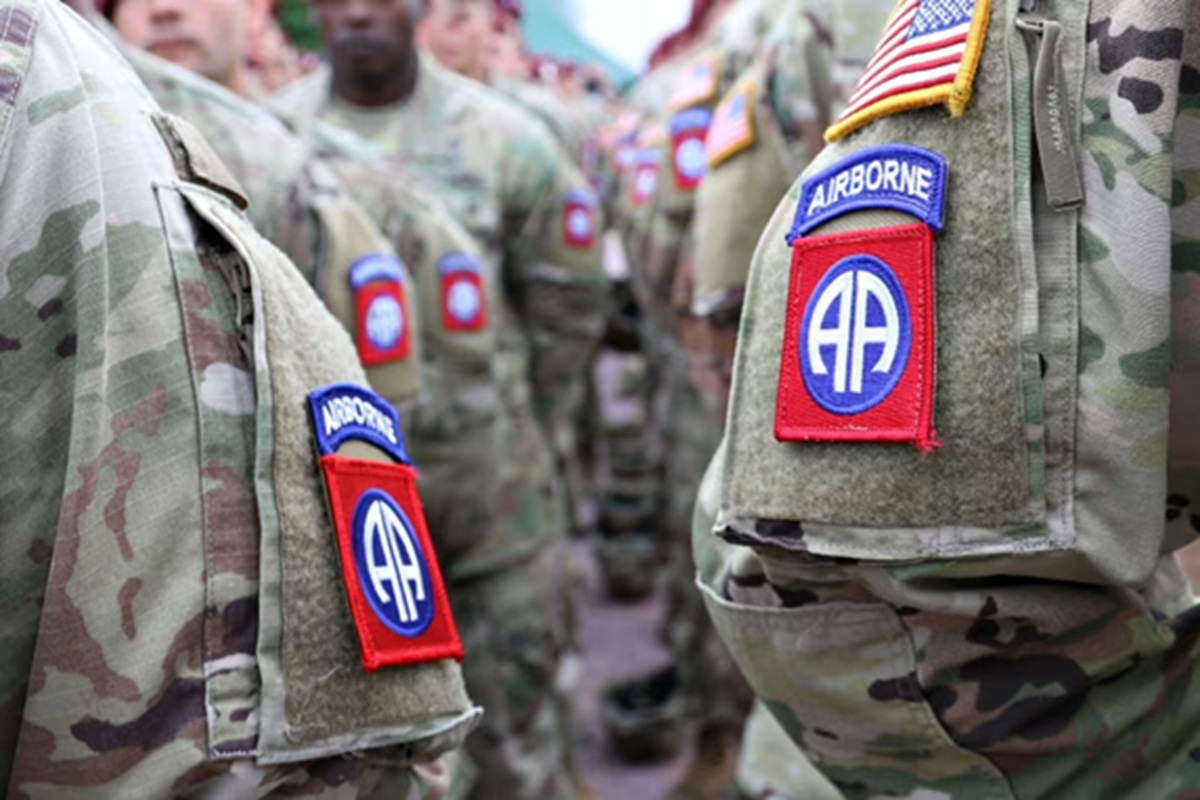
The United States government is reportedly preparing to deploy around 1,000 soldiers from the US Army’s 82nd Airborne Division to the Middle East. This step is being taken to strengthen the military posture in the region, even as the Trump administration states it is maintaining communications with Iran to ease the conflict.
The deployment includes divisional staff personnel led directly by Major General Brandon Tegtmeier, as well as one battalion from the 1st Brigade Combat Team. According to sources familiar with the plans, the initial elements of the divisional staff and battalion are expected to begin moving within the next week.
The troops being dispatched are part of the Immediate Response Force (IRF), or Rapid Response Force. This unit specialises in deployment within hours of receiving orders, making it the Pentagon’s spearhead in facing unforeseen emergency situations.
One source mentioned that this brigade will serve as a ‘standby unit’ in the Middle East, ready to be called upon at any time if the situation deteriorates.
‘The brigade will be a ’standby unit’ in the Middle East, prepared to be called if needed,’ the source stated.
Although official deployment orders have not yet been formally issued as of now, personnel have reportedly received instructions to prepare, as the orders are expected to appear soon.
This military step is not the first for the 82nd Airborne Division. In 2020, the division, based at Fort Liberty, also made a similar movement following intense tensions after the death of Iranian commander Qasem Soleimani.
Currently, the deployment of additional elements from the brigade is also under consideration, though the exact schedule remains dynamic, adjusting to developments on the ground. The presence of thousands of elite soldiers adds to the long list of US weaponry and combat personnel already on alert in the region as a form of pressure and security anticipation measure.
The conflict in the Middle East has triggered a massive rise in energy prices and concerns over global supply shortages.
The energy crisis due to the escalation of war in the Middle East is hitting major countries in Asia. South Korean President Lee Jae Myung has called for a national energy-saving campaign due to the Iran war.
Plans for joint control of the Strait of Hormuz by the United States and Iran are becoming a new dynamic that could potentially alter the power map in the Middle East, amid the intertwined conflicts.
President Prabowo Subianto assesses that Indonesia’s foreign policy in the Middle East region must remain committed to the non-aligned principle amid the mutually linked conflicts.
Switzerland has officially frozen new arms exports to the US to maintain neutrality amid the Iran war. Bern has also closed its airspace to Washington military flights to the Middle East.