
Middle East Observer: Fate of Middle East Conflict Depends on Iran and US Stance
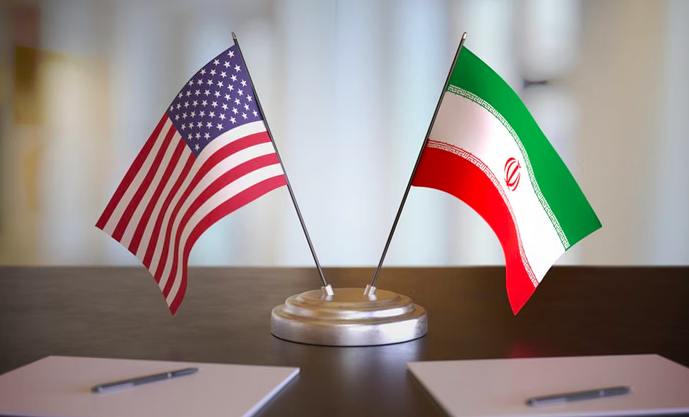
Development of the Middle East conflict is assessed to be heavily dependent on the stances of Iran and the United States. Middle East observer Smith Alhadar believes that opportunities for de-escalation still exist, but are heavily influenced by both parties’ willingness to meet the conditions for ending the war. The key decision ultimately rests with Iran.
“Everything depends on Iran. Through Russia and China, Trump has requested that Iran end the war that now threatens regional stability, global stability, and inflation in the US that erodes the purchasing power of its citizens due to significantly rising fuel prices,” Alhadar said when contacted by Media Indonesia on Thursday, 12 March.
According to him, Iran is willing to end the war if the United States meets three main conditions. “Iran is willing to end the war if three conditions are met. First, a written statement declaring that it will not attack Iran again. Second, lifting sanctions and Iran being free to pursue its nuclear programme without restrictions. Third, reparations,” he said.
However, he assessed that these demands would be difficult for President Donald Trump’s government to meet.
“The US will struggle to meet Iran’s demands because it essentially means Trump admitting US defeat. Yet Trump wants to end the war quickly with a declaration of victory,” Alhadar stated.
He added that if Iran’s demands are not met, the conflict will likely continue.
“So, if Iran’s demands are not met, the war will continue and the US cannot claim victory. Iran, feeling betrayed, with its leader assassinated, and having suffered enormous losses from US-Israeli aggression, will not accept an end to the war without the US and Israel being held accountable for their actions,” he explained.
According to Alhadar, Iran’s current position is relatively strong, both internally and in regional and international relations.
“Fortunately, Iran is in a strong position internally, regionally, and internationally,” he said.
He also assessed that attempts by the United States to invite Iran to negotiations without agreeing to the three conditions will almost certainly be rejected.
“The US offer to negotiate without agreement to the three conditions above will definitely be rejected by Iran because previously on two occasions the US deceived Iran during negotiations and Iran had already offered concessions,” he said.
Impact on Global Energy and Indonesia
Alhadar also warned that a prolonged conflict could have major impacts on global energy supplies, especially if Iran continues to close the Strait of Hormuz.
“What is certain is that in the coming days, our fuel reserves, even those of all ASEAN nations, will be depleted if the war continues because Iran is closing the Strait of Hormuz and attacking oil refineries in Gulf Arab countries,” Alhadar explained.
He noted that the International Energy Agency (IEA) has stated its readiness to release oil reserves to prevent surges in global energy prices.
“The International Energy Agency, which holds 400 million barrels of reserves, has promised to flood the market to prevent spikes in global oil prices,” he said.
Indonesia, he continued, stands to benefit from receiving an allocation from these reserve releases, though at prices that remain high.
“Indonesia could receive an allocation from these reserve releases, although prices remain expensive and supplies could only last for two months. There is no other way for national energy security except through conservation and waiting for the war to end,” Alhadar continued.
He also warned that the situation could worsen if the United States and Israel escalate military pressure against Iran.
“The situation could become worse if the US and Israel escalate military pressure on Iran because Iran is not in a position to yield regardless of the cost of war it must pay,” he said.
Alhadar emphasised that resolving the conflict again depends on Washington’s willingness to consider Iran’s demands. “Again, it depends on the US’s willingness to agree to Iran’s demands because the Strait of Hormuz is Iranian and Omani territory based on the UN Convention on the Law of the Sea,” he explained, referring to UNCLOS.
He added that this strategic shipping route is tightly controlled by Iran and is difficult to force open without triggering a larger global crisis.
“And this narrow strait is tightly guarded by Iran, making it nearly impossible for the US and its allies to force it open without causing greater dangers to global economic, political, and security stability,” he concluded.
Iran also intends to break the cycle of war-negotiation-ceasefire and then war again. For Iran, this is quite straightforward: as long as they do not lose, they win.
This decision has also raised a major question: is this purely an internal Iranian decision, or is there a larger geopolitical dynamic behind it?
The oil embargo by Arab OPEC member nations against countries supporting Israel in the October 1973 war caused oil prices to surge dramatically.
The largest defence companies in the United States have agreed to quadruple production four times over.
Iran attacked Kuwait Airport with drones and exploded fuel tanks in Bahrain. Residents of Muharraq were advised to remain indoors to avoid smoke from burning energy facilities.
Iraq halted all operations at its oil ports after tanker ship attacks in the Arab Gulf region. The incident increased tensions in the Strait of Hormuz involving Iran.
The United States exercised its veto against a UN Security Council draft resolution submitted by Russia calling for a ceasefire in the Middle East region.
China’s Foreign Minister Wang Yi conducted a series of telephone conversations with foreign ministers from four Islamic nations: Kuwait, Bahrain, Pakistan, and Qatar.
The global energy crisis has peaked. G7 nations discuss maritime escort operations in the Strait of Hormuz.