
Middle East Geopolitical Escalation on the Brink of Major War
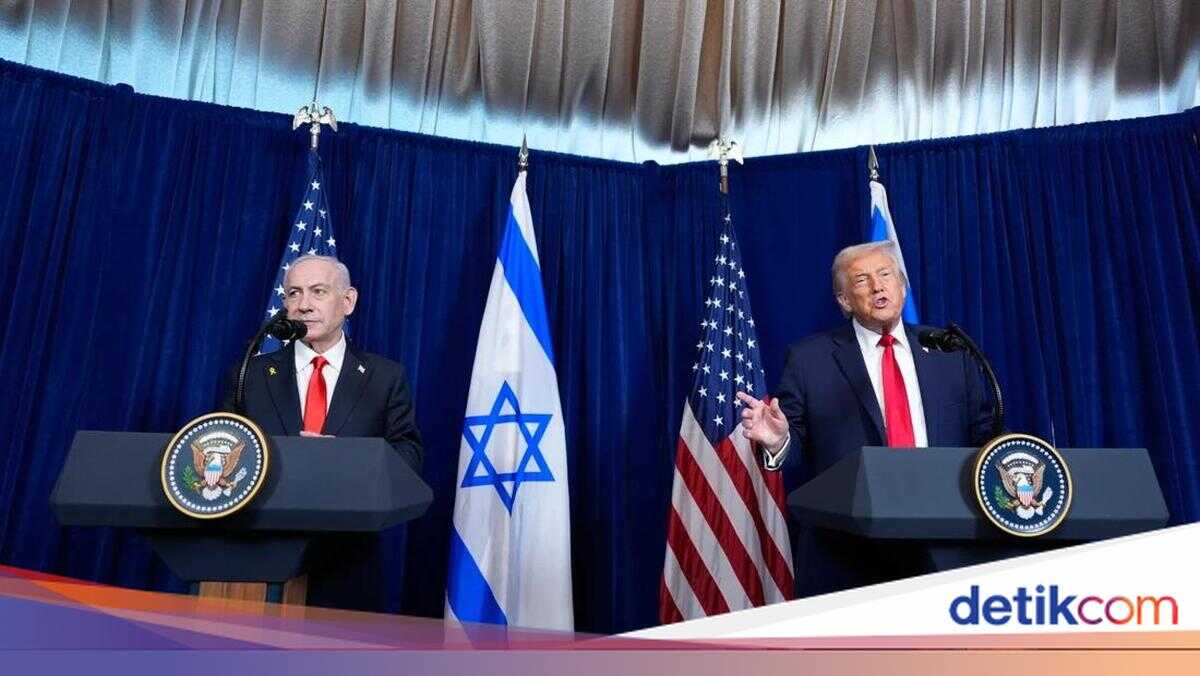
The potential for a major war erupting in the near future in the Middle East is not mere media speculation, but rather the logical consequence of a paradigm shift in United States foreign policy that has become increasingly synchronised with Israel’s expansionist agenda.
In the book Trump: America’s First Zionist President (2019) by Derek Mailhiot, it is explained how Donald Trump’s policies are fundamentally rooted in unconditional support for Zionist aspirations, including recognition of Jerusalem and illegal settlements.
The dominance of pro-Israel lobbying within Washington’s decision-making structures has created a fast track towards military confrontation, where US domestic interests have become virtually indistinguishable from Israel’s national security agenda.
This political ambition is reinforced by the emergence of the Greater Israel narrative, implicitly and explicitly supported by key figures such as Ambassador Mike Huckabee. This perspective aligns with the analysis in Paul Moorcraft’s Israel’s Forever War (2024), which sets out that for Israel, war is not merely a temporary instrument of defence but a permanent condition for maintaining and expanding territorial control.
This vision transcends traditional boundaries and targets the total restructuring of the region, automatically placing every opposing force as a military target that must be neutralised in the near term.
Iran, in this context, emerges as both the primary obstacle and the principal target of the US-Israel alliance. Mohsen M. Milani, in Iran’s Rise and Rivalry with the US in the Middle East (2025), explains that Iran’s rise as an independent regional power threatens the US monopoly over economic resources, particularly oil and gas routes in the Gulf.
The destabilisation of Iran is not merely ideological but a strategic effort to eliminate the only actor possessing the military capacity and proxy networks capable of obstructing total control over the region’s energy assets.
This rivalry is also fuelled by concerns over Iran’s pursuit of regional supremacy. A document from the Jerusalem Center for Public Affairs entitled Iran’s Race for Regional Supremacy (2008) highlights that the infiltration of Iranian influence in Lebanon, Syria, and Yemen is viewed as an existential threat to the Western-led order.
The militaristic logic adopted by the Zionist coalition holds that diplomacy has failed, and the only way to halt Iranian influence and secure the Israeli expansion project is through physical confrontation — which may occur within weeks as tensions on the ground intensify.
On a deeper level, Jalil Roshandel and Nathan Chapman Lean, in Iran, Israel, and the United States: Regime Security vs. Political Legitimacy (2011), argue that these tensions are driven by the need for regimes to maintain political legitimacy through security rhetoric.
For the Trump and Netanyahu administrations, escalating war against Iran functions as a unifier of their respective support bases amid domestic pressures. The control of the Jewish lobby in the US ensures that American military and financial resources remain available to support every aggressive step Israel takes aimed at securing absolute supremacy in the Middle East.
This situation should serve as an alarm for Arab nations to recognise that they are caught within a new imperialist scheme. The Zionist expansion project will not stop at Palestine or Gaza; the stability of neighbouring states is also at stake should the regional order collapse due to a major war.
If Arab nations remain passive and trapped within Western frameworks, they will only facilitate the creation of singular Israeli sovereignty fully backed by the American military, which would ultimately diminish the economic and political sovereignty of Arab nations themselves.
Furthermore, this threat also looms over global powers such as Russia, China, and Turkey. Zionist imperialism, intertwined with US foreign policy, aims to close off external powers’ access to regional oil resources.
Should Iran collapse or be neutralised, Russia’s and China’s economic routes and diplomatic influence in the Middle East would be severed. Turkey, as another regional power, would become the next target in a project of regional homogenisation that tolerates no independent power centre other than an American-backed Israel.
The logic set out by Moorcraft (2024) regarding Israel’s eternal war demonstrates that the Israeli war machine requires constant enemies to justify its expansion. After Gaza and Lebanon, the next logical target is the heart of the opposing force — Iran.
With lobby support in Washington capable of directing US foreign policy, war within the coming weeks becomes highly plausible as a pre-emptive effort to secure the Greater Israel project before the global geopolitical map shifts due to pressure from eastern economic alliances.
Ultimately, the current escalation in the Middle East is a manifestation of the convergence of oil economics, Zionist territorial ambitions, and political lobby control in the United States. Without collective resistance from regional Arab powers and support from global actors such as Russia and China, this imperialist project will continue to expand.
War is no longer a distant possibility but an instrument being prepared to ensure that no other power can challenge the absolute dominance of the US-Israel coalition in the future.
Muhammad Thaufan Arifuddin is a lecturer in Communication Studies at the Faculty of Social and Political Sciences, Andalas University, and a graduate of the Graduate School of International Development (GSID), Nagoya University, Japan.