
Middle East Conflict Triggers Oil Price Surge, Impact on Indonesia
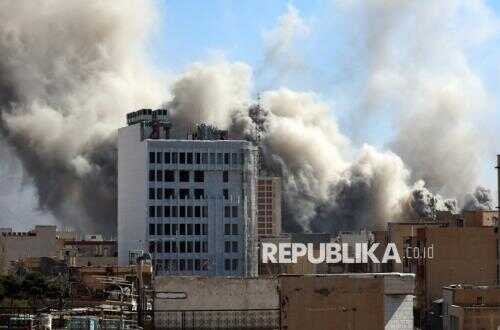
A petroleum industry practitioner, Hadi Ismoyo, has warned that domestic fuel prices in Indonesia risk rising as crude oil prices surge due to escalating Middle East tensions. He highlighted that Iran’s decision to close the Strait of Hormuz could disrupt global energy supplies and strain Indonesia’s energy cost structure.
Ismoyo explained that Indonesia’s dependence on oil imports remains substantial, exceeding 1 million barrels per day. Any disruption to the strait—which carries approximately one-fifth of the world’s oil supplies—would drive up crude oil prices and impact domestic fuel pricing.
“Although we are thousands of kilometres away from the Strait of Hormuz, this is severely impactful because we import more than 1 million barrels per day,” said Ismoyo, Advisory Board chairman of the Indonesian Association of Oil and Gas Professionals (IATMI) for 2025–2028, in comments to Republika on Monday, 2 March 2026.
According to Ismoyo, rising crude oil prices place both the government and state enterprises in a dilemma. On one hand, energy procurement costs increase. On the other, fuel price adjustments must consider public purchasing power as well as government and parliamentary approval.
In the short term, Indonesia will face pressure from higher import costs. This situation constrains fiscal space, particularly when subsidy schemes must be maintained amid incomplete economic recovery.
“Indonesia is facing the prospect of buying crude at high prices while selling it under a subsidy scheme,” he said.
Ismoyo predicts that global oil prices could rise to $80–90 per barrel if the conflict persists and supply disruptions continue. Such an increase would proportionally drive domestic fuel prices up by approximately 10–15 percent.
He believes the government has two policy options: increasing subsidy allocations through budget adjustments, or allowing price adjustments to prevent state enterprises bearing the full burden. Such a decision requires open discussion between the government and parliament whilst considering the national economic situation and state budget capacity.
“There are only two choices: creating fiscal space to expand subsidies or raising fuel prices,” Ismoyo said.
He also cautioned that fuel price increases would trigger cascading effects across the transport sector, goods distribution, electricity tariffs, and basic necessities, with direct consequences for household living costs.
In the long term, Ismoyo emphasised the importance of strengthening national energy resilience to reduce exposure to global volatility. One strategic step is accelerating energy conversion programmes from oil to gas through more substantial gas infrastructure development.