
Middle East Conflict Tests National Resilience
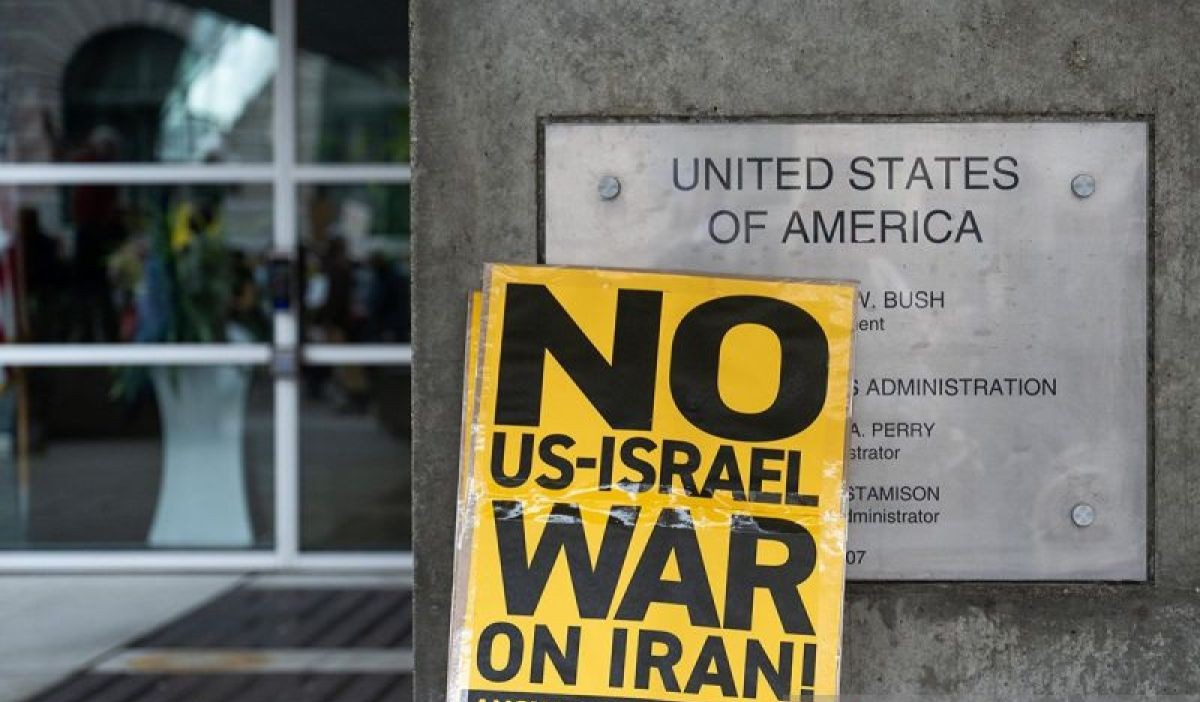
Escalating Middle East conflict has become a major challenge to global stability and tests the national resilience of various countries, according to Bahrullah Akbar, Chairman of the National Council of the Indonesian Student Regiment Alumni Association (IARMI).
Speaking at a National Dialogue on “National Sovereignty Challenges in the Midst of Middle East Geopolitical Turmoil” held at the Auditorium of the Ministry of Villages, Development of Disadvantaged Regions in Jakarta, Bahrullah noted that the Iran versus United States and allied conflict demonstrates that regional geopolitical dynamics have shifted from limited tensions towards potential open confrontation with high strategic risks.
“This situation shows how power politics have once again become the dominant factor in international relations. Military escalation moves very rapidly and often exceeds the pace of diplomacy,” Bahrullah stated.
He explained that modern conflicts extend beyond purely military dimensions, affecting public psychology, global economic stability, and international political perceptions. Despite Indonesia’s lack of direct involvement, the country remains vulnerable to the conflict’s consequences through global economic interconnectedness and world energy stability.
Bahrullah highlighted the Middle East’s role as a global energy centre, noting that disruptions to strategic routes such as the Strait of Hormuz could trigger oil and gas price surges, increased logistics costs, and diminished economic stability for energy-importing nations including Indonesia.
“This means national sovereignty is now tested not only by direct military threats but also by dependence on a destabilised global system,” he explained.
Beyond economic factors, Bahrullah warned of information warfare threats exploiting disinformation and identity narratives to fuel social polarisation across countries.
He emphasised that Menwa alumni and cadres occupy strategic roles in strengthening national resilience amid global geopolitical dynamics. Since their inception, the Student Regiment has been trained in values of national defence, discipline, and strong nationalist perspectives, equipping them to contribute to maintaining national stability.
“Menwa and Menwa alumni are dispersed across various strategic sectors. They carry a moral responsibility to enhance public geopolitical awareness, counter disinformation, and preserve national unity amid global turbulence,” Bahrullah explained.
He stressed that amid international conflict dynamics, Menwa alumni are expected to serve as moral and intellectual forces safeguarding national stability. “National resilience is not solely the government’s responsibility but that of all national components. Menwa alumni must emerge as a force ensuring Indonesia remains stable, sovereign, and independent amid the global geopolitical whirlwind,” he said.
The national dialogue, attended by over 500 participants in hybrid format from the Student Regiment community and alumni, was held concurrently with a joint breaking-of-fast gathering. Several prominent figures participated as speakers, including Ermaya Suradinata, Ulta Levenia, Aryo Wibowo, Heri Herdiawanto, and Rasminto.
Global oil prices could potentially surge to US$130 per barrel should Iran-US-Israel tensions continue escalating. Former Vice President Jusuf Kalla called for Indonesia to adopt a firm stance on the conflict, particularly should Iran become the target of attack. Iran’s Deputy Foreign Minister Majid Takht-Ravanchi warned that any nation supporting US aggression against Iran would be considered a legitimate target for retaliatory strikes.
Global oil prices surged sharply after concerns mounted over potential energy supply disruptions. Drone attacks struck Iraq again, with airports and oil facilities as targets. The Middle East conflict has prompted panic buying and threatened fuel shortages in Thailand, with authorities closely monitoring supply amid local price surges.
Strengthening national defence requires not only public support but also technology sources from various parties, according to recent assessments.