
Middle East Conflict: Said Abdullah Urges Refinement of Priority Programmes
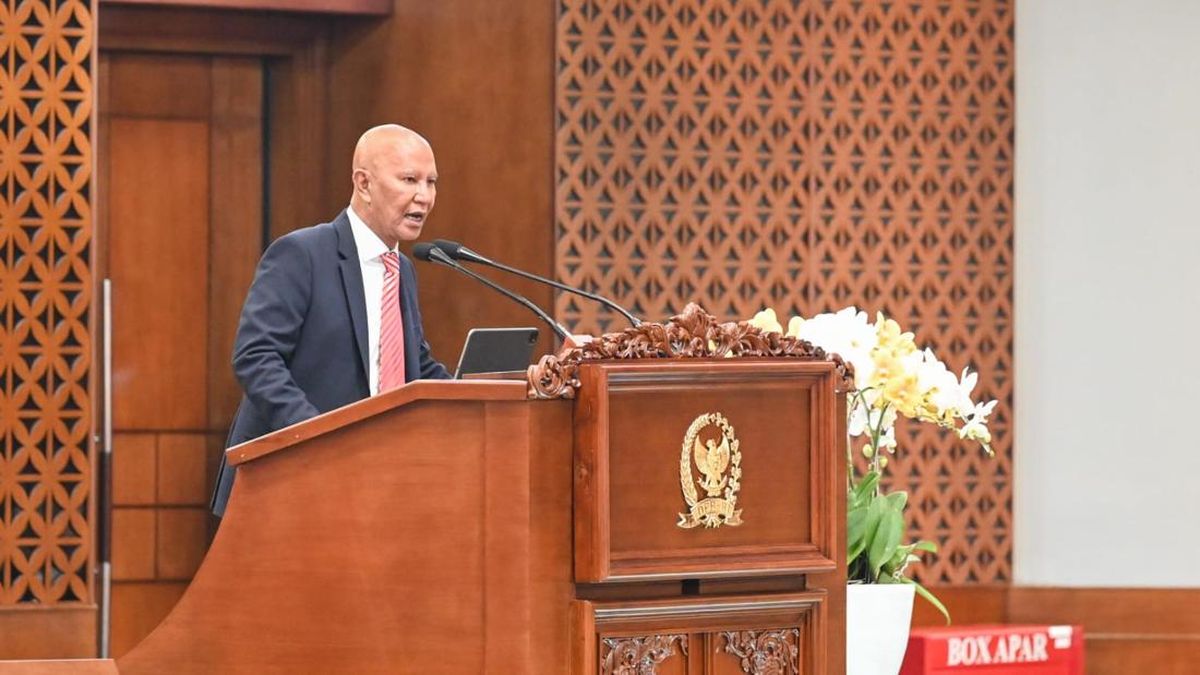
House of Representatives Budget Commission Chairman Said Abdullah has stated that the government can take several anticipatory measures amid the current Middle East conflict. One of these involves sharpening priority programmes between urgent and non-urgent initiatives.
Said gave an example of programmes not considered particularly urgent that require review. According to him, such programmes could be postponed temporarily.
“For instance, things that aren’t so urgent—like toll road projects and so forth—perhaps the government should hold off on them for now. In fact, these toll roads are multi-year projects, so the government could strengthen its reserve funds. As a precaution,” Said said at the House of Representatives Complex in Senayan, Jakarta, on Thursday (12 March).
Said hopes the government will also refine subsidies, which he noted remain poorly targeted. He said subsidies for upper-income groups and industry could represent wasteful spending in the state budget.
“Programmes that aren’t so urgent can be postponed. Then there’s the refinement of LPG—8.6 million tonnes per year keeps rising. Yet we all know that according to law it should be closed, but it’s sold openly,” he said.
“There’s no system in place, only based on DTSEN [Unified Data on Socio-Economic Status]. They should just use fingerprint verification, one click. Or something more advanced like retinal scanning. I’m confident that would bring it down to around 5.5 million tonnes at most,” he added.
Responding to national priority programmes (PSN) such as the Free Nutritious Meals Scheme (MBG) and Village/Sub-district Cooperatives Red and White (KDMP), Said assessed that MBG falls within the mandatory education spending cluster, which is non-negotiable.
“If MBG is in the mandatory education budget cluster, then it’s compulsory. There’s no negotiating it. It’s part of education spending, so it’s mandatory,” Said said.
At the same time, he reminded that improvements in MBG governance must continue to be monitored. Said hopes the MBG programme can be implemented effectively.
“Improvements in governance are needed in the field, and I agree. But it’s legally mandatory because of its mandatory status—it’s education, after all,” he concluded.