
Middle East Conflict Puts Pressure on Budget, Prabowo Insists Free Nutritious Meals Programme Continues
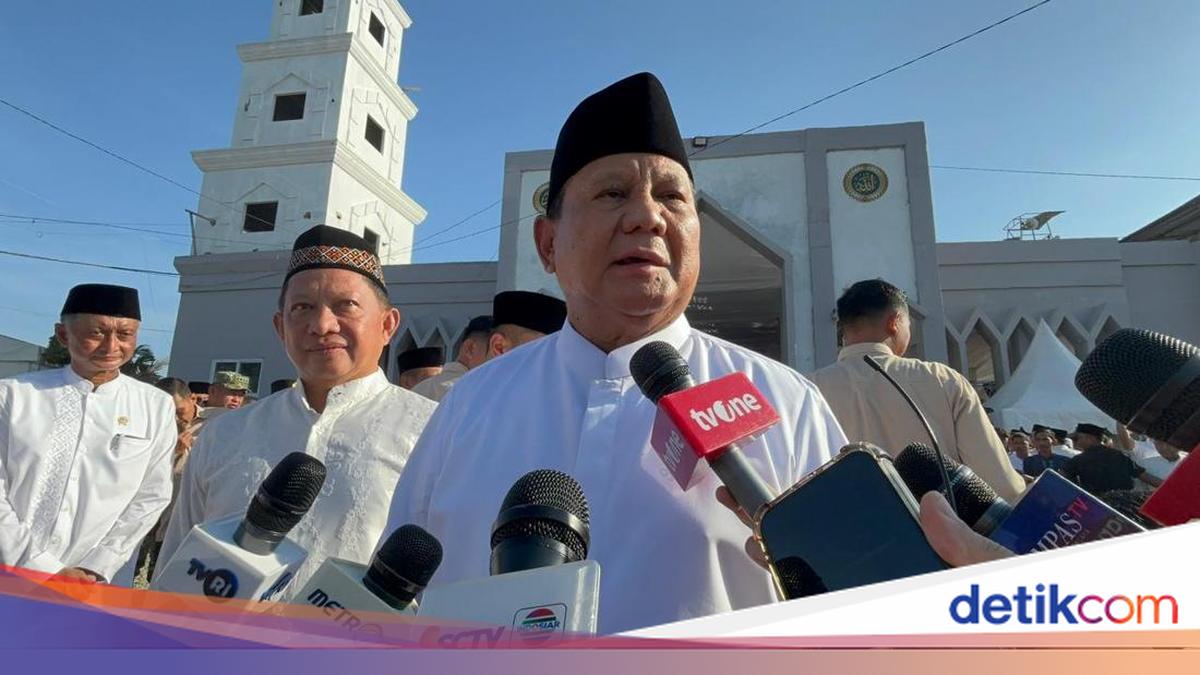
President Prabowo Subianto has emphasised that the Free Nutritious Meals (MBG) programme will continue despite the government facing pressures from the Middle East conflict and budget efficiency measures. This programme is one of the priorities for improving the quality of human resources (HR) while also boosting economic circulation.
Amid the escalating global situation, there have been calls to temporarily halt the MBG programme as it is seen to burden the state budget, particularly with the potential rise in energy prices. However, Prabowo believes the MBG programme must proceed.
He stated that he prefers to find savings in other sectors rather than stopping a programme that has a direct impact on the public, especially in addressing stunting issues.
“It is better for my people to eat. Don’t you see children who are stunted? I see them; during my campaigns in villages multiple times, I saw a child: ‘How old are you?’ 11 years old. His body is like a 4-year-old child’s,” Prabowo explained.
He also stressed that MBG is a strategic move by the government to improve Indonesia’s HR. Regarding budget savings amid the crisis due to the Middle East conflict, Indonesia’s top leader believes there are still many other areas where budgets can be cut.
“So, this is strategic; it’s for our human capital. So, there are still many real savings we can make. We have exercised it; we have made savings in many sectors,” Prabowo said.
Significant Economic Impact
From an economic perspective, Prabowo claims that MBG will also have a major impact on money circulation in society. He mentioned international institutions, including the Rockefeller Institute and the UN’s World Food Programme (WFP), which support this claim.
These institutions affirmed to Prabowo that MBG is the best investment Indonesia is making. Based on their studies, Prabowo explained that MBG can generate multiplied money circulation.
For every US$1 spent on MBG in the near term, it is believed to circulate up to US$7 in society. In the long term, the circulation is even greater, reaching five times or US$35.
“I was visited by the Rockefeller Institute from the United States; they checked our SPPG and came to me. He said, ‘This is the best investment, Mr. President; you have made the best one.’ Do you know why? Because for every US$1 spent on MBG, the return is between US$7-35; in the long run US$35, in the short run US$7,” Prabowo clarified.
Prabowo targets MBG to have 30,000 SPPG. So far, from his calculations, each MBG Public Kitchen is estimated to employ 50 people. If there are 30,000 kitchens, that means 1.5 million jobs will be available.
“Each kitchen creates vendor-suppliers between 5-10 per kitchen who sell eggs, carrots, vegetables; each vendor empirically employs about 5 farmers. So, how many is that? Another 50. Another 1.5 million people working,” Prabowo added.
On the other hand, Prabowo did not deny that some Public Kitchens have been slightly problematic. However, the shortcomings that occurred are being addressed; for example, more than 1,000 SPPG have been closed.
“That there are shortcomings, we address them. I have said there are more than 1,000 that we have closed. Yes, right? But you see, in many areas outside Java, they really need it,” Prabowo asserted.