
Middle East Conflict Impact on Oil Expected in April, Government Action Plans Outlined
Indonesia’s Ministry of Energy and Mineral Resources (ESDM) has confirmed that the government has prepared anticipatory measures to address potential impacts of Middle East conflicts on domestic energy supply.
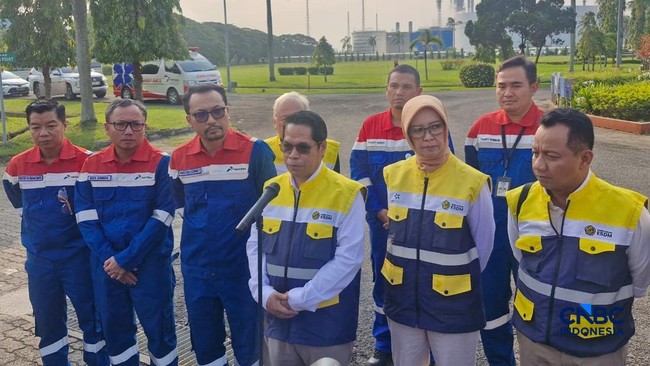
The Directorate General of Oil and Gas at the Ministry of ESDM, Laode Sulaiman, stated that the ministry is focused not only on ensuring energy supply readiness during the Ramadan and Eidulfitri (RAFI) period of 2026, but is also preparing for conditions after that period ends.
“As I mentioned earlier, we are preparing for the aftermath. So after RAFI we are preparing because the impact will be felt starting in April,” said Laode, speaking at the Balongan Refinery Complex on Friday (13 March 2026).
He stated the government has prepared several strategic steps to ensure national energy resilience remains protected, including strengthening domestic energy stock availability. The government has stockpiled petroleum products, liquefied petroleum gas (LPG), and crude oil in adequate quantities to anticipate possible supply disruptions due to global geopolitical dynamics.
“We have taken these steps and, God willing, through RAFI and then April and beyond we will maintain stability,” he said.
Earlier, Energy and Mineral Resources Minister Bahlil Lahadalia outlined Indonesia’s oil supply situation amid rising geopolitical tensions in the Middle East, particularly following the closure of the Strait of Hormuz due to the Iran-Israel conflict involving the United States.
Bahlil explained that the Strait of Hormuz is a vital global energy trade route. Approximately 21 million barrels of oil transit through the strait daily, with some crude oil imported by Indonesia from the Middle East region also passing through this strategic route.
“Almost everything is affected. Imagine now, the Strait of Hormuz is transited by roughly 21 million barrels per day. How much does that represent of global consumption? That is the current situation,” said Bahlil during the Bukan Abuleke podcast on Wednesday (11 March 2026).
He then disclosed that Indonesia’s current oil production stands at approximately 605,000 barrels per day, whilst national consumption demand reaches 1.6 million barrels per day. This means Indonesia must import approximately 1 million barrels of oil daily to meet domestic needs.
Nevertheless, the ministry continues to pursue various steps to reduce import dependency, particularly for diesel fuel.