
Middle East conflict forces Southeast Asia’s pivot to travellers from the region, but gaps remain
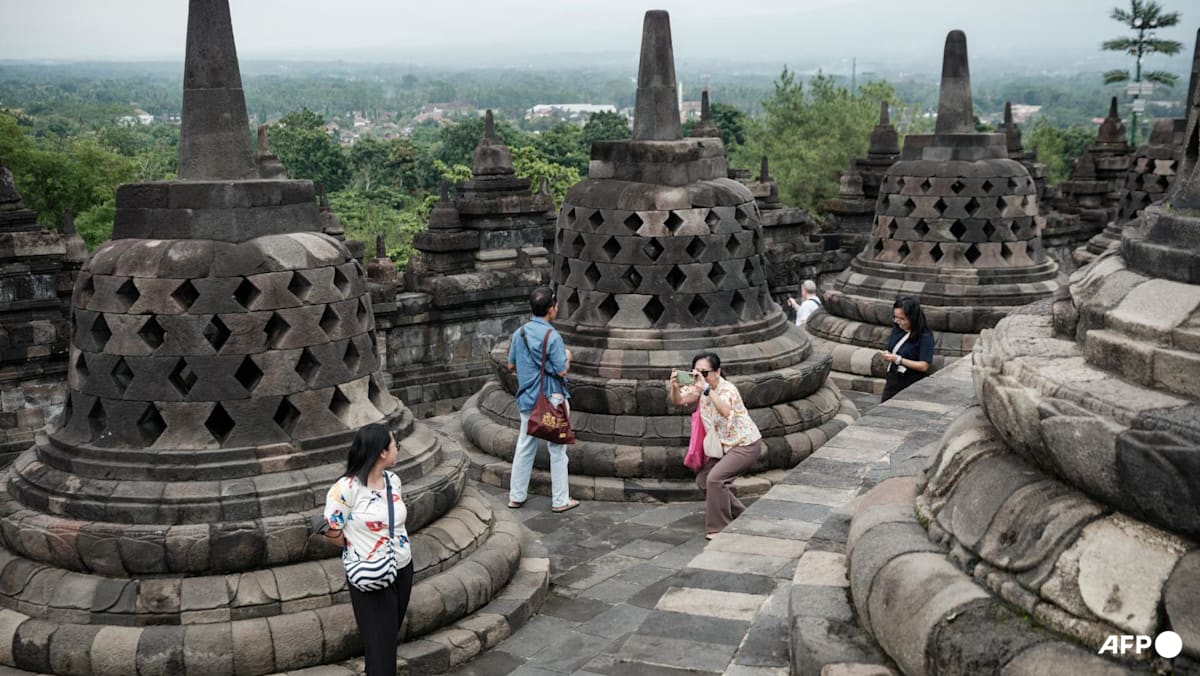
Middle East conflict forces Southeast Asia’s pivot to travellers from the region, but gaps remain
Countries like Malaysia, Indonesia and Thailand are recalibrating their tourism strategies, while tour operators have ramped up intra-Asia offerings as airspace restrictions and rising costs weaken long-haul demand.
SINGAPORE: When bookings for trips to the Middle East began to drop sharply in March – following the United States and Israel’s strikes on Iran from Feb 28 – Malaysian tour operator IBC Tours & Travel quickly rolled out 32 new packages focused on Southeast Asia and destinations closer to home.
“About 80 per cent of our business was affected in early March … we now offer travel alternatives that do not involve transiting through the Middle East,” said its managing director Mohammad Rizal.
He is among the tourism players in Southeast Asia that have scrambled to adapt as tens of thousands of flights globally were cancelled or rerouted.
Airspace closures and restrictions, as well as fuel shortages, have disrupted popular routes that traditionally transit through major aviation hubs like Dubai and Doha. This has reshaped how people travel.
Countries like Malaysia, Indonesia and Thailand are recalibrating their tourism strategies to make up for the loss of longer-haul inbound travellers from regions like Europe and the Middle East, while outbound tour operators in the region are ramping up intra-Asia offerings.
These recalibrations will not be seamless due to some Southeast Asian countries’ longstanding focus on Western tourists, and the different travel patterns of shorter-haul travellers, observers say.
While it remains to be seen if the recalibration will continue when Middle East tensions dial down, the good news is that appetite for travel appears robust.
GOVERNMENTS, INDUSTRY PIVOT TO SHORT-HAUL TRAVELLERS
Since the Middle East conflict started, Asian countries have seen visitor arrivals from longer-haul markets decline.
Short-haul markets generally refer to those that are up to a three-hour flight away while long-haul markets are over a six-hour flight away, with the medium-haul segment falling in between.
“Bookings (from the Middle East) are totally zero, and they postpone their trip until the end of the year. But … we still don’t know when they will come back, because the problem now is the war is very uncertain,” said Mint Leong, president of the Malaysia Inbound Tourism Association. This is despite overall arrivals in March still being “very positive”.
In Thailand, Pullman Phuket Panwa Beach Resort marketing and communication director Pimpisa Sukapasert said Middle East travellers have declined by 30 to 50 per cent since the start of the war, while data from early March shows “sharp declines” from Germany, Russia, United Kingdom, France and Israel.
Long-haul travel has become less predictable due to airspace disruptions, higher fuel costs and traveller caution linked to the conflict, said Siamak Seyfi, an associate professor in tourism geography at Finland’s University of Oulu.
“Longer travel times and the increased likelihood of delays have made long-haul journeys less attractive,” Seyfi said.
“Regional markets such as Singapore, India, and China remain more stable (as destinations), and price-sensitive travellers are more willing to take short trips,” he said, adding that this was the case during the COVID-19 pandemic, when countries reliant on long-haul markets struggled to recover.
In addition to the disruption to Gulf hub connectivity, airfares on some Europe routes have risen by close to 100 per cent, prompting a “very understandable” shift towards shorter, more predictable journeys, said tourism consultant Nisha Abu Bakar, founder of World Women Tourism.
“Those three forces are pointing demand toward intra-Asian travel and destinations are responding accordingly,” she said.
Although overall arrival numbers are holding up, some tourism authorities in the region have signalled a rough few months ahead.
At Singapore’s Tourism Industry Conference 2026 on May 8, Singapore Tourism Board (STB) chief executive Melissa Ow cautioned that travel demand is expected to be muted in the coming months due to the conflict.
“Our tourism businesses are under strain from the crisis and the global uncertainty that persists,” Ow said.
Regional travel to Singapore has remained stable, with international arrivals rising 10 per cent year-on-year in March, driven by strong growth from Asian markets including Indonesia, China and Malaysia with increases of 23 per cent, 12 per cent and 27 per cent respectively, STB assistant chief executive Oliver Chong told CNA.
“We are thus working closely with our tourism partners to adapt to evolving market conditions and roll out campaigns at the appropriate timings across all source markets,” Chong said.
Government agency Tourism Malaysia said arrivals from West Asia have fallen by 27.2 per cent since the war, while arrivals from Africa fell 8.4 per cent.
On Mar 31, Malaysia’s Ministry of Tourism, Arts and Culture (MOTAC) announced it would prioritise “high-performing” and “stable” tourism markets in Asia including China, Indonesia, Thailand, Japan, South Korea, India, Bangladesh and Vietnam, amid geopolitical developments.
It announced expanded routes set to begin in October, including AirAsia flights from Phuket to Penang, Batik Air flights from Banda Aceh to Kuala Lumpur, and Chongqing Airlines flights from Chongqing to Kota Kinabalu.
Asked about the October timeline for these flights, Tourism Malaysia told CNA the schedule is preliminary and intended to guide preparations.
Malaysia has recorded “encouraging progress” in tourism performance since its pivot, Tourism Malaysia told CNA.
Visitors from Southeast Asia remained Malaysia’s primary market and accounted for about 70 per cent of arrivals between January and March this year. Malaysia is targeting 47 million international visitor arrivals in 2026.
“By prioritising the broader Asia-Pacific region, in