
Middle East Conflict Escalation Prompts Bank Indonesia to Abandon Rate Cut Prospects
JAKARTA – Bank Indonesia (BI) has eliminated the possibility of reducing its benchmark interest rate (BI rate) from its monetary policy direction.
This change comes amid escalating global uncertainty stemming from the intensification of Middle East conflict.
In previous meetings of BI’s Board of Governors (RDG), the central bank repeatedly indicated the potential for BI rate reductions.
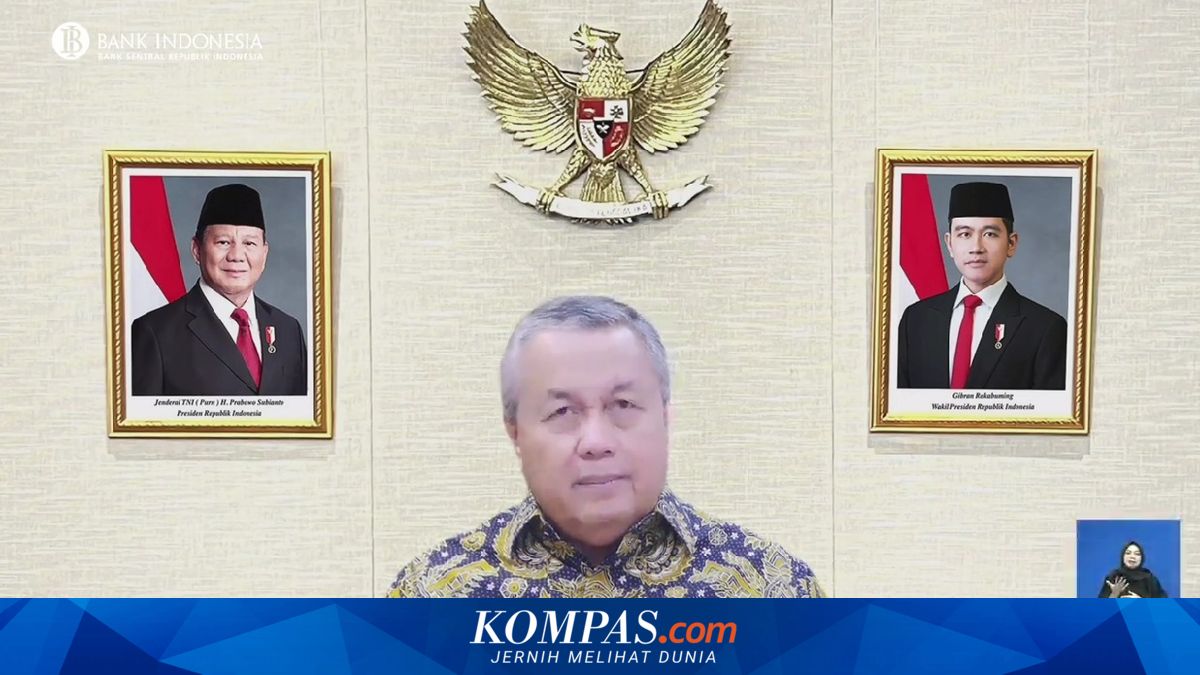
“Indeed, regarding the impact of the Middle East conflict, we are no longer conveying the possibility of a reduction in the benchmark interest rate, which is why we have removed this from our statement,” stated BI Governor Perry Warjiyo at the BI Board of Governors’ March 2026 press conference on Tuesday (17 March 2026).
Warjiyo explained that during the March 2026 RDG meeting, BI has carefully considered the impacts of escalating Middle East tensions.
BI assesses that this situation will trigger rises in global oil prices, which will subsequently feed through to increased global inflation and a slowdown in global economic growth.
These conditions are also triggering turbulence in global financial markets, including the outflow of foreign capital from emerging markets.
Indonesia is naturally not immune to these pressures.
The strengthening of the US dollar and the elevated yields on US Treasury securities have pressured the rupiah exchange rate and raised the yield on domestic government bonds.
Nevertheless, BI has prepared multiple scenarios, ranging from relatively stable oil prices, moderate increases, to sharp spikes should Middle East escalation worsen.
In responding to these dynamics, BI will optimise its monetary policy mix through three main instruments: currency intervention, foreign exchange reserve management, and interest rate policy.
“Of course, the calibration of optimality among these three will depend on how far the Middle East conflict escalation continues and its impact on oil prices, global economic growth and inflation, its effect on the US dollar, and outflows from emerging markets, and the elevated US Treasury yields,” he added.
Therefore, at the March 2026 RDG meeting, BI decided to maintain the BI rate at 4.75 per cent to optimise the monetary policy mix from the interest rate perspective.
Looking ahead, BI will no longer open the possibility of reducing the BI rate.
“Because we will indeed maintain the BI rate at current levels to strengthen currency intervention and ensure adequate foreign exchange reserves, and we will emphasise this going forward in accordance with existing dynamics regarding the optimality of interest rates, intervention, and adequacy of foreign exchange reserves,” he concluded.