
Middle East Conflict Escalates, Bank Indonesia Rules Out Interest Rate Cuts
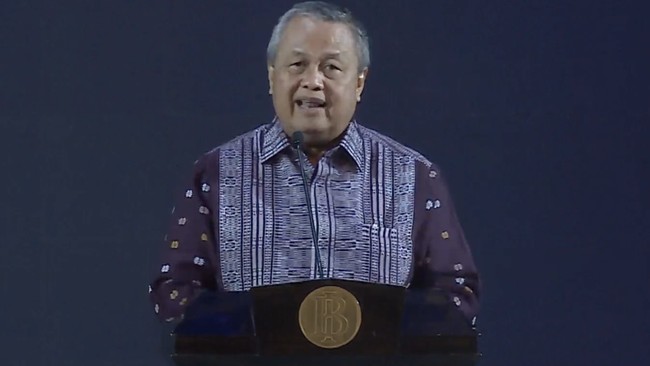
Jakarta, CNBC Indonesia – Bank Indonesia (BI) Governor Perry Warjiyo has signalled that the central bank will focus on maintaining the BI benchmark rate going forward.
Considering the effects of Middle East conflict that risks depressing economic growth, driving inflationary pressures, and triggering outflows of foreign capital abroad, coupled with the rupiah’s continued currency volatility.
“Because of the impact of the Middle East conflict, this is why in our statement (RDG results) we are no longer communicating the possibility of interest rate cuts,” said Perry during a press conference on the results of BI’s Board of Governors meeting conducted online on Tuesday (17 March 2026).
“We have removed this from today’s statement because we indeed anticipate keeping the BI rate as is to strengthen intervention and also ensure adequate foreign exchange reserves and maintain momentum going forward in line with developments,” he added.
As is known, in the Board of Governors Meeting (RDG) of Bank Indonesia on 16–17 March 2026, the board decided to maintain the BI-Rate at 4.75%, the Deposit Facility rate at 3.75%, and the Lending Facility rate at 5.50%.
Although the central bank will continue to hold the BI rate at the 4.75% level, Perry assured that BI has prepared various other policies aimed at driving Indonesia’s economic growth momentum.
The key policy measures include:
Strengthening rupiah exchange rate stabilisation through intervention in both Non-Deliverable Forward (NDF) transactions in overseas markets and spot transactions and Domestic Non-Deliverable Forward (DNDF) transactions in the domestic market;
Strengthening pro-market monetary operations strategy to attract foreign portfolio investment inflows and ensure adequate liquidity in money and banking markets through management of interest rate structure and volume of monetary instruments, as well as sovereign bond transactions in the secondary market in a measured manner;
Strengthening foreign exchange market transaction policy effective from April 2026 to support rupiah exchange rate stability through:
adjustment of the cash foreign exchange purchase threshold against the rupiah from USD 100,000 per participant per month to USD 50,000 per participant per month,
increase in the DNDF/Forward sales threshold from USD 5 million per transaction to USD 10 million per transaction,
increase in Swap purchase and sale threshold from USD 5 million to USD 10 million per transaction;
Strengthening Foreign Exchange Flow reporting requirements (LLD) through adjustment of the documentation support threshold for overseas fund transfers (outgoing) in foreign exchange from USD 100,000 to USD 50,000, effective from April 2026;
Enhancing the effectiveness of macroprudential policy relaxation through publishing transparent assessment of Base Lending Rates (SBDK) with focus on lending rates by priority sectors covered by credit risk management guidelines, as well as synergies with the Government and other stakeholders to encourage high lending/financing through the Indonesia Intermediation Acceleration Programme (PINISI);
Launching the Indonesia–South Korea Cross-Border QRIS in April 2026 as part of efforts to expand digital payment connectivity across borders and accelerate digital acceptance;
Launching the Indonesia Digital Innovation Centre (PIDI) in April 2026 to accelerate Digital Economy and Finance transformation (EKD), including through organising hackathons and developing digital talent through the Digital Empowered and Productive Talent (Digdaya) programme, conducted in synergy with authorities, associations, and relevant ministries/agencies;
Implementing the Capacity Building and Literacy Programme for Regional Digitalisation Acceleration and Expansion Synergy (KATALIS P2DD) on a quarterly basis as a platform for inter-regional synergy and knowledge sharing to accelerate and expand digitalisation of local government transactions, including public service quality;
Continuing the readiness of the national payments system during the National Religious Holiday period (HBKN) of Eid al-Fitr 1447 H, ensuring the availability, reliability, and security of Bank Indonesia’s Payment System (SPBI) and industry payment systems, as well as guaranteeing adequate supply and quality of rupiah currency throughout Indonesian territory, including through the Ramadan Rupiah Festivity and Eid Blessing (SERAMBI) 2026 programme.