
Middle East Conflict Disrupts China's Car Exports, Reaching Europe
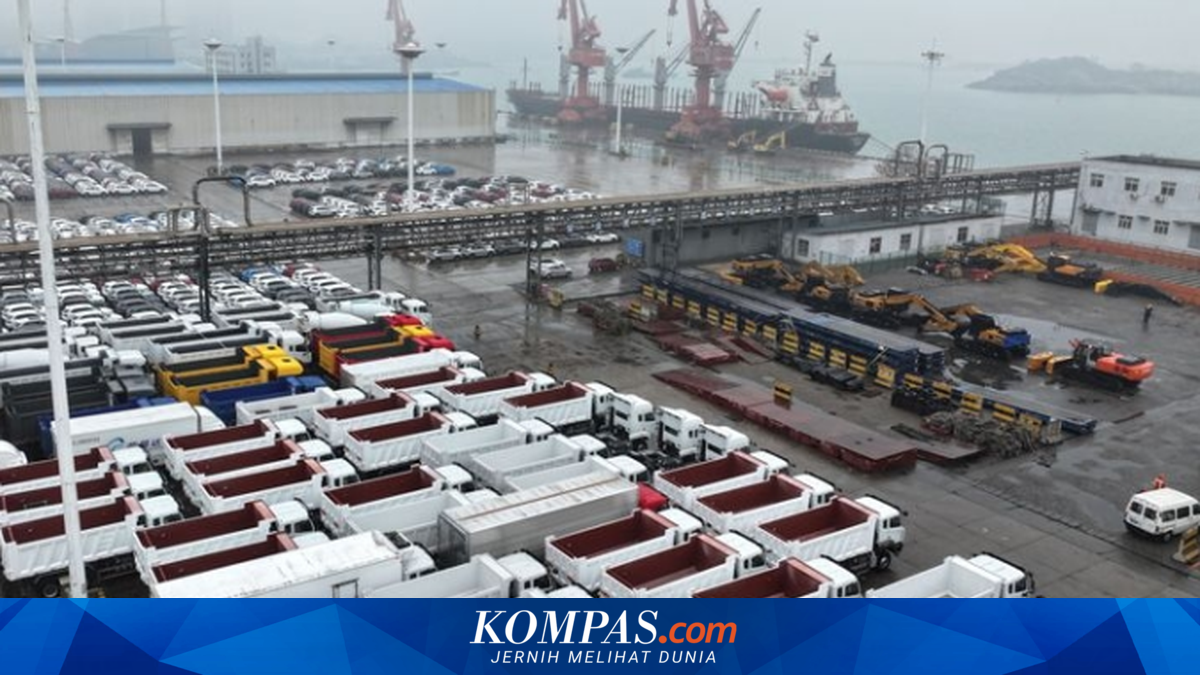
JAKARTA, KOMPAS.com – The intensification of the Middle East conflict, tied to the confrontation between the United States-Israel and Iran, is starting to affect the global automotive industry. One of the most noticeable effects is disruptions to exports of Chinese-made cars, which have long relied on the region as a key distribution route. “Our business in Iran has come to a complete halt,” said an export manager from a Chinese state-owned automobile manufacturer cited by Carnewschina on Wednesday, 4 February 2026.
Many Chinese automakers ship cars to Dubai first before distributing to final destinations. When this route is disrupted, shipments to various regions are affected. Dubai indeed plays a major role. The United Arab Emirates (UAE) was recorded as China’s third-largest car export destination in 2025, after Mexico and Russia.
Last year, China’s car exports to the UAE reached 567,000 units, up more than 70 percent from the previous year. This means that a large portion of those cars were not intended for use in the UAE, but were re-exported to other markets. “Dubai basically serves as a front warehouse. Many companies ship vehicles there before forwarding them to the intended markets,” said another anonymous participant in the Chinese automotive industry.
However, the situation worsened when the Jebel Ali port in Dubai, the region’s largest port, was attacked on 1 March. Operations were briefly halted. Although several berths were reopened on the same day, many shipping companies chose to suspend services for security reasons. As a result, export activities were practically disrupted.
Because the Red Sea route and the Suez Canal are considered high-risk, car carriers must now reroute via the Cape of Good Hope in South Africa. The Chinese automotive industry had actually invested heavily in the Middle East region. In fact, a few days before the conflict escalated, spare parts shipments from China arrived in Dubai and were moved to a large warehouse of 19,000 square metres in the Jebel Ali Free Zone. This warehouse was built to speed distribution, reducing the time from weeks to days.