
Middle East Conflict Causes Plastic Prices to Rise, Impacting Small Traders
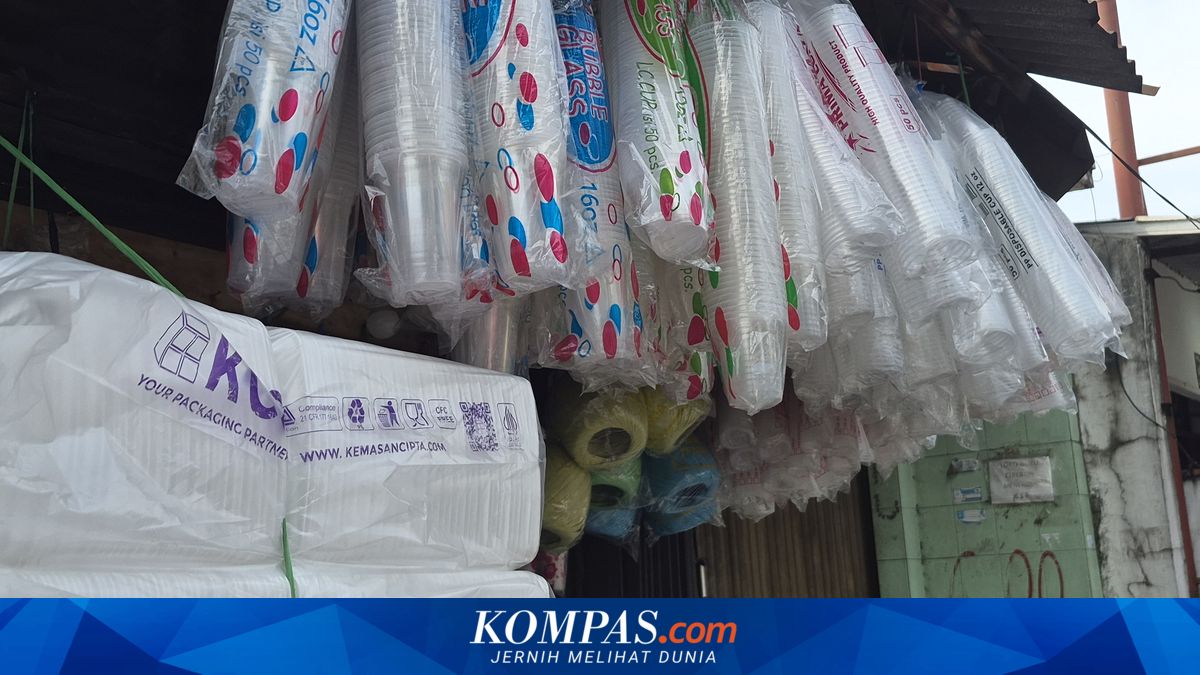
Plastic prices in several areas of DKI Jakarta have risen, directly impacting small traders. They feel the effects immediately because they usually wrap food using plastic bags. “It’s up, usually Rp 25,000 now Rp 30,000, the one that used to be Rp 10,000, but now around Rp 12,000. Since Eid, from fasting until now, it hasn’t normalised,” explained Raden Arka (29), a goreng rice seller in the Jatinegara area, East Jakarta, quoted from Kompas.com on Wednesday (1/4/2026). Plastic is like a staple for him. “For me personally, it’s hard (to find alternatives other than plastic) because plastic is like a staple commodity. We’re too dependent on plastic,” said Arka. Besides Arka, a pecel lele seller in Jatinegara, Parti (57), complained about the same issue. “It’s very burdensome because our sales are slow, not good. So if everything rises, we get even more difficult,” said Parti. Although plastic prices have risen, Parti admitted she does not want to change her selling prices. “We can’t raise them, because the usual buyers are already few. So we won’t increase our food prices, we’ll stick to the same,” she explained. The raw material for plastic pellets is a petroleum derivative called petrochemicals. 22 percent of the global petrochemical supply comes from the Middle East, which must pass through the Strait of Hormuz. “There are 193 active petrochemical complexes in the Middle East, handling 22% of global supply, and all rely on the Strait of Hormuz for shipping their products,” explained CNBC on Saturday (28/3/2026). “Our plastic suppliers in China have raised prices by about 15% recently, and they cite rising raw material costs and general market uncertainty as reasons,” said Stanislav Krykun, CEO of DST-Pack, a Poland-based packaging company. Plastic prices tend to continue climbing if tensions in the Middle East do not subside.