
Middle Class Shrinks to 16.9 Percent, Survival Strategies Become Increasingly Adaptive
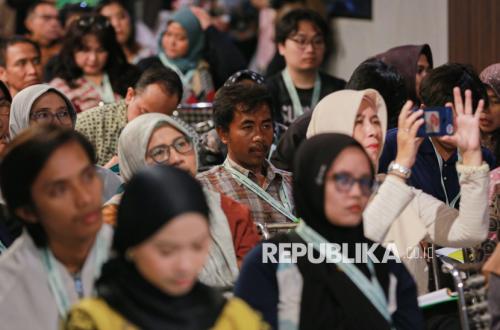
Pressure on Indonesia’s middle class has intensified in recent years. The decline in this group’s size, amid a rise in the aspiring middle class, serves as a key signal for the national economy’s direction and a challenge to Indonesia’s target of becoming a developed nation by 2045.
Data from the National Socio-Economic Survey (Susenas) shows the middle class proportion falling from 21.5 percent in 2019 to 16.9 percent in 2024. In contrast, the aspiring middle class group has risen to 48.8 percent over the same period. Previously, Bappenas estimated that Indonesia could become a developed nation if the middle class proportion reaches 70 percent of the total population.
On the other hand, the middle class’s role in supporting the economy remains dominant. In 2024, this group contributed 81.5 percent of total household consumption, while household consumption accounts for 58.8 percent of gross domestic product (GDP).
Co-founder and CEO of Katadata Indonesia, Metta Dharmasaputra, stated that the middle class holds a strategic position in driving social and economic change.
“The middle class is the key to national and societal transformation,” she said at the IDE Katadata Future Forum 2026 in Jakarta on Wednesday (15/4/2026).
Several findings indicate that this group is beginning to change its survival strategies. Vice President of Finance and Business Development at Katadata, Ivan Triyogo Priambodo, revealed that a single source of income is no longer considered sufficient for many middle-class families.
“For the middle class, one source of income is no longer enough to provide certainty. Therefore, side jobs are not just extras but a layer of security,” said Ivan.
According to him, this situation reflects the middle class’s efforts to become more adaptive and resilient against economic uncertainty. At the same time, consumption patterns are shifting to be more selective, prioritising value over just low prices.
Research Analyst at Katadata Insight Center, Kholis Dana P., views public policy as a key factor in maintaining the middle class’s sustainability.
In his view, the government needs to play a role in preserving purchasing power, controlling living costs, expanding job access, and providing adaptive social protection.
“The middle class is not just about protection, but about ensuring they continue to grow and contribute sustainably,” said Kholis.
Additionally, the utilisation of technology such as artificial intelligence (AI) is starting to be considered as one strategy to boost productivity, expand skills, and open new economic opportunities amid existing pressures.
These findings are part of the Katadata Indonesia Middle Class Insight (KIMCI) 2026 report presented at the IDE Katadata Future Forum 2026. The report comprehensively depicts the middle class’s condition, from consumption behaviour to current economic sentiment.