
Middle-Class Consumers Spending ahead of Eid, but Savings Dwindling
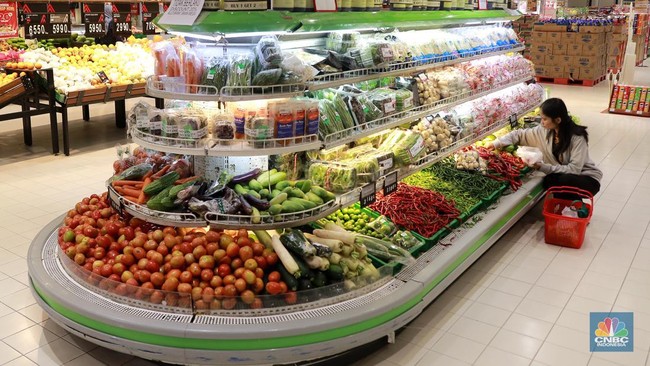
Jakarta – Consumer spending in Indonesia is beginning to rise ahead of Eid. Amid this momentum, the middle-class cohort is also showing signs of recovery, although consumption patterns remain cautious and focused primarily on daily necessities.
This is evident from the Mandiri Institute’s report showing that the weekly Mandiri Spending Index (MSI) has increased. In the first week after Ramadan began, on 1 March 2026, the MSI was recorded at 121.6, up from 121.2 the previous week. On a weekly basis, the index grew 0.28% week-on-week (WoW), higher than the previous week’s growth of just 0.01%.
Year-on-year, consumer spending growth remains quite robust. The MSI for that period recorded growth of 6.5% year-on-year (YoY), higher than the same period last year at 5.7% YoY. This indicates that consumer activity is strengthening as Ramadan progresses and Eid approaches.
The rise in spending also makes sense because the start of Ramadan this year coincided with the end of the month, when household purchasing power is typically constrained. As the salary period arrives, purchasing power begins to move and drives increased consumption.
Middle Class Showing Signs of Recovery
Amid rising consumer spending ahead of Eid, middle-class consumers are beginning to show signs of recovery. This signal is evident from a significant increase in the proportion of spending, particularly on daily necessities.
In February 2026, middle-class spending at supermarkets reached approximately 20.7%, up from 18.6% in January 2026. Meanwhile, the proportion of spending on household needs also increased slightly to 8.9% from 8.7% in the previous month.
This increase indicates that the middle class is beginning to actively spend again, particularly on essential items and daily consumption. In other words, recovery is becoming visible, although it is not yet fully reflected in more aggressive spending on secondary needs or lifestyle products.
This improvement signal is also evident from the Consumer Confidence Index (IKK) based on spending groups. In this data, the middle class is reflected in spending groups of Rp3.1-4 million and Rp4.1-5 million per month. In February 2026, these two groups recorded increased IKK compared to January 2026.
The IKK for the Rp3.1-4 million spending group rose from 120.7 to 122.6, whilst the Rp4.1-5 million group rose from 124.2 to 125.5. In contrast, other spending groups experienced declines. This condition signals that middle-class consumer confidence remains reasonably resilient amid pressures still being felt by other groups.
This means the middle class is beginning to show recovery in both spending behaviour and consumption confidence. However, this recovery remains cautious, as the spending increase so far is concentrated on daily necessities.
But Middle-Class Savings Are Shrinking
Behind the recovering middle-class spending, there is one important point that deserves attention: savings for this group are actually shrinking.
Mandiri Institute data shows that the Mandiri Saving Index for the middle class in February 2026 stood at 100.4. This figure is down from the previous year and represents the lowest level since October 2023.
In Mandiri Institute’s classification, the middle class refers to customers with average savings of Rp1 million to Rp10 million. Meanwhile, the lower class comprises customers with average savings below Rp1 million, whilst the upper class comprises customers with average savings above Rp10 million.
Looking further, savings trends differ for each group. The lower and upper classes tend to be more stable during Ramadan, whilst the middle class shows weakness.
This makes the middle class position quite vulnerable. On one hand, they are beginning to spend again, but on the other hand, their savings cushion is actually shrinking.
This means that although middle-class consumption is showing signs of recovery, room to continue increasing spending is likely limited. In other words, this recovery is not yet fully robust because its financial buffer is becoming more constrained.