
Microplastic Particles Detected in Copepods Along the Arlindo Pathways, Zooplankton That Are Consumed by Fish
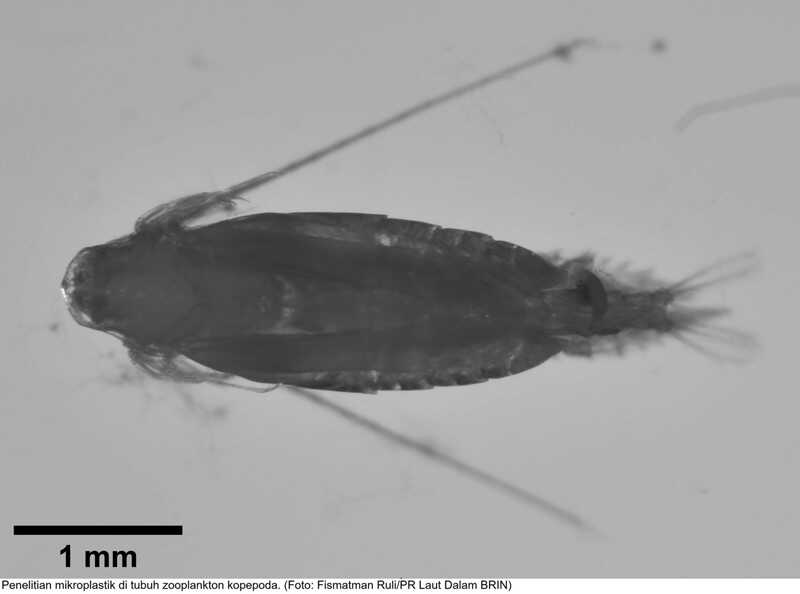
Darilaut – A study by the National Research and Innovation Agency (BRIN) in collaboration with an international team of researchers has found microplastics in the deep sea along the Indonesian Throughflow (Arlindo) pathways. In the study published in the journal Sains Malaysiana, under the title “Ingestion of Microplastics in the Planktonic Copepod from the Indonesian Throughflow Pathways” (2024), Corry Yanti Manullang, a senior researcher at the Centre for Deep Sea Research, BRIN, and colleagues found that microplastics have been detected in the bodies of small zooplankton called copepods along the Arlindo pathways. In addition to investigating the distribution of microplastics in the water column, researchers from Indonesia, Malaysia, the United States and China examined whether the particles had entered the marine food chain. Copepods are a highly abundant zooplankton in the sea and an important food source for various fish species. In the study, around 6,000 copepod individuals were analysed from several locations along the Arlindo pathway. The results showed 133 microplastic particles were found in the bodies of these organisms. The average microplastic ingestion rate recorded was about 0.022 particles per individual, or equivalent to one plastic particle in every 45 copepods.