
MGBKI: Constitutional Court ruling supports collegium independence for patient safety
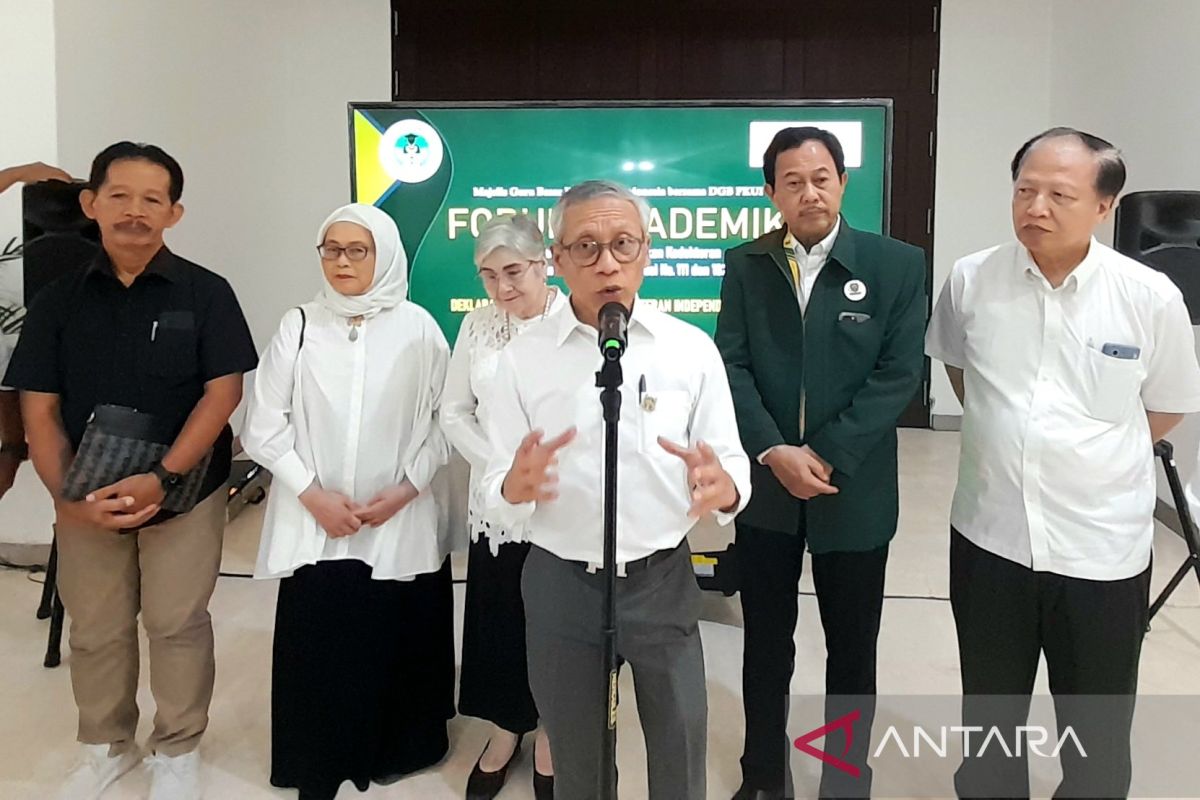
Jakarta — A forum organised by the Indonesian Association of Medical Professors (MGBKI) has promoted the independence of medical collegia following Constitutional Court decisions 111/PUU-XXII/2024 and 182/PUU-XXII/2024 to safeguard patient safety.
Dr Theddeus O.H. Prasetyono, Secretary of MGBKI, stated that the court decisions should form the basis for collegia to establish medical education competence standards, ensuring that future medical graduates practise within their field of expertise in the public interest.
“In practice, collegia maintain the quality of medical education, including curriculum development, competence standards, and medical competence examinations. If competence standards are not upheld, inappropriate medical practice can occur. This must be prevented for public safety,” he said in Jakarta on Friday.
Prasetyono emphasised that declarations of independent collegium formation across various medical disciplines do not constitute resistance to government authority, but rather direct implementation of the Constitutional Court ruling.
“This is not resistance at all. Constitutional Court decisions are self-executing, so they automatically apply and supersede provisions in the tested law,” he explained.
He highlighted historical lessons where medical science under political influence has led to ethical violations, citing the Tuskegee research tragedy in the United States and post-World War II Nuremberg trials.
“In global practice, the medical scientific community has established independent collegium institutions to uphold standards of science and professional ethics,” he said.
Tri Hanggono Achmad, Expert Staff to the Minister of Higher Education, Science, and Technology, emphasised the importance of medical regulatory bodies and collegia in maintaining medical education quality.
According to him, within the medical education system, collegia hold significant positions as they interact directly with medical faculties and study programmes whilst ensuring professional standards remain science-based.
“Independent collegia are essential as science-based bodies that establish competence standards and medical education curricula,” Tri stated.
The Constitutional Court’s decision 111/PUU-XXII/2024 affirmed the importance of maintaining health professional governance that proportionally involves scientific and professional elements.
This decision relates to Constitutional Court decision 182/PUU-XXII/2024, which together reinforced the institutional position of medical regulatory bodies and collegia as part of an independent health professional governance system directly accountable to the President.