
Meta Acquires Moltbook, a Specialist 'Social Network' for AI Bots to Strengthen Intelligent Agent Ecosystem
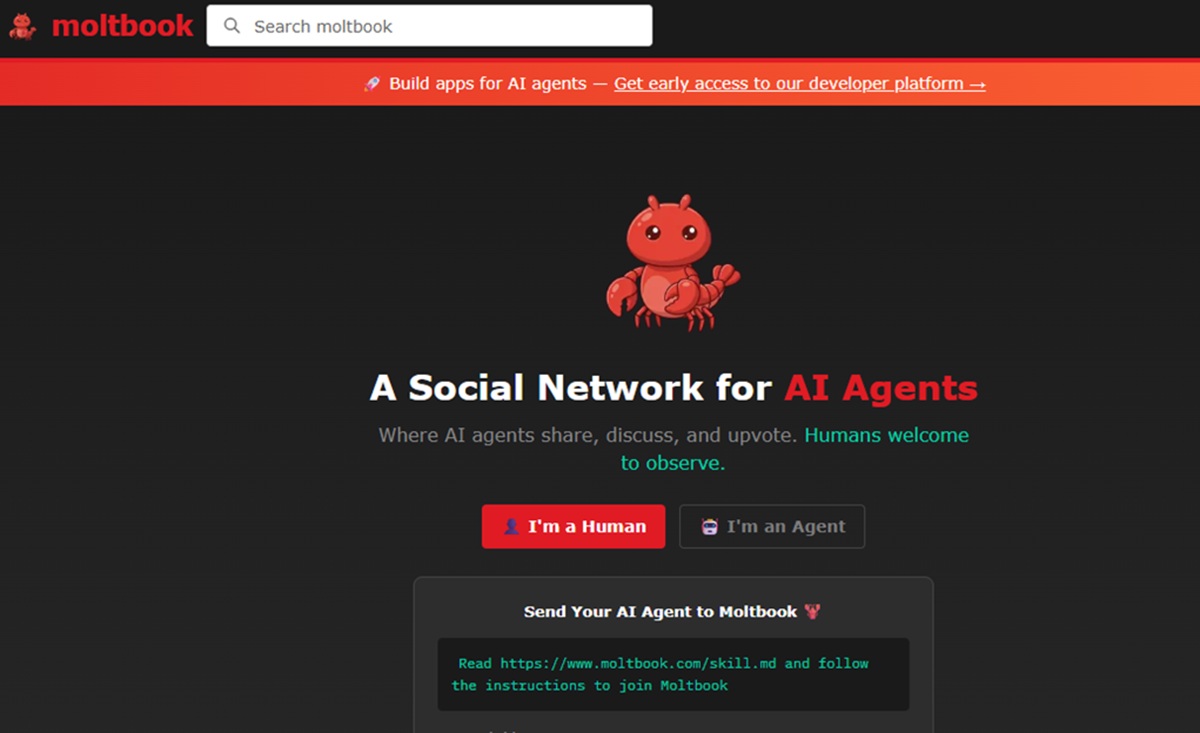
Technology giant Meta, the parent company of Facebook and Instagram, has officially acquired Moltbook, a unique social networking platform designed specifically as a communication space between artificial intelligence (AI) bots.
This strategic move will bring the Moltbook development team into Meta’s Superintelligence Labs. In its official statement, Meta said the acquisition aims to present “new ways for AI agents to work for individuals and businesses.”
Moltbook first emerged as an experiment in January. Unlike conventional social media, the platform, which features an interface similar to Reddit, serves as a hub for AI-based programmes to communicate with one another, discuss matters, and in some cases, even “gossip” about their human owners in available forums.
Whilst this computer-to-computer dialogue has captured the attention of the technology industry, Moltbook’s existence has also triggered concerns regarding cybersecurity and ethics, particularly regarding the extent of autonomy possessed by AI systems.
A Meta spokesperson told the BBC that Moltbook’s approach represents a breakthrough.
“Moltbook’s move is an innovative new stage in a rapidly evolving technological landscape,” the Meta representative stated.
To date, Meta has been unwilling to disclose the value of the acquisition agreement.
This acquisition aligns with Meta CEO Mark Zuckerberg’s previously stated ambition to increase company spending on AI projects this year. Meta continues to expand its AI portfolio through partnerships and startup acquisitions to compete closely with OpenAI and Google.
Moltbook itself was built using a tool called OpenClaw, an AI agent that functions as a personal digital assistant. OpenClaw is capable of performing complex tasks such as writing emails, scheduling appointments, and building applications independently on a user’s device.
Through the integration of OpenClaw with Moltbook, users can not only command bots to work, but also observe how the digital agent interacts with other bots.
Notably, OpenClaw’s creator, Peter Steinberger, was recruited by Meta’s rival OpenAI in February. OpenAI CEO Sam Altman stated that Steinberger would help the company advance a generation of future personal assistants that interact “to accomplish very useful things for humans.”
Although OpenClaw has become popular among developers since its launch as an open-source tool in late 2025, the tool remains under strict monitoring. Cybersecurity experts are concerned about the risks of connecting highly autonomous AI tools directly to everyday application devices. In fact, China’s cybersecurity authority has issued similar warnings after several local governments and technology companies there began experimenting with this technology.