
MES DIY: Jogokariyan Mosque Management Legacy of Ustadz Jazir Becomes Inspiration for Sharia Economy
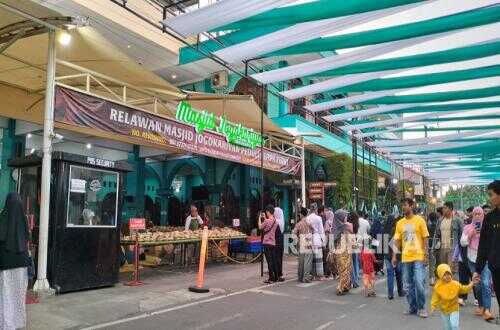
The Islamic Economics Society (MES) of Yogyakarta Special Region has stated that the management model of Jogokariyan Mosque, pioneered by the late Muhammad Jazir ASP, has become an inspiration for developing community-based Islamic economic development. The General Chairman of MES DIY, Edy Suandi Hamid, explained that one of Ustadz Jazir’s important legacies was the implementation of transparent and trustworthy mosque financial governance.
“The late figure proved that Islamic economics does not only exist in books and regulations, but can grow genuinely within communities through mosques,” said Edy Suandi Hamid during the posthumous award ceremony at the Bank Indonesia Regional Office in Yogyakarta on Friday (27 February 2026).
Edy stated that mosque financial reports were disclosed openly to the congregation, thereby fostering trust and increasing community participation. He added that Ustadz Jazir also introduced the principle of managing charitable donations so they would not remain idle without benefit.
“Funds must move, circulate, and empower the people. Charitable donations must return to the congregation in the form of real programmes needed by the community,” said Edy.
Based on this principle, Ustadz Jazir developed various mosque-based economic empowerment programmes, including rice ATMs for disadvantaged residents, Ramadhan bazaars and markets to mobilise micro and small enterprises belonging to congregation members, community catering businesses, and progressive endowment development.
In recognition of these contributions, MES DIY awarded the late Muhammad Jazir ASP the title of Innovator and Conceptor of Mosque Management. “This award is not merely a symbol. It is recognition of his dedication, integrity, and courage in presenting a grounded Islamic economic model,” he said.
A representative of Ustadz Jazir’s family, Haidar, conveyed that Ustadz Jazir often referred to Jogokariyan Mosque and the surrounding village as a laboratory of civilisation. “Jogokariyan Mosque is a laboratory of civilisation, used to test whether Islamic values can be practised such as building mosque economics,” said Haidar.
Meanwhile, Deputy Head of the Bank Indonesia Regional Office in Yogyakarta, Hermanto, described the role of the Islamic Economics Society as fairly central in driving the development of national Islamic economics, covering Islamic industry, Islamic finance, and Islamic financial literacy. According to him, Bank Indonesia has drafted a blueprint for Islamic economic development as part of strengthening inclusive economics.