
Merauke Environmental Activist Backs Papua Food Estate Project
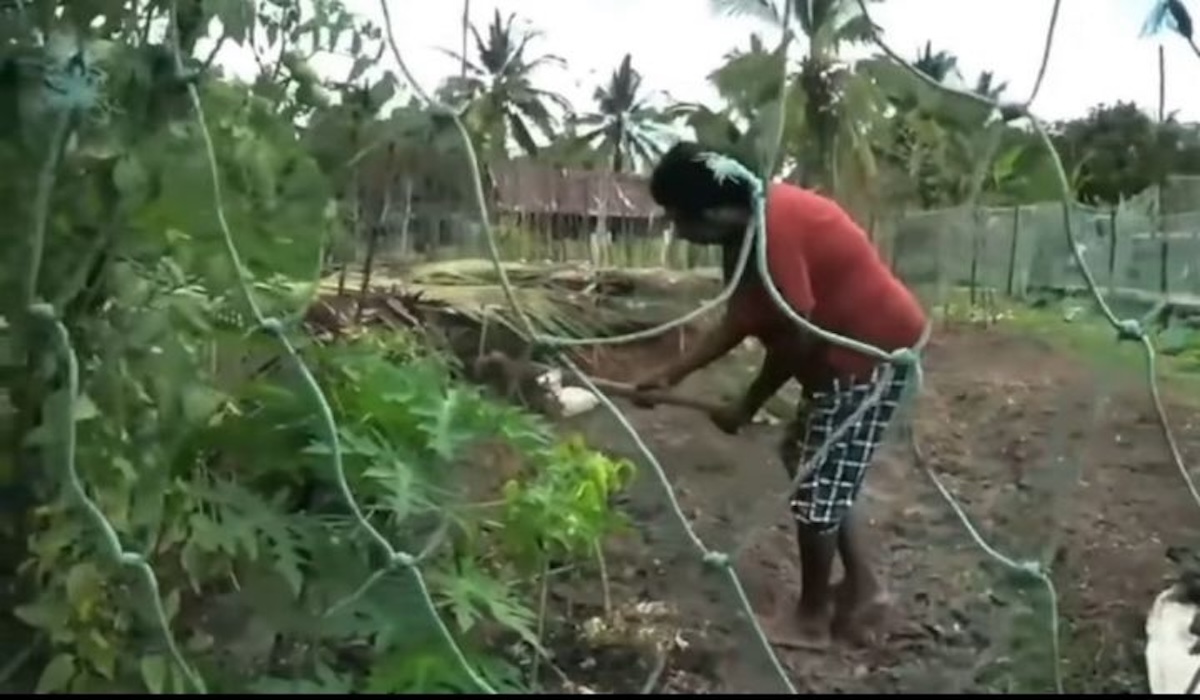
Merauke indigenous woman Yasinta Moiwend, known as Mama Sinta, has unexpectedly voiced support for the food estate program in South Papua. The environmental activist stated she has left the legal aid group that had been opposing the National Strategic Project (PSN).
Mama Sinta said her decision was driven by her family’s economic needs and her deteriorating living conditions. She hopes that by supporting government initiatives, her children can find employment and her home can be renovated.
‘I am no longer with their legal aid organisation; I have made my own decision. I want to find work at a company to get my house repaired as it is no longer habitable,’ Mama Sinta said in a statement on Sunday (24 May).
She admitted she was previously invited by the Marind indigenous group and a legal aid organisation to oppose land clearing. However, she felt her concerns were exploited without tangible benefits for her welfare. After six months of accompanying protests all the way to Jakarta, she said she only experienced exhaustion.
‘I am truly sorry, but it was not my choice—it was due to their invitation. I did not know what would happen in the future or if they would help with housing or employment for my children, but nothing came of it,’ she said while showing her kitchen, which now relies on firewood.
Mama Sinta now places her hopes on collaboration between the government, companies, and local communities. ‘Our hope is through the government working with companies and the community, which is why we support it,’ she added.
On the other hand, the legal aid group has responded differently. Villarian, also known as Juple, a researcher at Pusaka Bentala Rakyat, denied the claim of a change in stance, stating they remain committed to opposing the PSN in South Papua alongside indigenous communities.
‘There is no such thing; this needs clarification. Where did this information come from? Mama Yasinta is with us and committed to continuing opposition to the PSN in South Papua,’ Juple said.
This discrepancy in statements has sparked new dynamics in the implementation of the Food Estate project in Merauke, which is projected to strengthen national food security and infrastructure in eastern Indonesia.
Paulus Waterpauw, a member of the Special Autonomy Acceleration Development Executive Committee, stressed that development orientation in Papua must undergo a paradigm shift.
Several civil society figures held a screening and discussion of the film ‘Pesta Babi’ in Jakarta on Wednesday (20 May).
Over the past eight years, deforestation in indigenous areas has continued, leading to severe environmental damage such as landslides and flash floods.
According to Yusril, this pattern indicates that the dissolution or cessation of film screenings was not a directive from the government or central law enforcement authorities.
Resolving conflicts in Papua requires a combination of three approaches: massive development, security guarantees, and social justice.