
Menwa Is More Than Mere Drill Formations—When Senior Members Are Not Forgotten
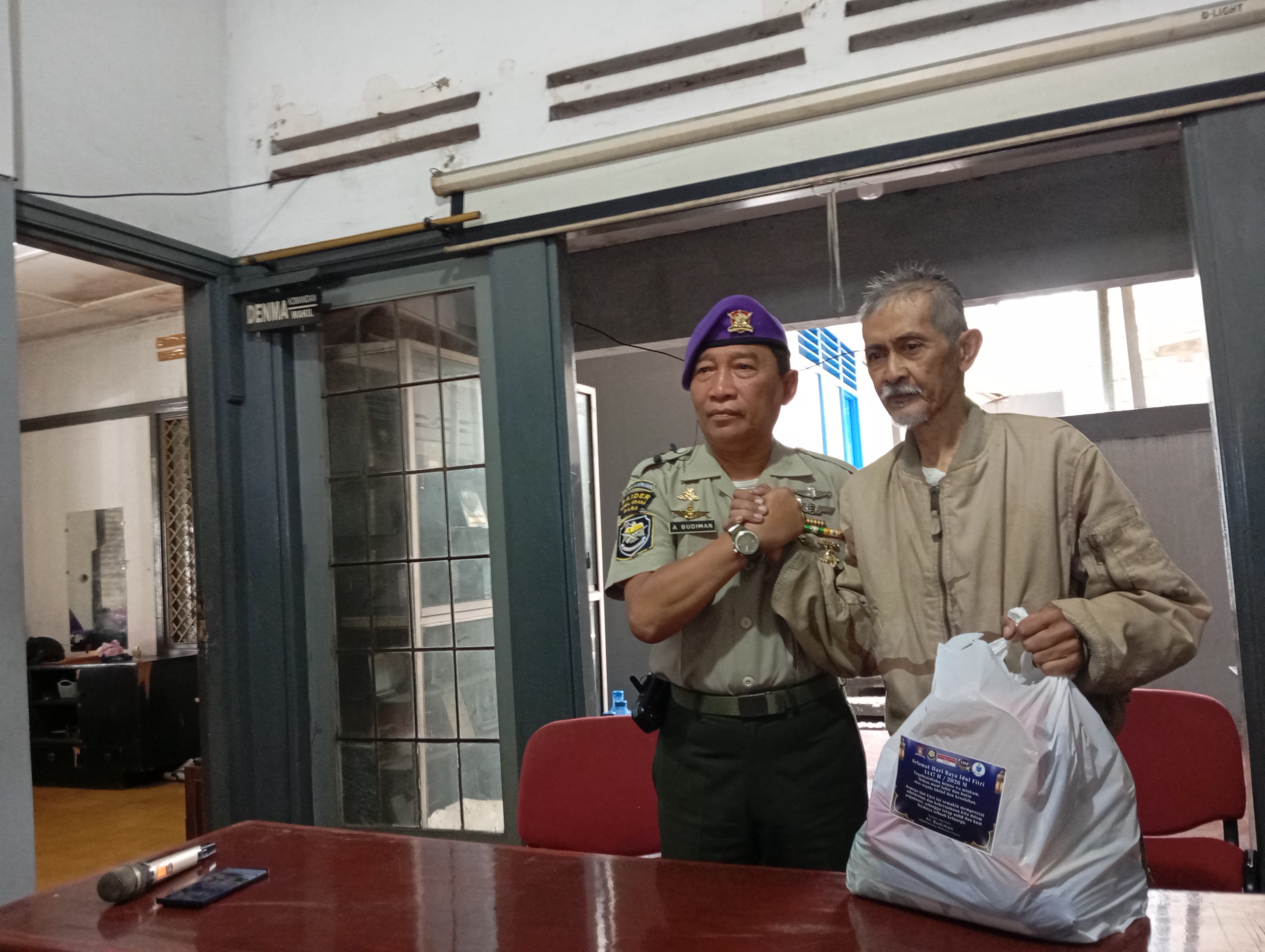
Amidst the hustle and bustle of the mudik migration season that was beginning to congest Bandung, a different atmosphere prevailed at the Menwa Mahawarman Headquarters on Jalan Surapati on Tuesday (17 March). Rather than drill formations or formal ceremonies, a warm intergenerational meeting unfolded, bringing together young members and elderly seniors who are now advancing in years.
The Student Regiment (Menwa) Mahawarman West Java chose a simple yet meaningful approach: distributing social assistance to senior members and families facing economic difficulties. For them, this was not merely a routine agenda, but a way of honouring the memory that this organisation was built upon the sweat and sacrifice of previous generations.
Menwa Mahawarman West Java Commander Ali Budiman, an alumnus of the Bandung Institute of Technology (ITB), noted that many former members have now reached advanced age, with some living in straitened circumstances. Among the aid recipients were widows of deceased members who remained part of the Mahawarman family.
“This is a form of our respect. Some alumni have succeeded, and today they are sharing back with the extended family,” said Ali.
Initially, the assistance was planned to be delivered directly to recipients’ homes. However, on-the-ground realities proved otherwise. Personnel constraints—as some members had already departed early for mudik—combined with increasingly severe traffic congestion, prompted the committee to centralise the activity at the headquarters.
Rather than becoming an obstacle, this decision created a rare meeting space. The elders present engaged in friendly conversations with younger members. There were no generational barriers, only stories—of intensive training days, campus dynamics, and fragments of shared historical experiences.
A Major Organisation
Behind the familial atmosphere lay an interesting fact: Menwa Mahawarman is no small organisation. Each year, it recruits approximately 150 to 200 new members. Over the past decade, the number of active members has reached 2,000 people, whilst total alumni are estimated to number between 4,000 and 5,000 people.
However, Mahawarman’s strength lies not merely in numbers. There is a long historical legacy that is still preserved. The organisation is a continuation of the Indonesian Student Army, part of the nation’s struggle’s pulse in the past.
Ali recalled that in 1964 Menwa was formally established as a response to the geopolitical situation, including the Dwikora confrontation. Indeed, their headquarters on Jalan Surapati once witnessed critical events during the turmoil of the G30S/PKI incident. At that time, Battalion 1 from ITB reportedly received weaponry directly from General A.H. Nasution.
Today, this historical legacy remains preserved. The Pataka Dhuaja, a symbol of heritage from the Student Army, is kept under strict security. Only a replica is visible at the headquarters, whilst the original is guarded as evidence of the organisation’s long journey.
At 62 years old, Menwa Mahawarman demonstrates that loyalty does not end when active service concludes. Rather, it is at that point that solidarity is tested.
Amidst many organisations busy building their image, Mahawarman chooses a quieter path. Preserving memory and ensuring one simple thing: no senior member is forgotten.