
MenPPPA Highlights Challenges in Expanding Women's Access to Healthcare
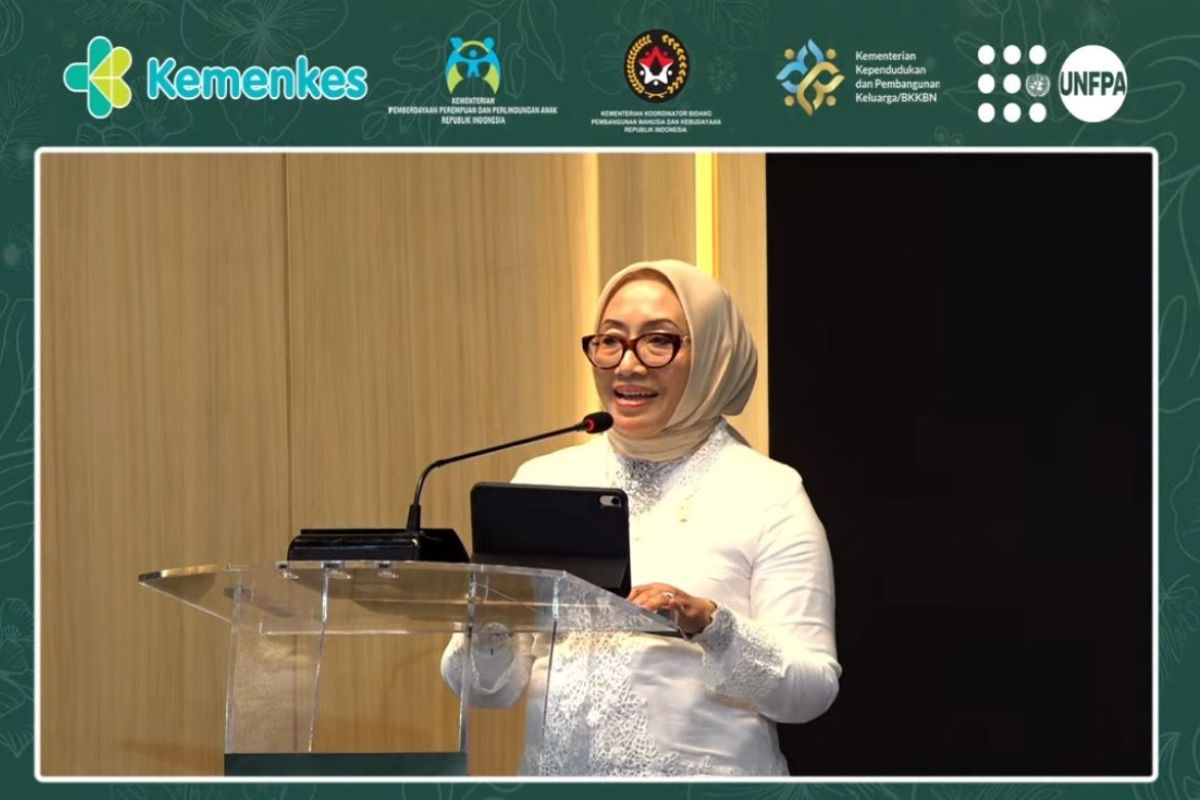
Jakarta (ANTARA) - Minister for Women’s Empowerment and Child Protection (MenPPPA) Arifatul Choiri Fauzi stated that several issues related to women’s healthcare services need to be addressed collectively, from discrimination-free services to integration with violence protection systems.
She noted that enhancing women’s healthcare services is crucial because women can determine the quality of future generations. She exemplified that stunting cases are not only about baby births but also about maintaining the mother’s health during pregnancy.
“Mental health is also a concern, as information we have indicates that 10 percent of the world’s and Indonesia’s population is currently experiencing mental health or psychological disorders,” the MenPPPA said at the National Women’s Health Forum 2026 themed No Woman Left Behind, in Jakarta on Wednesday.
From the various actions that need to be taken, she said the first is to ensure women’s healthcare services that are friendly, safe, and free from discrimination.
Secondly, she said, to strengthen prevention and early detection efforts for diseases at every stage of life. Thirdly, to expand access to services for women in underdeveloped, frontier, and outermost regions (3T) and vulnerable groups.
“The fourth is to integrate healthcare services with violence protection systems, strengthen mental health services for women and adolescents, and increase health literacy so that women can make the right decisions for themselves and their families,” she stated.
Arifah said that the forum serves as a strategic collaboration space that positions women as the main actors in health development.
On the same occasion, Deputy Minister for Population and Family Development Ratu Ayu Isyana Bagoes Oka stated that health policies must be responsive and equitable, as not all women face the same conditions.
“Let us ensure that every Indonesian woman, wherever she is, has equal rights to a healthy life, quality services, and a resilient future, so that no woman is left behind in access to healthcare, information, and protection,” Isyana said.
Head of the Health Development Policy Agency (BKPK) Asnawi Abdullah stated that prior to the National Women’s Health Forum, his agency had gathered aspirations from women and found high attention to mental health and protection from violence.
“Followed by topics on reproductive and maternal health, disease prevention and early detection for women, and equitable access and protection for vulnerable groups,” he said.
His agency opens wide participation spaces for all parties to provide input and contribute.