
Menekraf: Creative Economy Needs Data-Based Management
Jakarta (ANTARA) -
The Minister of Creative Economy (Menekraf)/Head of the Creative Economy Agency, Teuku Riefky Harsya, has stressed the importance of data-based policies in developing the creative economy sector, which is seen as having great potential as a new source of growth.
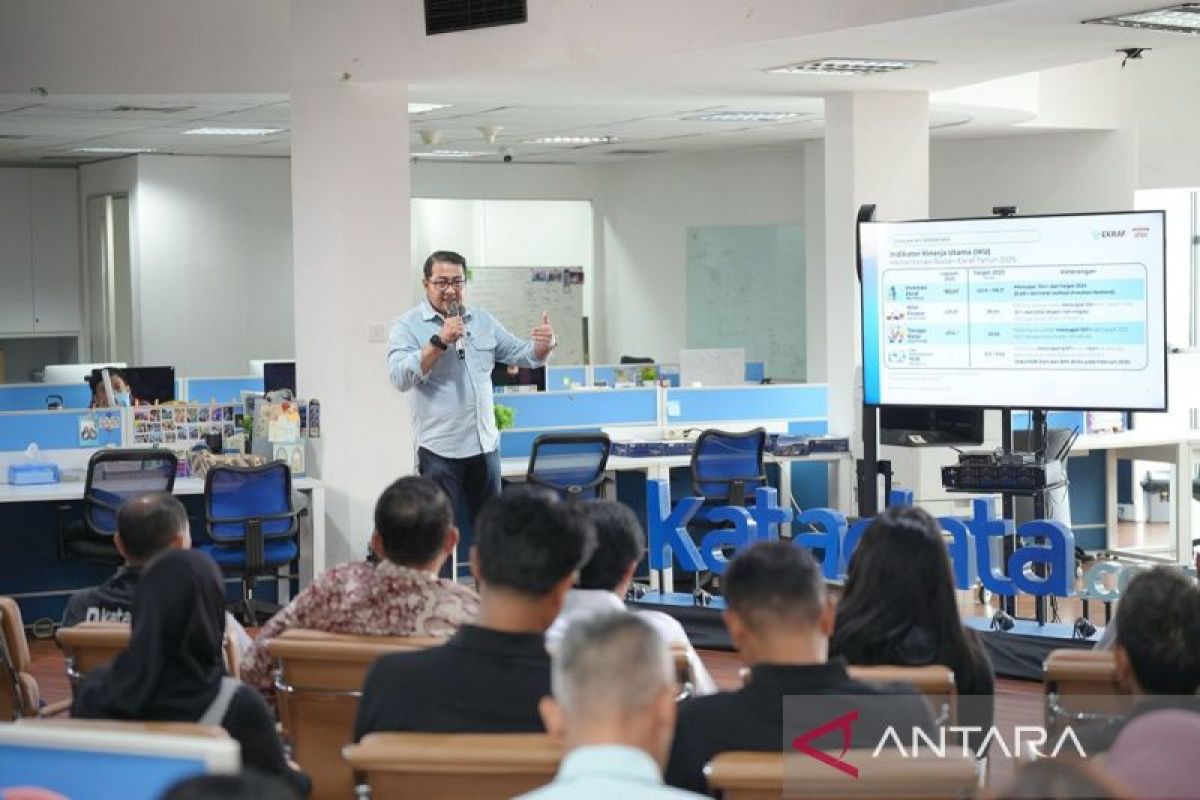
As reported from the official broadcast of the Ministry of Creative Economy on Saturday, this was stated by the Menekraf during a visit to the Katadata Indonesia office in Jakarta on Friday (27/3), to absorb aspirations from creative ecosystem players, particularly in the media sector.
“The creative economy or creative industry is like the new mining or new mine that is spread throughout the regions and must be managed together,” said Teuku Riefky.
He mentioned that the government under the direction of President Prabowo Subianto views the creative economy sector as a new engine for national economic growth.
According to him, a data-based approach is key in formulating policies and strategies for developing the 17 creative economy subsectors to make them more targeted.
“The potential of the data-based creative economy for accelerating growth is very large. Collaboration with Katadata is very relevant for compiling data-based policies,” he said.
On that occasion, the Menekraf also outlined the ministry’s main performance indicators, including the realisation of creative economy investments reaching Rp183.01 trillion or 134 percent of the 2025 target.
In addition, the creative economy’s gross domestic product (GDP) growth in 2024 was recorded at 6.57 percent, exceeding the national economic growth of 5.03 percent.
Meanwhile, Co-founder of Katadata, Metta Dharmasaputra, said that her side is committed to supporting the strengthening of the creative economy ecosystem through the provision of research-based data and communication.
She assessed that the future of Indonesia’s creative economy depends on a collaborative ecosystem supported by data, research, and strong narratives.
“We believe the future of Indonesia’s creative economy rests on a collaborative ecosystem supported by data, research, and strong narratives,” said Metta.
Katadata also outlined several strategic initiatives, from strengthening data insights, organising cross-regional forums, to promotional support for MSME players in various creative economy subsectors.
In the discussion, the government and Katadata also discussed cross-sector collaboration potential, including strengthening support for MSMEs, developing intellectual property, and utilising data in policy formulation.
The Ministry of Creative Economy and Katadata agreed to promote the role of data as a foundation in strengthening the creative economy as one of the main drivers of national economic growth.