
Melly Goeslaw Proposes Including Creative Economy in the National Education System Bill
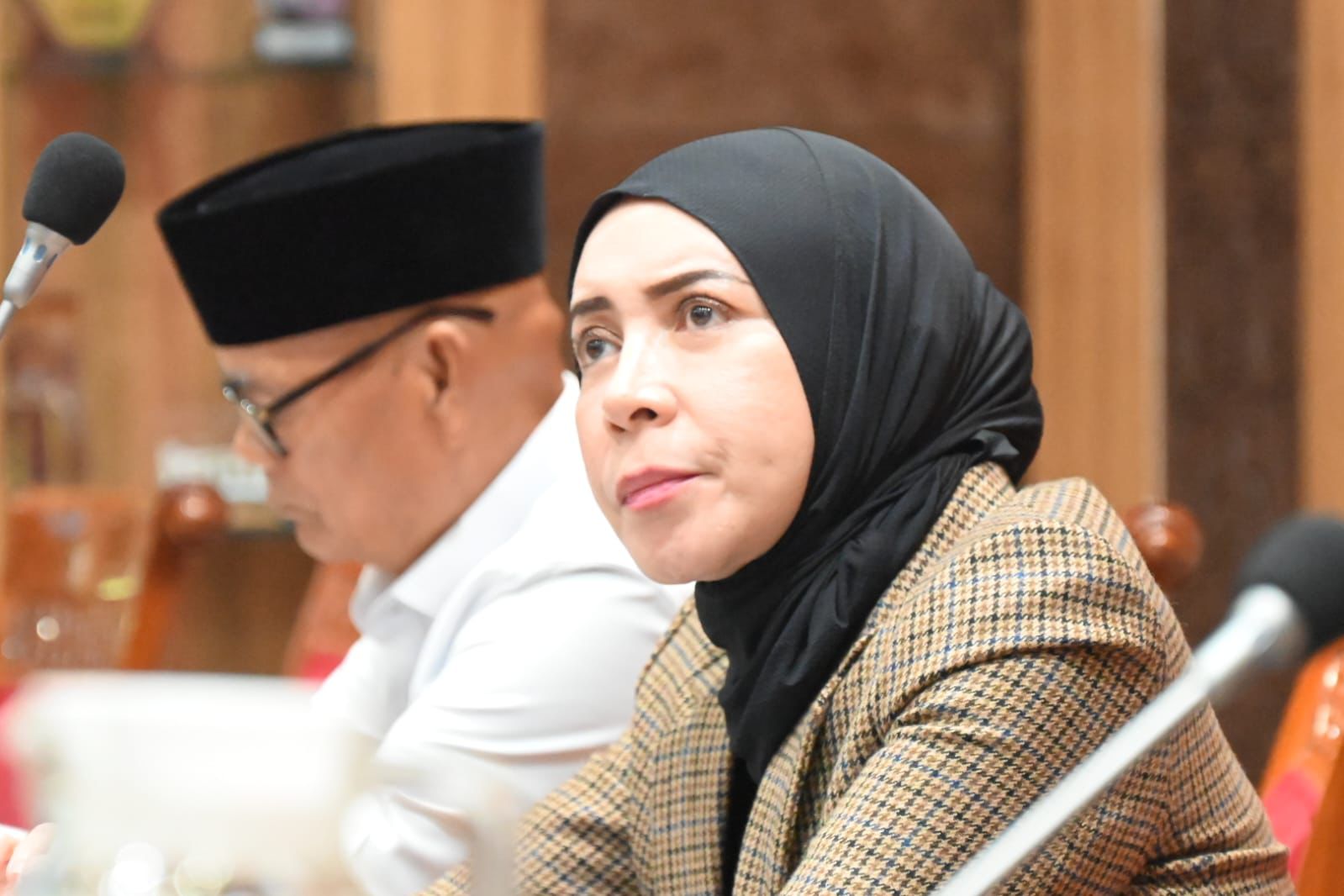
Member of the House of Representatives Commission X, Melly Goeslaw, has proposed that the National Education System Bill (RUU Sisdiknas) provide a flexible legal basis for schools to add, reduce, and adjust the structure of subjects in line with developments in the era, technology, industry needs, and social changes in society.
The proposal focuses on the importance of providing space for the creative economy, digital entrepreneurship, content development, creative design, technology-based businesses, and creative ethics to be introduced starting from junior high school to senior high school/vocational high school levels.
According to Melly, national education can no longer be rigid and solely oriented towards conventional knowledge transfer, but must also be able to capture new fields that represent the future for the younger generation and sources of national economic growth.
“Schools must become spaces that encourage children to dare to try, dare to fail, and dare to learn from mistakes. A healthy risk-taker character is actually born from creative education,” she stated on Thursday (9/4/2026).
The creative economy material is proposed to be present as a subject, elective content, or integrated into intracurricular, cocurricular, and extracurricular activities according to the characteristics of the educational unit.
In addition to preparing future competencies, creative education is also considered to have an important impact on stimulating student brain development, courage in decision-making, and the ability to solve problems innovatively.
Melly views that space for creativity in schools can become an important instrument for shaping children to be more resilient, confident, and have hope for their future.
“Instead of children feeling pressured without space for expression, creative education can actually become a path to finding solutions, building self-confidence, and seeing failure as a learning process.”
She added that learning the creative economy from an early age will provide a foundation so that students are not only able to produce innovative works and businesses, but also understand morals, ethics, social responsibility, and contributions to the national economy.
“This approach is also in line with practices in various advanced countries that incorporate entrepreneurship, design, innovation, and creative industries into secondary school curricula as a strategy to prepare future generations,” she explained.
Thus, she hopes that the RUU Sisdiknas will not only regulate education as an academic process, but also as an ecosystem for forming productive, creative, resilient generations capable of becoming problem-solvers for the nation.