
Melasti ceremony at Kuta Beach captivates tourists
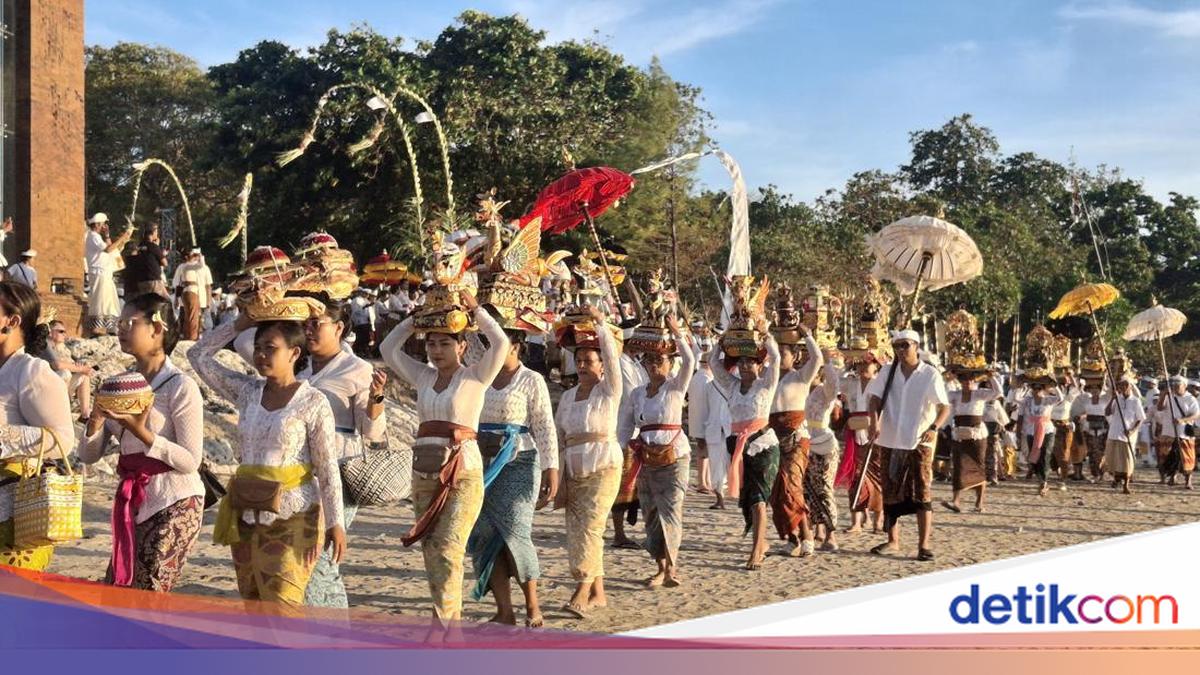
The Melasti ceremony held by Kuta Traditional Village at Kuta Beach drew considerable attention from tourists. Many visitors flocked to witness the ritual purification procession that forms part of the lead-up to the sacred Nyepi day.
Among them were Jane, 45, and Chelsea, 37, Canadian tourists on a two-week holiday in Bali. Upon visiting Kuta Beach, the two happened upon the Melasti procession taking place.
Both said they were already aware of Nyepi, yet were unaware of the ceremonial preparations preceding Nyepi, such as Melasti.
“We know about the Nyepi tradition, but we didn’t know there was a ceremony like this,” said Jane on Monday, 16 March 2026.
This was their second visit to Bali. However, it was the first time they directly witnessed the Melasti procession. According to them, the atmosphere of the ceremony felt very peaceful and beautiful.
“It is very peaceful and beautiful,” she said.
From the start of the procession, they said they were captivated, particularly towards the end of the event when they saw a parade of community members walking together towards Pura Desa Adat Kuta while carrying various ceremonial offerings on their heads.
“When all the groups gathered and walked together carrying something on their heads,” said Chelsea.
A similar sentiment was expressed by Ogi, 35, a man from Jakarta who works in Bali. Although he has lived in the Renon area for five years, he said it was his first time witnessing the Melasti procession directly and that he felt fortunate.
“Well, I’ve been living here for a long time, but this is the first time I’ve had the chance to see Melasti up close, and it’s really exciting,” he said.
According to him, the Melasti procession felt very solemn as each traditional village carried their own offerings before returning to their respective areas.
“It was very moving that each traditional village brought their own offerings and then returned to their own places – that was really cool,” he said.