
Melasti Ceremony 2026 held on 18 March, dress code rules for tourists
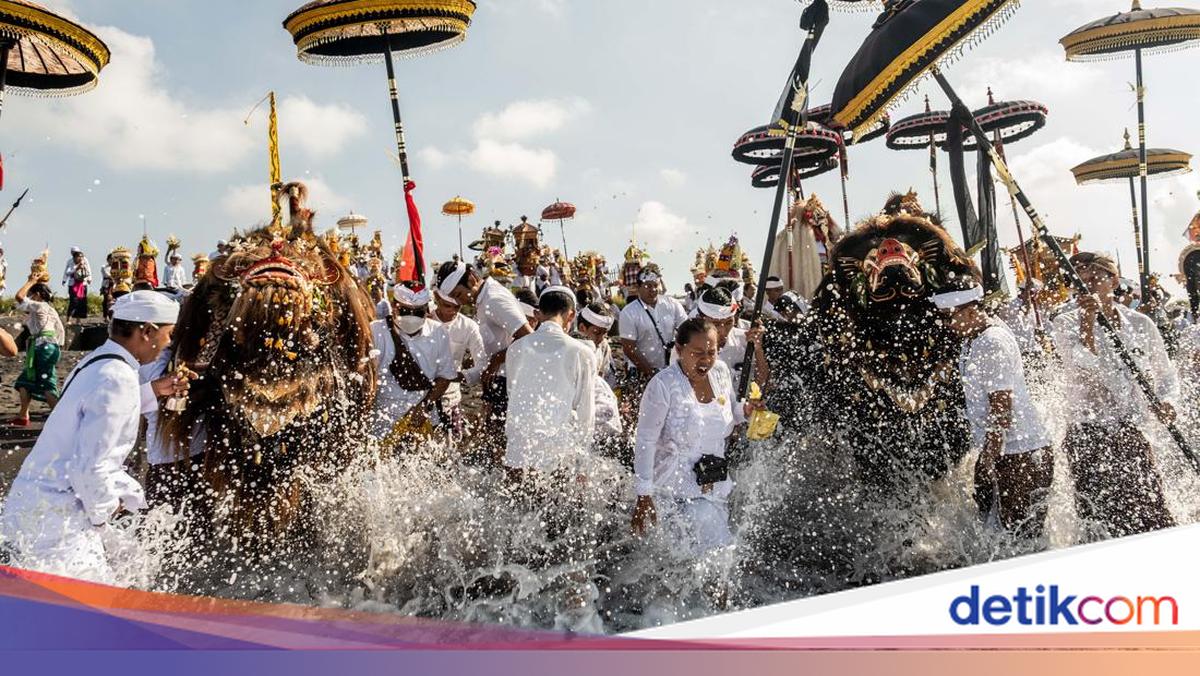
The Nyepi holiday marking the Saka Year 1948 will be observed on 19 March 2026. For Hindus, Nyepi is a sacred day symbolising peace and quietude through the observance of Catur Brata Penyepian as a form of self-reflection.
One day before Nyepi, there are several spiritual traditions as part of holiday preparation. One of these is the Melasti Ceremony, a purification ritual of self and the cosmos performed to cleanse all negative elements.
This tradition rich with meaning has also become an attraction for tourists visiting Bali. However, before witnessing the Melasti procession, tourists must understand several dress code rules that must be observed as a form of respect for Hindus who are worshipping.
When is the 2026 Melasti Ceremony?
Nyepi will be observed on Thursday, 19 March 2026. In advance of this sacred day, Hindus will perform several rituals, including the Melasti Ceremony. This tradition is usually held one day before Nyepi, on Wednesday, 18 March 2026.
For tourists wishing to witness the Melasti procession directly, the ceremony is typically held at several points along beaches in the Denpasar area and its surroundings. Some common venues include Mertasari Beach in Sanur Kauh and Segara Sanur Beach.
However, tourists are still advised to seek the latest information regarding the specific locations and times of the ceremony.
Dress Code Rules for Tourists During the Melasti Ceremony
During the Melasti Ceremony, Hindus typically wear white traditional clothing symbolising purity and cleanliness. Therefore, tourists wishing to witness this procession are expected to respect the sacred value of the ceremony by wearing neat and modest dress, covering areas such as shoulders and knees.
Several dress code guidelines recommended for tourists are as follows:
• Female tourists should avoid clothing that is open or too short. It is recommended to wear a kain and selendang or kamen (Balinese traditional lower garment) wrapped around the hips.
• Male tourists are advised to wear a sarong wrapped around the waist and wear an udeng on the head.
• Avoid clothing with excessively bright colours.
• Wear modest and comfortable footwear.
• Maintain a neat, simple and unexaggerated appearance.
These dress code rules are important to understand and implement so as not to disrupt the ceremony. Besides providing comfort for Hindus who are worshipping, tourists are also expected to show respect for local traditions, ancestors, and culture.
This concludes the information regarding the 2026 Melasti Ceremony schedule and dress code recommendations that tourists must observe. We hope this is helpful.