
Melamine Factory in JIIPE Drives Low-Emission Chemical Industry
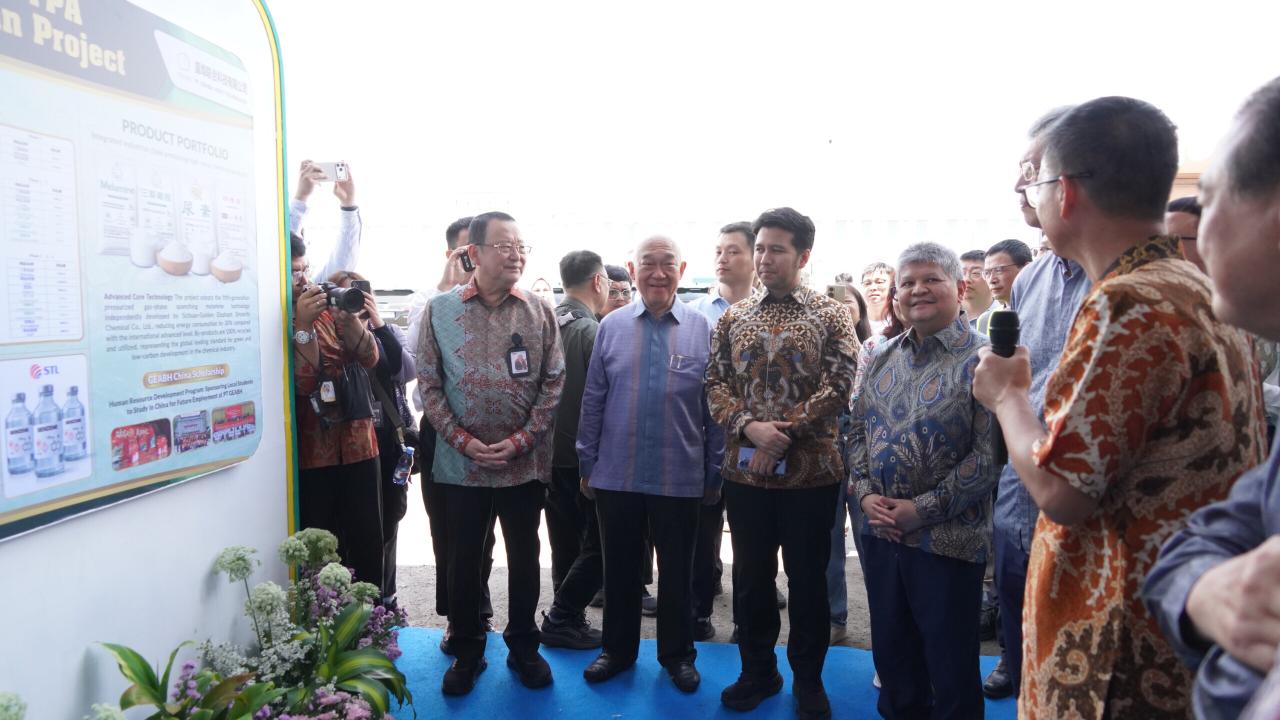
The government faces a policy dilemma with no truly comfortable options. The development of a melamine factory worth approximately US$600 million in the Java Integrated Industrial and Port Estate (JIIPE) special economic zone in Gresik has commenced. The factory is expected to strengthen the national chemical industry structure while promoting the development of low-emission industries in Indonesia. This project, developed by Golden Elephant (GEABH), is one of the largest melamine facilities in the world and is designed to be integrated from upstream to downstream, starting from processing natural gas into ammonia, urea, and melamine. Coordinating Minister for the Economy of the Republic of Indonesia, Airlangga Hartarto, stated that the construction of this facility is part of the national strategy to increase the value added of domestic resources while strengthening industrial competitiveness. “The development of the melamine industry in Gresik is a strategic step in strengthening national downstreaming. We appreciate the role of the Gresik SEZ in providing an integrated industrial ecosystem,” Airlangga said in an official statement. The development of this project aligns with the government’s efforts to strengthen the industrial base based on natural resources, while supporting the transition to more efficient and sustainable industries. Chairman of Golden Elephant (GESC), Lei Lin, conveyed that this project adopts a circular economy-based chemical industry approach with support from the latest generation process technology. “We see JIIPE as a strategic zone to bring an integrated chemical industry chain based on a circular economy in Indonesia,” said Lei. The project is considered not only to strengthen domestic industry supplies but also to encourage technology transfer and cross-country industrial cooperation. He added that the application of this technology enables energy efficiency up to 30% lower than global industry standards, as well as optimisation of by-product utilisation through recycling processes, thereby supporting the development of low-carbon chemical industries. Director of PT Berkah Kawasan Manyar Sejahtera (BKMS)-JIIPE, Bambang Soetiono, emphasised that JIIPE’s advantage lies in its integrated zone that can support operational efficiency and industrial sustainability. JIIPE, he said, is designed to support the industrial value chain end-to-end, from raw material availability, infrastructure, to logistics connectivity. “This enables higher efficiency while strengthening sustainable industrial competitiveness,” he stated. Ambassador of the People’s Republic of China to Indonesia, Wang Lutong, assessed that this project will strengthen chemical industry resilience and become an important milestone in economic cooperation between the two countries. The development of the melamine industry chain in JIIPE is believed to strengthen the supply of strategic chemical products, support Indonesia’s industrialisation, and provide positive contributions to regional economic growth. With integrated infrastructure support, including a deep-sea port, and its status as a special economic zone, JIIPE is considered to have a strategic position in driving the development of industries based on energy efficiency, value added, and sustainability. The project is also projected to create more than 1,000 jobs and encourage the strengthening of upstream and downstream industrial ecosystems, including the agriculture, manufacturing, and logistics sectors.