
Megawati Congratulates Mojtaba Khamenei, Iran's New Supreme Leader
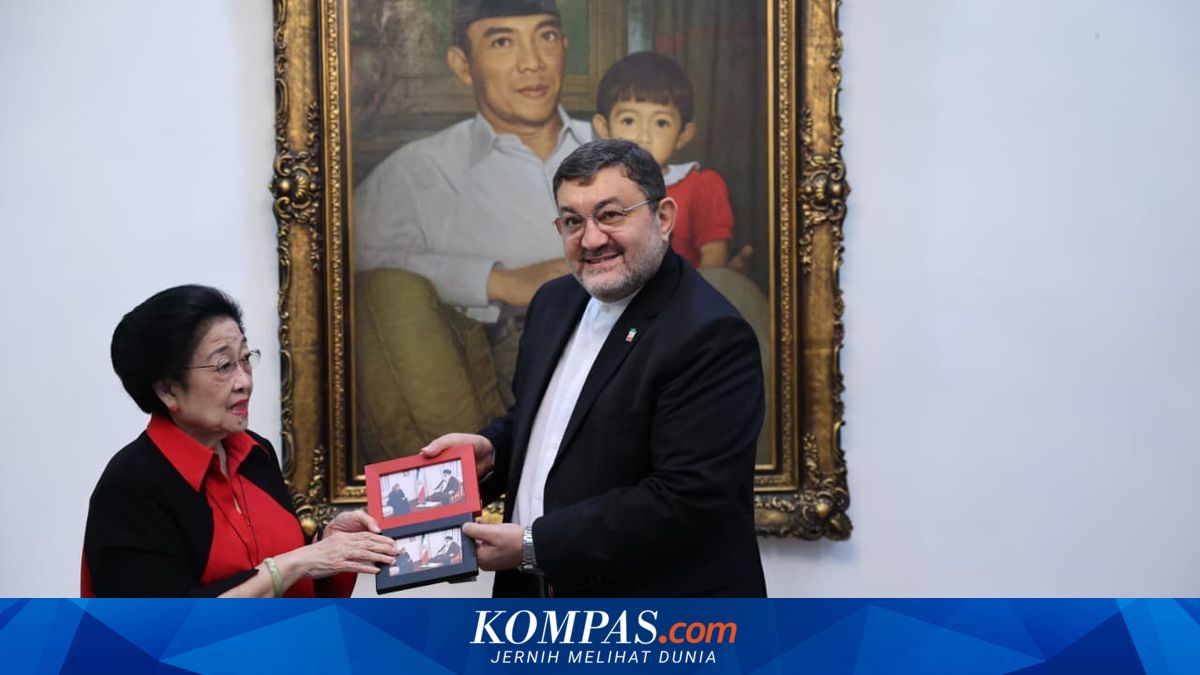
JAKARTA – Indonesia’s fifth President and Chair of the PDI-P party, Megawati Soekarnoputri, conveyed congratulations on the appointment of Iran’s new Supreme Leader, Mojtaba Khamenei, who succeeds the late Ayatollah Ali Khamenei.
Megawati delivered the message whilst receiving the Ambassador of the Islamic Republic of Iran to Indonesia, Mohammad Boroujerdi, at her residence in Menteng, Jakarta, on Tuesday, 10 March 2026. During the meeting, Megawati personally handed over a letter of congratulations to Mojtaba Khamenei through Ambassador Boroujerdi.
“This is the second letter, and I am pleased that Iran now has a leader again,” Megawati said whilst presenting the letter, according to a press statement issued on Wednesday, 11 March 2026.
In addition to delivering the congratulations letter, Megawati also displayed photographs from her visit to Tehran in 2004 and her direct meeting with Ali Khamenei. “This is evidence that I have a friendship with the late Ayatollah Ali Khamenei,” Megawati told Boroujerdi.
The letter contained expressions of deep condolences over the death of Iran’s Supreme Leader Ali Khamenei, following attacks by the United States and Israel on the country.
Iran officially appointed Mojtaba Khamenei as the new Supreme Leader on Monday, 9 March 2026, succeeding his father, Ali Khamenei. The appointment was decided by the Assembly of Experts, an 88-member body of clerics tasked with selecting Iran’s Supreme Leader.
“With a decisive vote, the Assembly of Experts appointed Ayatollah Seyyed Mojtaba Hosseini Khamenei as the third Supreme Leader of the sacred Islamic Republic of Iran,” the institution stated, according to AFP.
In Iran’s political system, the Supreme Leader is not directly elected by the public, but rather appointed by the Assembly of Experts through a voting mechanism. This body consists of senior clerics selected by the public every eight years, though all candidates must first be approved by the Guardian Council.
When the position of Supreme Leader becomes vacant due to death or resignation, the Assembly of Experts immediately convenes to select a replacement through a simple voting process.
According to the Iranian constitution, candidates for Supreme Leader must be experts in Shia Islamic law with deep knowledge of jurisprudence and must be assessed as possessing political acumen, courage, and administrative capacity.
Before Mojtaba Khamenei, only one transition of power in the position of Iran’s Supreme Leader had occurred – when Ruhollah Khomeini, the leader of the 1979 Iranian Revolution, died in 1989 and was succeeded by Ali Khamenei.