
Meet Amanda Askell, the Philosophy Graduate Who is Imbuing AI Claude with Personality
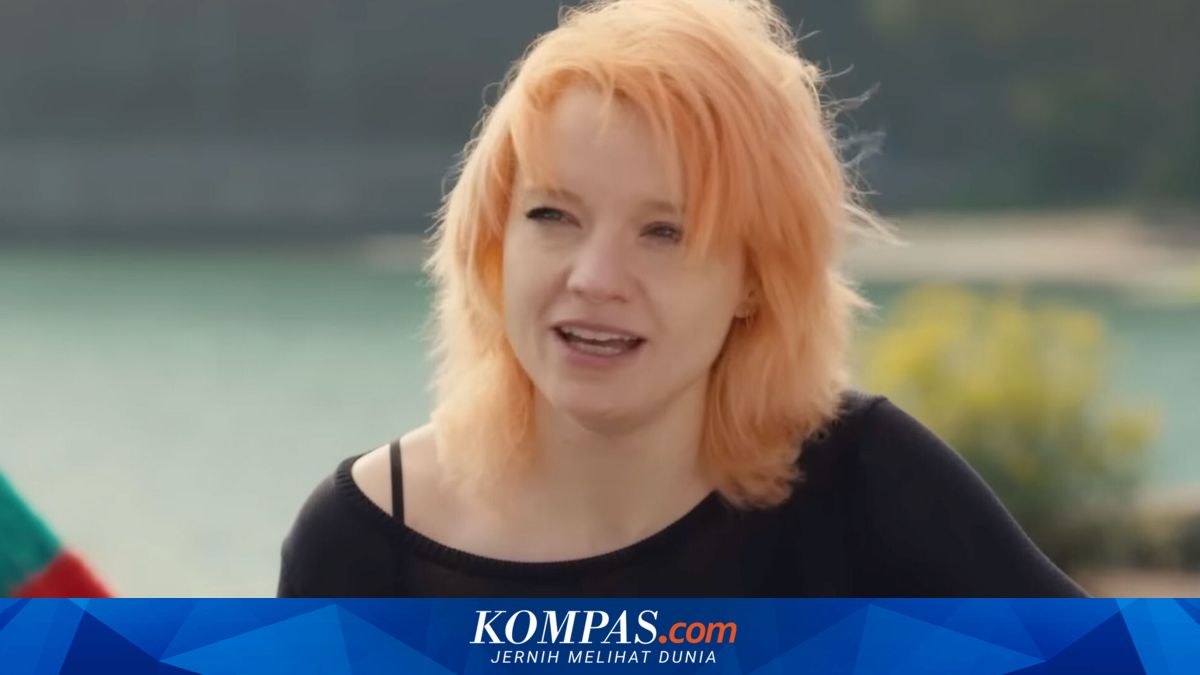
Many tech companies are currently spending vast sums of money simply to create the smartest and fastest artificial intelligence (AI) programs.
Unfortunately, few consider what the AI’s character will be like when it interacts with humans.
This is where Anthropic, the startup behind the Claude chatbot, is taking a different approach. Instead of just focusing on advanced hardware, they specifically hired Amanda Askell, a philosopher from Scotland.
Askell is not a typical Silicon Valley computer engineer who is good at coding. Instead, she was given a very unique and crucial task: to instill “soul”, personality, and a moral compass into Claude.
Through her involvement, Claude has evolved from a mere automatic answering machine into a digital entity with ethics and empathy.
Growing up in Prestwick, Scotland, Askell was raised by her mother, who was a teacher.
Her interest in questions about existence and morality began in her childhood, starting with her hobby of reading the works of J.R.R. Tolkien and C.S. Lewis.
Her educational background is very different from the impression of the world of programming, as summarized by KompasTekno from WSJ.
Askell began her journey by studying art and philosophy together at the University of Dundee, where she became accustomed to painting and contemplating the meaning of life.
Her academic journey continued at the University of Oxford to earn a BPhil degree, and culminated at New York University (NYU), where she earned a PhD.
At NYU, Askell’s thesis discussed one of the most complex areas of philosophy, namely infinite ethics.
She grappled with the question of how morality works when applied to an infinitely large population. Armed with moral philosophy and her ability to embrace ambiguity, Askell eventually stepped into the world of artificial intelligence.
However, as time went on, Askell saw the winds changing at the ChatGPT-making company.
Citing various reports, she eventually decided to resign and leave OpenAI because she was concerned that the company was starting to shift its priorities.