
MediaMIND 2026 Highlights Sustainable Mining Issues
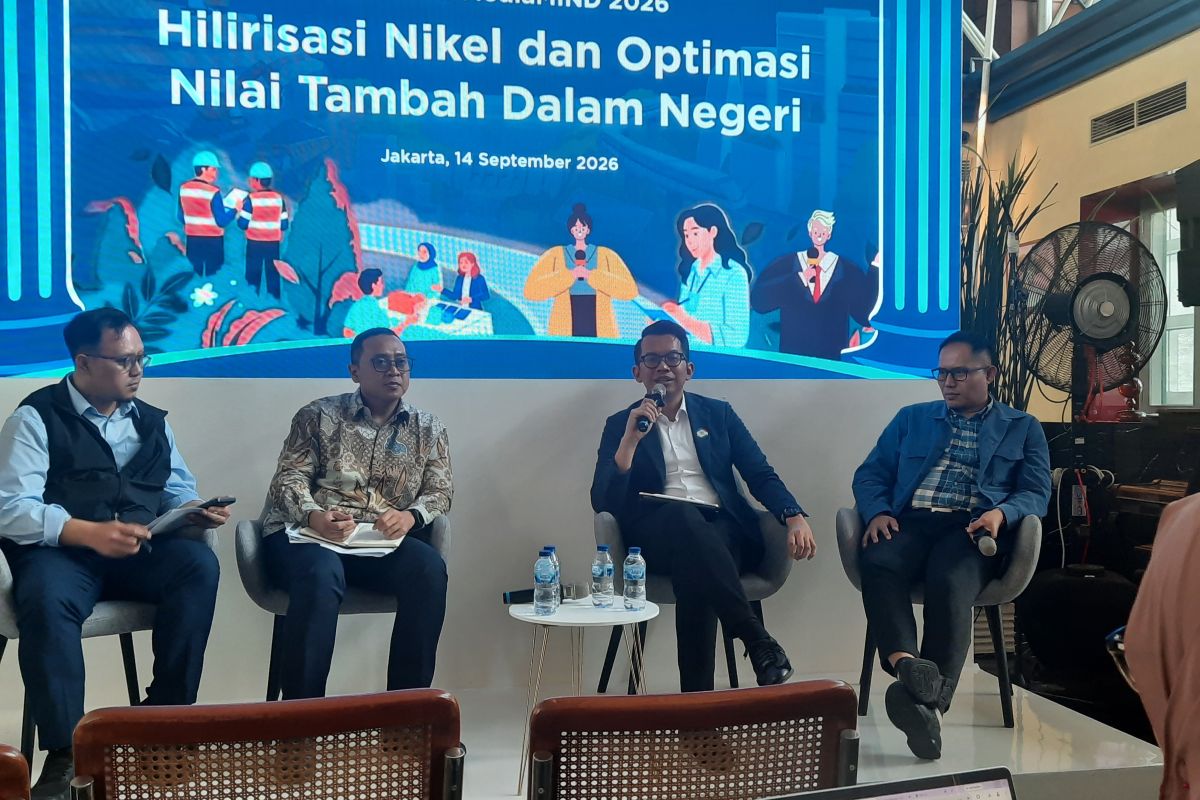
PT Mineral Industri Indonesia (MIND ID) continues to push campaigns regarding sustainable mining practices. This commitment is also one of the key issues raised in the MediaMIND 2026 journalism competition. This year, MediaMIND 2026 carries the theme ‘From the Earth for National Sovereignty’. Through this competition, MIND ID aims to create a space for discussion regarding the mining industry’s contribution, including efforts to implement sustainability principles in business activities.
MIND ID Corporate Secretary, Pria Utama, stated that the mining industry should not be viewed solely as an activity that has a negative impact on the environment. According to him, mining practices need to be carried out by considering economic benefits alongside responsibilities towards the environment and society.
“The mining activities we undertake are beneficial. We do not simply mine, leave, and then destroy the surrounding ecosystem. We have ESG; we understand that we are conducting what we call green mining,” said Pria during the MediaMIND 2026 Socialisation event at the Energy Building, Central Jakarta, on Monday (14/9).
Consequently, several sub-themes raised in MediaMIND 2026 also discuss green mining, the implementation of environmental, social, and governance (ESG) principles, and various other sustainability issues.
The implementation of sustainable mining practices is also highlighted by PT Vale Indonesia Tbk, one of the companies part of MIND ID. Head of Strategy and Business Development at PT Vale Indonesia Tbk, Mateus Sigit Harisulistya, stated that sustainability aspects have now become part of industrial competitiveness.
“Sustainability is a part of competitiveness,” said Sigit.
He cited the processing of nickel ore using High Pressure Acid Leach (HPAL) technology as an example. In his view, although this technology produces lower emissions compared to the pyrometallurgical system, the HPAL process still produces a significant amount of residue or tailings. Therefore, the development of such processing facilities must be carried out with attention to appropriate standards and management.
“But with the right partner, and a commitment to building better, we emphasise to our partners that the HPAL we build must meet international standards. That is what will be implemented, from the engineering phase until we build the HPAL,” he explained on the same occasion.
ESG as a Consideration in the Battery Industry
Meanwhile, PT Industri Baterai Indonesia, or Indonesia Battery Corporation (IBC), considers the implementation of ESG to be a vital necessity in the development of the battery industry. President Director of IBC, Aditya Farhan Arif, stated that attention to sustainability aspects is one of the factors that can influence product competitiveness in the market.
“Without being told, we will certainly be concerned with ESG. Because if not, the product potentially will not sell,” said Aditya at the same event.
According to him, the transition from internal combustion engine vehicles to electric vehicles (EV) indeed has the potential to reduce carbon dioxide emissions. However, this reduction in emissions must be viewed holistically, including the energy sources used in the production process and the operation of electric vehicles.
“In looking at total emissions, we look from upstream to downstream. Not just in one segment like batteries or MHP (mixed hydroxide precipitate); we must look from upstream to downstream. Because the framework used is life cycle assessment,” explained Aditya.
In an effort to reduce overall emissions, IBC is implementing an energy mix in the development of its industrial portfolio.
“That is why IBC is implementing an energy mix in its portfolio. For instance, in our factory in Karawang, we have installed 18 MW of solar PV, and later in our battery material factories, we will also implement a mix with clean energy. This is so that, in total, we can offset emissions overall,” he added.
In addition to the use of clean energy, the company is also developing recycling efforts. According to Aditya, this process is part of the strategy to reduce the emission footprint generated throughout the production chain.
“This is our effort to be competitive in ESG-sensitive markets. Therefore, social and governance issues, in addition to environmental issues, should not become problems because we are part of this SOE. Thus, social and governance aspects are an integrated part of it,” he concluded.
Through the implementation of ESG principles, the mining and downstreaming industries are deemed to need to view sustainability as part of a long-term strategy. From the mining process, mineral processing, battery material production, energy use, to the management of products after their useful life, all stages are part of the effort to build a more competitive industry while paying attention to environmental, social, and governance aspects.