
Meat Crossing Borders
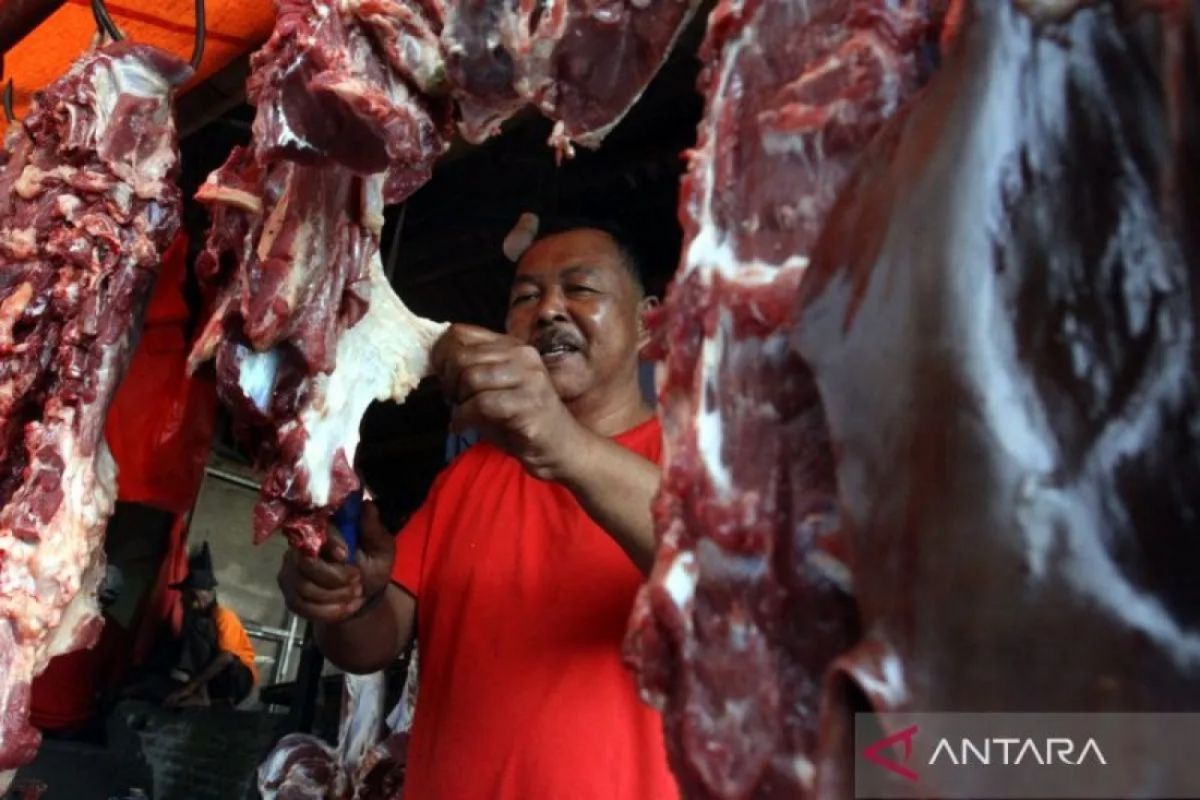
The journey of East Java livestock farmers towards the global market is not merely about selling meat abroad. It is a story of changing mindsets from survival to competitiveness, from local markets to becoming world players.
Surabaya (ANTARA) - In a village corner never truly quiet from the sounds of livestock, a farmer weighs a cow with a gaze full of calculations.
It is not just about weight or selling price in the local market, but about greater possibilities, namely how the results of his rearing one day can cross national borders.
In that simple pen, the direction of the farming business is slowly changing from daily routines to becoming part of the increasingly open global trade flow.
The drive to penetrate international markets is not just ambition. It arises from the reality that global meat demand continues to increase, while Indonesia, which has long relied on imports, has great potential to reverse the situation.
East Java, as one of the national livestock granaries, is now at a crucial point to survive as a domestic supplier or advance to become a global player.
The latest data shows that the strength of the livestock sector in East Java cannot be underestimated. The availability of cattle reaches more than 629,000 head, far exceeding the sacrificial needs of only around 70,000 head.
Surpluses also occur in goats and sheep, each numbering hundreds of thousands of head. These figures are not just statistics, but a strong signal that production capacity has exceeded local needs.
However, surplus numbers are only the entry point. The real challenge begins when the targeted market is the world.
Global Market
The global meat market is not an empty space. It has long been dominated by countries like Brazil and Australia, which have efficient production systems, high quality standards, and mature supply chains.
When East Java declares readiness to supply meat to countries like Saudi Arabia or Malaysia, the standards faced are no longer just about quantity, but quality, consistency, and trust.
This is where livestock transformation becomes important. The development of superior cattle like Belgian Blue through artificial insemination and embryo transfer technology is a real example of how innovation is beginning to be adopted.