
Measuring the Strategic Role of Polri in Food Security in the Era of Hexahelix Governance
Food security is no longer merely about rice production or the extent of agricultural land. More than that, it has become a strategic issue that determines economic stability, national resilience, and even the legitimacy of the state.
In this context, the question is no longer “who is authorised”, but rather “who is capable of ensuring the system works”.
It is at this point that the role of the Indonesian National Police (Polri) becomes relevant for re-examination.
For a long time, Polri’s involvement in development has been narrowly positioned as maintaining security and order. Conceptually, however, Polri is an integral part of the state that should also act as an actor in public policy governance. Reducing this role often overlooks Polri’s contributions to development, including in strategic sectors like food.
The government is no longer relying on a hierarchical “government” model, but adopting a collaborative “governance” approach through the hexahelix scheme. In this model, the state, private sector, academia, society, media, and including security institutions, are positioned as complementary actors.
The hexahelix approach opens new space for Polri to contribute further, not only as a guardian of stability, but also as an enabler in ensuring policies run effectively.
This becomes crucial, given that food security is currently under global pressure—from food crisis threats, supply chain disruptions, to commodity price fluctuations. In such situations, food policies cannot rely solely on technocratic planning, but require strong support for social stability and security.
It is here that Polri has advantages not possessed by other actors. With early detection capabilities, law enforcement, and networks down to the village level through Community Guidance and Security Police Officers (Bhabinkamtibmas), Polri can reach aspects often overlooked by purely administrative approaches.
In the perspective of collaborative governance, as stated by Ansell and Gash (2008), the success of collaboration is not only determined by the number of actors, but by institutional capacity in facilitating collective action. Polri, in this regard, has that capacity, particularly in maintaining system stability so that collaboration can proceed.
Field realities show that the food sector is not a sterile space from interests and distortions. Practices such as distribution mafias, hoarding of subsidised fertiliser, price manipulation, and commodity smuggling are real threats that can damage the entire food ecosystem.
Without intervention from actors with coercive authority as well as social legitimacy, such problems are difficult to overcome.
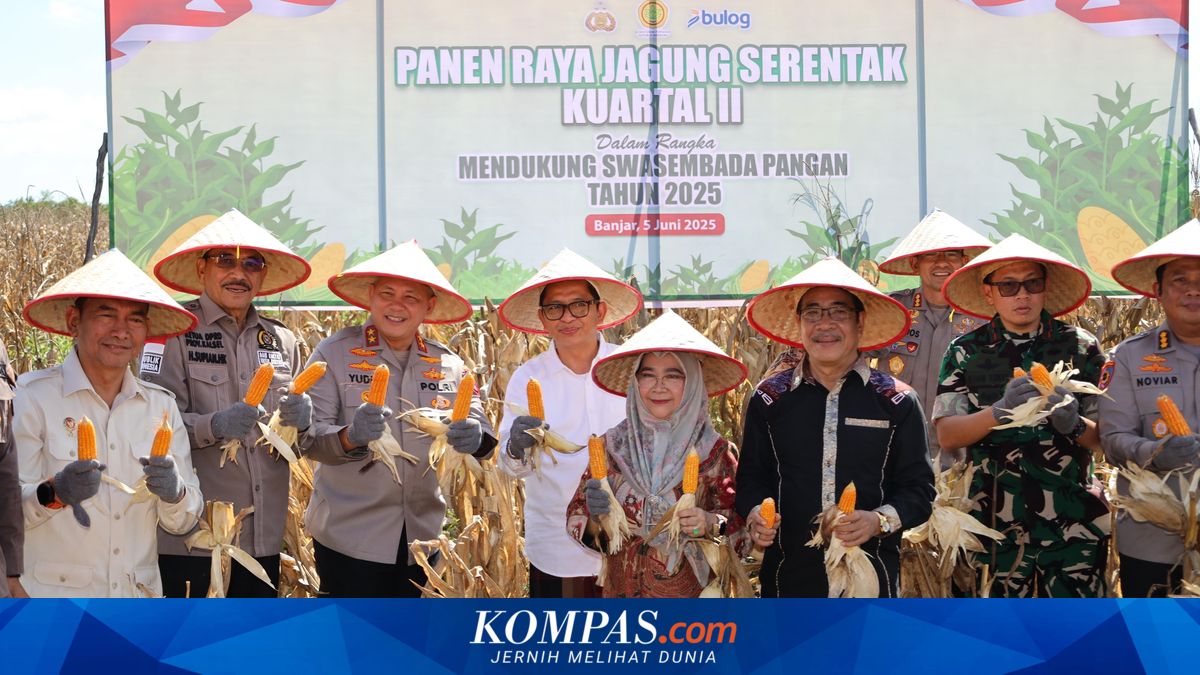
At the formulation stage, Polri’s contribution can come through intelligence analysis and risk mapping. At the implementation stage, Polri acts as a guardian of stability as well as a facilitator, for example through the Food Security Task Force and the Food Security Driving Police programme.