
Measles Suspect Cases in 2026 Reach 8,244; Vaccination Coverage Must Be Increased
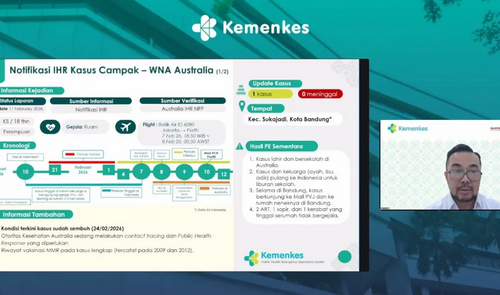
The Indonesian Ministry of Health recorded 8,244 suspected measles cases in 2026 from 1 January to 23 February. During this period, 21 outbreaks were recorded in 17 districts or cities across 11 provinces. The provinces with the most outbreaks were West Sumatra, South Sumatra, the Special Region of Yogyakarta, West Java, and Central Java. Most cases were found in areas with low immunisation coverage and where vaccine distribution is challenged by Indonesia’s archipelagic geography. Dr. Ratni Indrawanti, Sp.A(K), lecturer in Paediatrics at the Faculty of Medicine, Public Health, and Nursing at Gadjah Mada University, emphasised that although the number of cases has increased, the situation is still controllable with an effective health system. “This situation is serious and must be addressed quickly. With good surveillance, rapid case management, and increased vaccination coverage, suspected measles cases in 2026 can still be controlled and will not constitute a health emergency,” she said at UGM on Sunday (8/3). According to Dr. Ratni, the main drivers of the rise in suspected measles include low vaccination coverage due to limited access to health services and long distances, the downturn in community immunisation activities, and misinformation about vaccines on social media that reduces public trust. Measles is highly contagious and can spread via air or droplets. One infected child can transmit the virus to up to 18 others, especially in enclosed spaces where the virus can survive for up to two hours. Measles can cause serious complications such as pneumonia, encephalitis, seizures, and even death. In addition, people who recover from measles can experience immune amnesia, a condition in which the immune system ‘forgets’ part of its protection against previous diseases, leaving them vulnerable to other infections. For prevention, Dr. Ratni stressed the importance of following the 2026 measles vaccination schedule, namely at 9 months, 18 months, and 5 years. Repeated vaccination is necessary because the vaccine virus is weaker than the wild measles virus, so several doses are required for optimal immunity. Other important preventive measures include using masks when coughing or sneezing, regular handwashing, and health education. “Delays in vaccination increase transmission risk and can trigger outbreaks. Immunisation should be given when the child is healthy,” Ratni emphasised. Most suspected measles cases in 2026 were found in areas with low immunisation coverage, and the challenges of vaccine distribution add risk. With increased vaccination coverage, rapid response, and adequate health education, measles cases can still be controlled so as not to constitute a health emergency. The public is urged to remain vigilant and to support immunisation as the primary preventive measure.