
MBG Said to Drive Village Economy
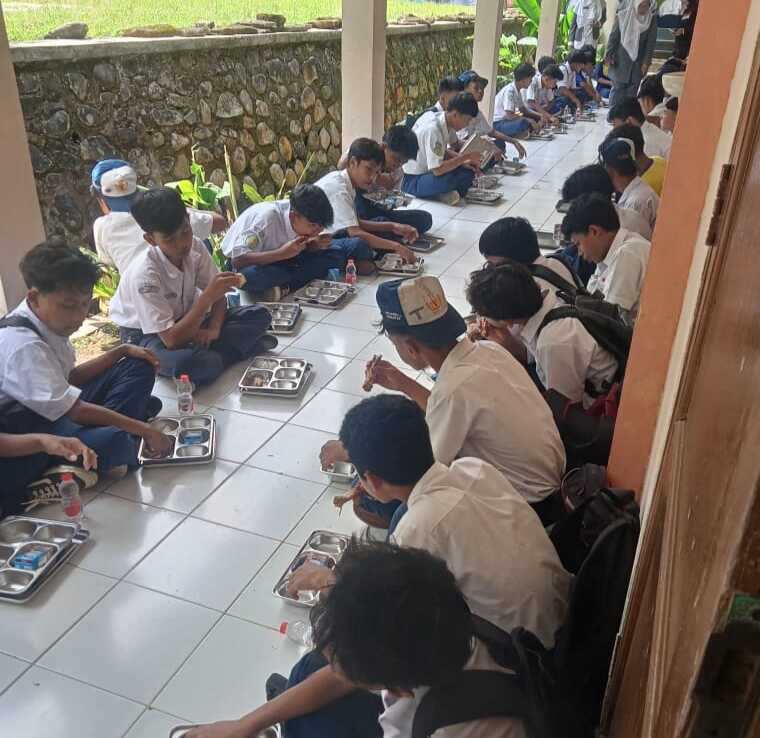
The Free Nutritious Meal (MBG) programme extends beyond improving student nutrition to stimulating the economy in surrounding communities. The MBG Regional Coordinator for Cilacap Regency, Yudha Prasetyo, states that the programme’s benefits are directly experienced by farmers, livestock herders, traders, and local volunteers.
“The MBG programme truly drives the people’s economy, especially for local residents, because if local residents have vegetable gardens or any other produce, including livestock products, the MBG kitchen in that area is obligated to purchase from them,” said Yudha Prasetyo on Friday (27 February).
He explained that the food requirements for a single Nutrition Fulfilment Service Unit (SPPG) are substantial. With approximately 2,000 beneficiary students, each MBG kitchen requires 100-160 kilograms of vegetables daily. For animal products such as eggs and chicken meat, the requirement reaches 160-200 kilograms per day.
Within a single sub-district, the number of SPPG units can range from 6 to 24. This means the potential for food supply circulation becomes significant. “Should a sub-district here have 6-24 SPPG units, the economic circulation is extraordinary. Assuming just 10 SPPG units, then daily requirements amount to 1-1.6 tonnes of vegetables and 1.6-2 tonnes of eggs or chicken meat,” he explained.
According to Yudha, supplies are provided by several vendors at each SPPG, with a rapid payment system in place. “On average there are 4-6 suppliers per SPPG. The payment scheme is immediate—goods arrive the next day and funds enter the supplier’s account,” he noted.
Beyond absorbing agricultural and livestock products from residents, the programme also engages local labour. He emphasised that community involvement forms part of the MBG kitchen’s operational structure. “For volunteers, 70 per cent must be local residents,” he concluded.
MBG also serves as an engine of grassroots economics through guaranteed markets for UMKM and partner kitchens, absorption of local products, and creation of new employment in the regions. The local government has claimed to have provided clarification and detailed reports during a joint evaluation session with the National Nutrition Agency (BGN). The National Nutrition Agency must take firm action against rogue kitchen operators who do not comply with nutritional menu standards.
Research from the Research Institute of Socio-Economic Development (RISED) demonstrates that the majority of parents perceive an improvement in their children’s consumption patterns following the MBG programme. Cabinet Secretary Teddy Indra Wijaya firmly refutes narratives linking the MBG programme to budget cuts and reduced education programmes, explaining that MBG is designed to strengthen human resource quality from an early stage, from early childhood education through to secondary level.