
MBG Programme Seen to Open Up New Economic Opportunities for Farmers and SMEs
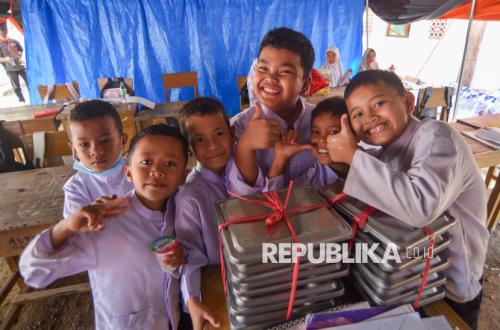
Free Nutritious Meals (MBG) programme has begun to show economic impact in several regions. The program is seen as not only targeting nutritional improvements but also stimulating local economic activity. Public Policy Expert Trubus Rahardiansyah of Trisakti University says public acceptance of the programme has begun to rise after initially facing resistance in the early stages of implementation. “MBG did face resistance at first. But now it is gradually being accepted by the public and services are improving, including support from the health sector,” Trubus said during a discussion held by the Jakarta Journalist Center on Friday, 6 March 2026. Trubus explained that the increase in beneficiaries contributed to movement of the economy at the local level. The MBG programme involves various parties, from SPPG as the food provider, volunteers, civil society organisations, to institutional support such as the Indonesian National Armed Forces (TNI) and the Indonesian National Police (Polri). Nevertheless, Trubus notes that the transparency of the programme’s implementation still needs to be strengthened. According to Trubus, not all information related to programme implementation has been disclosed openly to the public. In addition, Indonesia’s cultural diversity in foods should be considered when preparing MBG menus. Tailoring menus to local foods can improve public acceptance of the programme. Trubus gives an example: coastal areas can use fish as the main protein source; inland areas or more agrarian eastern regions could use tempeh and eggs as alternative protein sources that are easier to access. This approach is also seen as capable of strengthening the local economy. The MBG programme’s demand for food supplies creates opportunities for farmers, breeders, and micro-enterprises supplying vegetables, eggs, and other food products. The MBG programme has even reached the 3T areas. The presence of SPPG in these areas is seen as potentially creating new economic activity for local communities. “Initially, MBG was viewed only as a government policy. But I see the programme gradually developing into a moral movement,” said Trubus. Trubus believes that strengthening regulation and oversight is necessary for the programme to operate more effectively. Food quality oversight is an essential aspect of the programme’s implementation. Trubus stresses that SPPG, as the organiser of food distribution, must take full responsibility if problems arise in the field. “The most important thing is to ensure the meals are of high quality, targeted, distributed quickly, and that oversight runs well,” said Trubus. Trubus adds that public input remains needed as a social check to continually improve MBG and to provide broader benefits for the community.