
MBG Kitchen on Campus Deemed Representation of Knowledge-Based Programme
When centres of learning stand alongside production centres, the innovation process becomes much faster, more adaptive, and measurable. This is what we are beginning to see being built at Unhas through the MBG kitchen.
Jakarta (ANTARA) - The inauguration of the Nutritious Free Meals (MBG) programme kitchen on campus, specifically the Nutrition Fulfilment Service Unit (SPPG) at Hasanuddin University, has been assessed as a representation of science-based public programme governance.
“This is not just an operational kitchen; this is a living laboratory. Here, knowledge, research, innovation, and practice meet in a complete ecosystem,” said the General Chairman of the Indonesian Association of Nutritious Free Meals Kitchen Entrepreneurs and Managers (APPMBGI), Abdul Rivai Ras, in a statement received in Jakarta on Monday.
According to him, the approach taken at Unhas reflects the ideal model that has long been a challenge in development programmes, namely bridging the gap between the academic world and field implementation realities.
“So far, we have often seen research stopping at the academic desk, while practice runs without a strong scientific basis. This model breaks that chain. What is researched is directly tested, and what is implemented can be scientifically improved,” he said.
This pattern, he continued, has long been best practice in various advanced countries. The higher education industry is closely connected to production and innovation centres.
The proximity between learning spaces and production spaces is assessed as able to create acceleration in technology validation, process efficiency, and sustainable improvement in output quality.
“When centres of learning stand alongside production centres, the innovation process becomes much faster, more adaptive, and measurable. This is what we are seeing being built at Unhas through the MBG kitchen,” he stated.
In addition, he assessed that the inauguration of Unhas’s SPPG also strengthens the role of universities as development actors. Campuses are not only producers of graduates but also drivers of concrete solutions for society.
The model developed at Unhas is hoped to become a national reference in the development of MBG kitchens. Thus, this programme will not only run quantitatively but also qualitatively and with long-term impact.
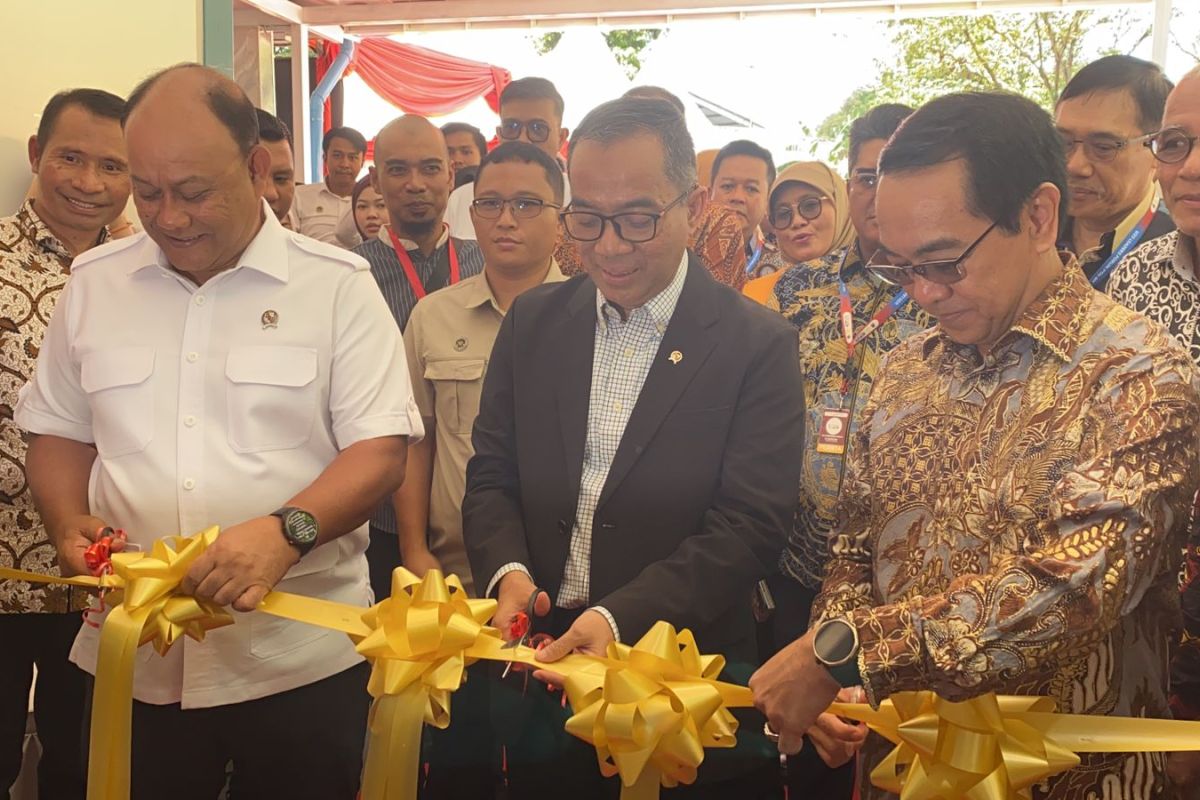
Previously, Minister of Higher Education, Science, and Technology Brian Yuliarto and Head of the National Nutrition Agency Dadan Hindayana inaugurated the SPPG at Unhas in Makassar, South Sulawesi, on Tuesday (28/4).
Brian Yuliarto said that the kitchen facility built by Unhas is a concrete step by the university in supporting the implementation of the MBG programme while strengthening Unhas’s position as an independent campus.
“The point is how higher education can play a role in supporting President’s priority programmes, one of which is the MBG programme,” he said during the inauguration.
Meanwhile, Dadan Hindayana appreciated Unhas’s commitment in responding to the government’s strategic initiatives. Unhas becomes the first state university with legal entity status (PTNBH) to build an SPPG.
“The campus’s openness to involvement in the MBG programme is very important because the technology, human resources, and innovation owned by universities will be very beneficial for the development of this programme,” said Dadan.