
MBG Distribution Cut to 5 Days, Here Are the Actual Effects
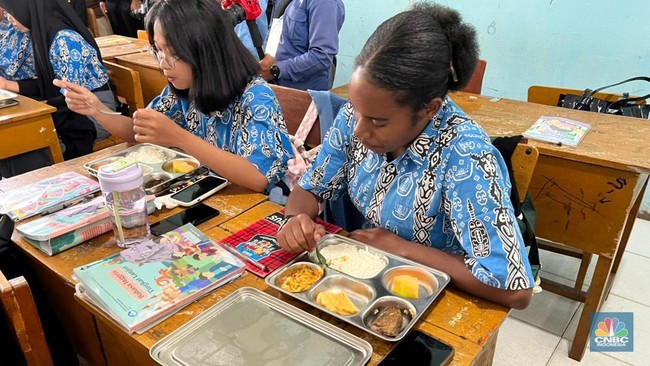
Jakarta, CNBC Indonesia - Several domestic economists assess that there are risks in the proposal from the National Nutrition Agency (BGN) planning to cut the number of days for free nutritious meal (MBG) distribution as part of the government’s budget efficiency policy. This proposal has reached Finance Minister Purbaya Yudhi Sadewa from BGN. The budget efficiency is said to address risks of economic and fiscal pressures due to the ongoing Iran-Israel and United States war, which is causing volatility in energy prices and supplies. Purbaya explains that the MBG budget efficiency is not yet part of the total efficiency value set by President Prabowo Subianto at Rp81 trillion. With the efficiency of one day of MBG distribution, Purbaya states that BGN has estimated the savings could reach around Rp40 trillion. According to economist from the Center of Reform on Economics (CORE) Yusuf Rendy Manilet, the government indeed has few choices other than making broader spending adjustments. However, the savings impact from one programme alone is relatively small if not followed by wider efficiency. “If only MBG is adjusted, the impact on the fiscal is relatively small,” Yusuf told CNBC Indonesia, quoted Tuesday (31/3/2026). On the other hand, Yusuf assesses that efficiency in MBG can also slow real economic activity. When many government programmes are held back or scaled down simultaneously, the effect will directly be felt in domestic demand. This is often underestimated. “So it’s not just about reducing one programme, but the cumulative effect of overall government spending tightening,” Yusuf said. Head of the Center for Macroeconomics and Finance at Indef, M. Rizal Taufikurahman, also assesses that reducing the frequency of MBG cannot be seen merely as budget cutting. According to him, this policy risks social impacts if implemented uniformly without considering regional conditions, especially areas with high nutritional vulnerability. “That means fiscally, this step can indeed reduce spending pressure, but it is not a fundamental solution. Especially socially, it is risky if implemented uniformly without considering regional conditions, particularly areas with high nutritional vulnerability,” Rizal told CNBC Indonesia, quoted Tuesday (31/3/2026). Furthermore, Rizal assesses that risks will emerge if efficiency is too aggressive and targets spending directly related to people’s purchasing power. In a global condition still full of pressures, policies like this could instead hold back domestic consumption, which has been the main pillar of Indonesia’s economic growth. “With external pressures such as rupiah weakening, potential energy inflation rise, and export moderation, then imprecise efficiency policies could turn into growth suppressors, not stability supporters,” he said.