
MBG and Poverty
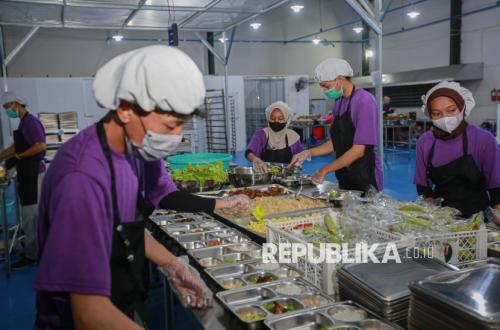
The government is convinced that President Prabowo’s flagship programme, MBG (Free Nutritious Meals), has had a positive impact on the economy and has been able to reduce poverty. In the Indonesia Economic Outlook 2026, President Prabowo stated that he had received reports from many regional heads that MBG has successfully lowered poverty rates and inequality in many areas. For example, the Governor of DKI Jakarta claims that MBG has reduced stunting and poverty rates in Jakarta. Since it was rolled out in January 2025, MBG is now claimed to have benefited 60 million people served by 22,000 kitchen partners (SPPG) that have absorbed up to 925,000 workers. The claim of MBG’s positive impact on poverty in general aligns with the trend of declining poverty rates over the past year. In September 2024, before MBG was rolled out, the poverty rate was recorded at 8.57 per cent or 24.06 million people. In March 2025, three months after MBG, the poverty rate fell to 8.47 per cent or 23.85 million people. And finally, in September 2025, nine months after MBG, the poverty rate fell again to 8.25 per cent or 23.36 million people. However, is the decline in the poverty rate truly due to the adoption of MBG? Theoretically, the direct impact of the MBG programme on poverty would occur through the channels of reducing poor households’ food expenditures and strengthening the people’s economy through the utilisation of local food ingredients, expanding job opportunities for farmers, boosting the rural economy, and strengthening food security. Meanwhile, the indirect impact of MBG on poverty would occur through increased school participation rates and reduced malnutrition, including stunting, among children from poor families, thereby breaking the chain of poverty in the long term. Overall, through the adoption of the MBG programme, it is hoped that there will be a significant improvement in education quality as well as the creation of a massive supply chain for inclusive economic growth. However, we see that the impact of MBG on poverty alleviation will be limited, at least for two main reasons. First, MBG is designed as a universal programme, making it ineffective as an instrument for poverty alleviation due to very high targeting inaccuracy. With a design as a universal programme, targeted at all toddlers and school-age children, the beneficiaries of MBG become highly concentrated in densely populated areas, especially urban areas in Java, which generally do not have problems with child nutrition.