
MBG Amid Fiscal Pressures and Government Prestige
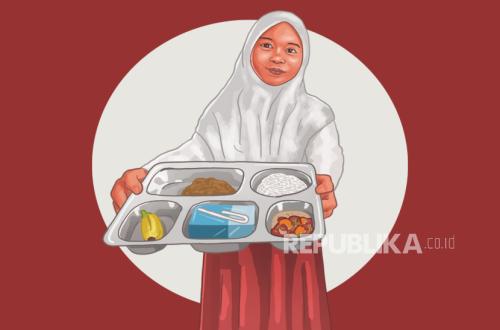
The Free Nutritious Meals (MBG) programme is a promise that is hard to refuse. Who would dare oppose the idea of feeding children? In the public sphere, it is almost immune to criticism—because it touches the most basic aspect of humanity.
The government even targets this programme to reach more than 50 million beneficiaries in the initial implementation phase, with a budget allocation of around Rp 70–100 trillion per year, and potentially increasing to over Rp 400 trillion if fully implemented on a national scale.
However, that is precisely where the problem begins. Policies that are too ‘good’ often escape the most important question: are they realistic?
In many households, nutritional needs remain a real issue. But the state does not operate on intention alone. It operates with numbers, with limits, with fiscal consequences that cannot be negotiated.
And when grand promises—with a scale of tens of millions of recipients and hundreds of trillions of rupiah—do not fully stand on fiscal reality, they have the potential to turn into a burden passed on, rather than a solution that resolves.
2025 State Budget: Between Ambition and Limitations
The 2025 state budget reflects one thing: great ambition amid limited space. State expenditure reaches around Rp 3,621 trillion, while the deficit widens to nearly 3% of GDP.
These figures are not mere statistics. They are the real limits of the state’s capacity.
In many global economic discussions, there is one message that feels simple but is often ignored: the state budget is not about how much is spent, but how precisely it is used.
Nobel laureate economist Milton Friedman once conveyed an idea that anyone can easily understand. When someone spends their own money on themselves, they are very careful. But when spending other people’s money on others, that caution often disappears.
In the context of the state, this is the challenge. Public budgets always carry a distance—between those who decide and those who feel it. That is where the risk of inefficiency arises.
Meanwhile, Joseph Stiglitz reminds us that the role of the state is indeed important, especially when the market fails to protect vulnerable groups. However, that intervention must not stop at good intentions. It must be carefully designed so as not to create new problems later on.
Furthermore, Esther Duflo shows through her various researches that successful social programmes are not the largest or most ambitious ones, but those that best understand who truly needs them. Precision is often more valuable than scale.
These messages feel very close to Indonesia’s situation today. When fiscal space is increasingly tight and the deficit approaches its limit, every rupiah becomes important.
In such conditions, policies like MBG cannot just feel ‘right’. They must truly work.
Because in the end, the problem in the state budget is not simply how much money is available, but whether that money truly reaches the places most in need—and produces real change. The message is simple: the state may be ambitious, but it must not be reckless.
In this context, MBG becomes a test. It comes not when finances are loose, but precisely when pressures increase—state revenues are not always stable, mandatory spending continues to grow, and financing needs become greater.
Adding a massive programme in such conditions is not without risk. It is like adding load to an already laden ship—still able to sail, but increasingly sensitive to waves.
Between Economic Rationality and the Prestige of Power
Not all policies are born from technocratic needs. Some are born from political impulses—the desire to show bias, build an image, or even leave a legacy.
The late economist Faisal Basri once reminded that public policies must be based on efficiency and sustainability, not just popularity. He often criticised programmes that are large politically but weak in economic calculations.
In this logic, MBG needs to be honestly tested: is it the best solution, or merely the most politically appealing one?
Government prestige often does not appear in numbers, but is felt in decisions. Programmes that have been announced are hard to withdraw, even if their fiscal burden grows. Evaluation becomes sensitive, and criticism is seen as interference.
Yet, in public policy, the ability to correct is a sign of strength—not weakness.
Learning from India and Brazil: Between Scale and Precision
If Indonesia wants to run a widespread nutritious meals programme, there are two countries often used as references: India and Brazil.
India runs the Mid-Day Meal Scheme, one of the world’s largest school meal programmes. This programme reaches more than 100 million children every day.
However, its success did not come instantly. India built this system gradually over decades, focusing on primary schools and poor areas.
Interestingly, the budget for this programme is relatively controlled compared to its economic scale.
India did not immediately make it universal in a broad sense, but targeted the groups most in need. Even in its implementation, challenges such as food quality and distribution still often arise.
Brazil has a different approach through the National School Feeding Programme (PNAE). This programme not only feeds students but also integrates local food policies. Some food ingredients must come from local farmers, so the social programme simultaneously boosts the domestic economy.
Brazil also emphasises nutritional standards and strict oversight. However, this success is supported by fiscal capacity and relatively strong governance.
From these two examples, there is one important lesson: large-scale meal programmes require careful planning to balance ambition with fiscal reality and ensure targeted benefits for the vulnerable.