
Mayor: East Jakarta's Main Harvest Results to be Sold and Support Toddler Nutrition
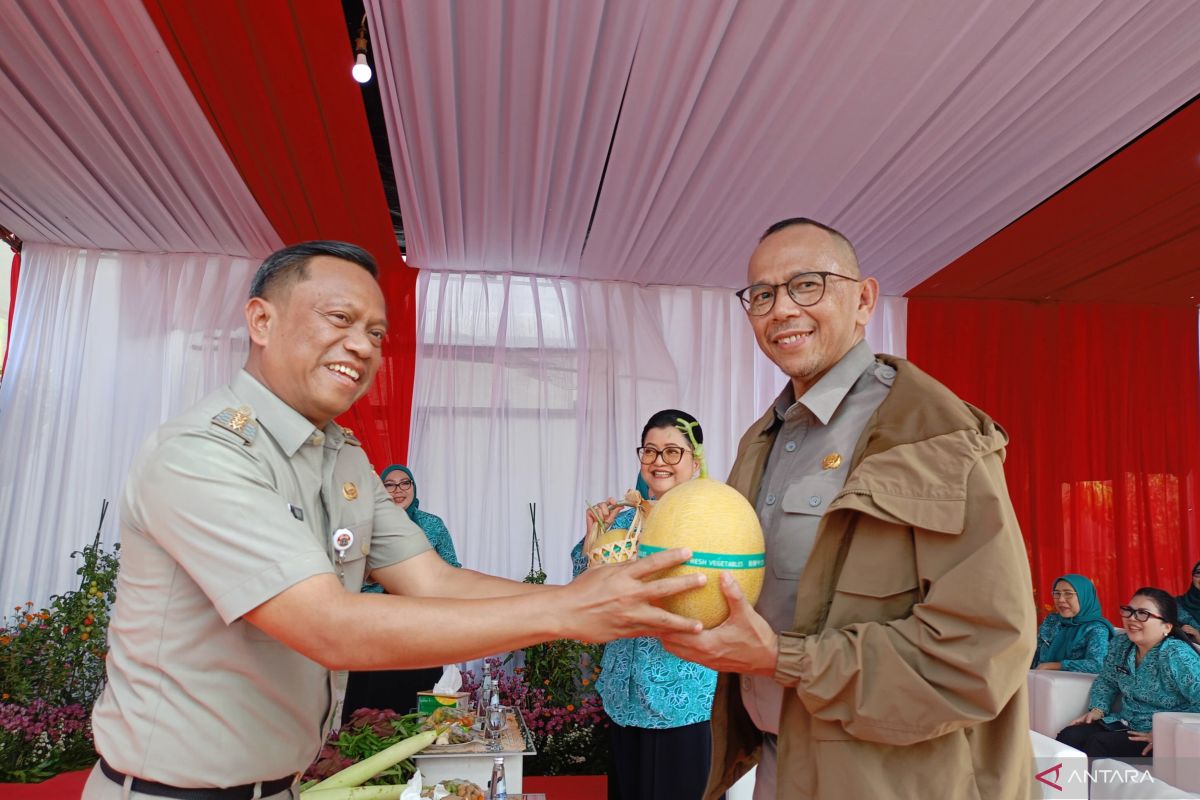
Jakarta (ANTARA) - East Jakarta Mayor Munjirin stated that the results of the simultaneous harvest activity at more than 400 sites across East Jakarta will be partly sold and partly utilised to support the fulfilment of nutrition for toddlers as well as other social programmes.
“The distribution model for the harvest results from farming groups in East Jakarta is diverse. Not all of it is sold; some is also used for social purposes,” Munjirin said after attending the DKI Jakarta simultaneous main harvest event at the agricultural land on Jalan Raya Pulo Gebang, RT 12/RW 06, Cakung, East Jakarta, on Monday.
He explained that some farming groups choose to sell their harvest to maintain production sustainability, such as buying seeds and other farming needs.
However, some farming groups opt to distribute their harvest directly to the surrounding community.
The distribution targets various groups, from local residents to vulnerable populations, including toddlers who need additional nutritional intake.
“Some is given to the surrounding community, including for Posyandu and stunting toddlers. This is part of the real contribution of urban farming to improving community nutrition,” Munjirin clarified.
In addition, several farming groups in East Jakarta have collaborated with the Free Nutritious Meals (MBG) programme spread across the area.
This collaboration opens up broader opportunities for local agricultural products to be absorbed optimally while supporting government programmes.
“Some farming groups are already working with MBG. This means the harvest results do not just stop at the market but also enter strategic programmes,” Munjirin said.
“Marketing in Jakarta is actually not too difficult. Demand is high, but the challenge is how to increase production,” Munjirin added.
Therefore, the East Jakarta City Government (Pemkot) continues to encourage the strengthening of farming groups and the optimisation of urban agricultural land.
Currently, there are 423 harvest locations spread across various sites, from Integrated Child-Friendly Public Spaces (RPTRA), schools, to community-managed land.
In addition to expanding production, the East Jakarta Pemkot also provides a marketing platform through routine farmers’ markets held every Friday in the last week of the month at the Mayor’s Office courtyard.
According to Munjirin, the programme is effective in connecting farmers directly with consumers, while also increasing the economic value of the harvest.
“Anticipation among farming groups is quite high. This shows that urban farming not only impacts food security but also community economics,” Munjirin revealed.
With a distribution concept that is not solely market-oriented, East Jakarta is able to present an inclusive urban farming model that combines economic, social, and community health aspects in one sustainable ecosystem.
The event is spread across 807 sites throughout DKI Jakarta, with East Jakarta having the most harvest points, namely 414 locations.
Followed by South Jakarta with 177 locations, North Jakarta with 94 locations, West Jakarta with 60 locations, Central Jakarta with 58 locations, and the Thousand Islands with 4 locations.
One of the main locations for the event is centred at the Pulo Gebang Agricultural Land Greenhouse area, East Jakarta.
Besides East Jakarta, the harvest activities are also carried out at several pilot sites in other areas, including the Central Jakarta Mayor’s Office balcony urban farming, GSG 07 Kembangan Utara in West Jakarta, RPTRA Cilandak KKO in South Jakarta, RPTRA Sunter Jaya Berseri in North Jakarta, and the Tidung Kecil Island area in the Thousand Islands.
The total area of agricultural land harvested in the main harvest event reaches around 12,567 square metres.
These lands are developed as integrated agricultural areas that serve as a showcase for urban farming in Jakarta.
The harvested commodities include chillies, various types of vegetables, fruits, food crops, family medicinal plants (TOGA), and consumption fish. Overall, the potential harvest yield in this event is estimated to reach 15 tons.