
Mayday Mayday! War Triggers Energy Crisis, Asia Heads Towards Pandemic Era
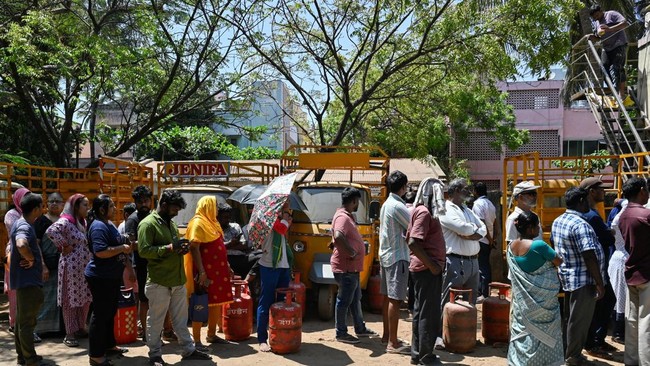
Jakarta, CNBC Indonesia - Several Asian countries are beginning to consider work-from-home (WFH) policies and economic stimulus measures previously implemented during the Covid-19 pandemic, following the global fuel crisis triggered by the Iran war.
The Asian region is at the forefront of this crisis’s impact because it purchases more than 80% of the crude oil passing through the Strait of Hormuz, a route almost entirely blocked by Iran since the war broke out on 28 February.
Although no country has officially implemented a full work-from-home policy yet, several governments have stated that the option is under consideration. South Korea’s Minister of Energy Kim Sung-whan said the idea is worth considering following recommendations from the International Energy Agency.
“I think it’s a good idea,” Kim said when asked about the IEA’s recommendation for the public to work from home, as reported by Reuters on Wednesday (25/3/2026). “We will consult with relevant ministries and actively consider steps for working from home.”
The IEA itself has agreed to release a record approximately 400 million barrels of oil from strategic reserves to address the crisis. The agency has also proposed measures to ease oil price pressures, such as working from home and avoiding air travel.
IEA Executive Director Fatih Birol reiterated these recommendations at a conference in Sydney. He cited Europe’s experience following Russia’s invasion of Ukraine.
“There was a real test, like after Russia’s invasion of Ukraine, European countries adopted these measures, and they were announced by the European governments. This greatly helped them get through the difficult time without Russian energy… but still keep the lights on,” Birol said.
As part of energy conservation, South Korea has also launched a public campaign asking the public to reduce shower durations, charge mobile phones during the day, and use vacuum cleaners at weekends.
In the Philippines, the government has shortened the workweek in some government offices earlier this month. President Ferdinand Marcos has even declared a national energy emergency, stating that the conflict poses an “immediate danger” to the country’s energy supply.
Pakistan has closed schools for two weeks and stated that office workers will work from home more. Meanwhile, the island nation of Sri Lanka has designated every Wednesday as a public holiday to help extend fuel supplies.
As Asia’s financial hub, Singapore is encouraging the public and businesses to use energy-efficient equipment, electric vehicles, and to raise room air conditioning temperatures.
Thailand’s Prime Minister Anutin Charnvirakul has ordered bureaucrats to postpone overseas travel, set room air conditioning temperatures above 25 degrees Celsius, avoid suits and ties, use stairs instead of lifts, and work from home.
Cost of Living Assistance
As fuel costs soar, burdening households, several countries are issuing stimulus. The Japanese government has stated it will use 800 billion yen, or about US$5 billion, from reserve funds for subsidies to keep petrol prices around 170 yen per litre. This policy is estimated to cost up to 300 billion yen per month.
New Zealand has also announced temporary financial assistance of 50 New Zealand dollars per week starting in April for low-income families.
“We know these families will be hit very hard by the global fuel price shock. We are providing timely assistance to them,” said Finance Minister Nicola Willis.
In the neighbouring country, Australia, hundreds of petrol stations have run out of stock due to panic buying and supply shortages, especially in remote areas. The centre-left government in that country has also introduced legislation to double penalties for unfair fuel price hikes.
Several Asian countries have also released domestic petrol and diesel reserves and temporarily relaxed fuel quality standards to increase supply.
Policy Dilemma
Unlike during the pandemic, central banks are not rushing to cut interest rates. In fact, some are considering hikes. During the pandemic, demand plummeted because the economy was shut down, so governments provided massive stimulus.
Now, Australia’s central bank has raised interest rates twice this year, citing energy risks to inflation as the reason for raising rates to the highest level in 10 months.
Investors also expect Japan, the UK, and Europe to raise interest rates in the coming months. Pressure on Asia’s economy is expected to be heavier because regional currencies are weakening against the dollar.
Leading global economist at Capital Economics Jennifer McKeown said central banks face a classic policy dilemma.
“Central banks face a classic policy dilemma when oil prices surge, inflation rises but growth can weaken,” she said in a note last week.
“The appropriate response very much depends on the reason for the oil price increase, how long the shock lasts, and whether inflation expectations are at risk,” she emphasised.