
May Marks a Bitter Month for IHSG and Rupiah – Time to Move On
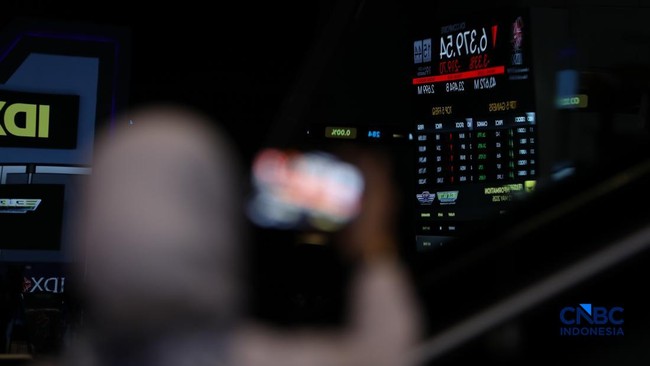
The IHSG plunged 76.16 points, or 1.23%, to 6,130.19 on Tuesday (26 May 2026), extending losses after a brief rebound the previous day. First-session trading value reached Rp18.1 trillion with a volume of 24.88 billion shares and 1.96 million transactions. Of the traded stocks, 241 rose, 447 fell, and 133 remained flat. Foreign investors recorded net selling of Rp1.6 trillion. Most sectors weakened, with the steepest declines in primary consumer goods, property, and financials. Specifically, mega-cap blue chips such as Astra International (ASII), contributing a 18.95-point drop, Bank Rakyat Indonesia (BBRI) at -15.68 points, and Bank Central Asia (BBCA) at -11.71 points, were the main drags on the IHSG.
In the currency market, the rupiah closed at Rp17,775 per US dollar on Tuesday, weakening 0.25%. The rupiah has weakened for four consecutive days, slipping 1% overall. In the non-deliverable forward (NDF) market, the rupiah touched Rp18,000. For one-week (SW) tenor, NDF rates ranged between Rp17,832-17,840 per US dollar, while one-year tenor breached Rp18,228-18,245. Bond market yields on 10-year Government Bonds (SBN) rose to 6.709% on Tuesday, up from 6.69% the previous day.
US stock markets celebrated on Thursday and Friday early morning Indonesian time, closing at record levels on Thursday, driven by tech stock gains and optimism over reports of a US-Iran ceasefire extension. The S&P 500 rose 0.58% to 7,563.63, while the Nasdaq Composite surged 0.91% to 26,917.47, both hitting intraday records. The Dow Jones Industrial Average edged up 0.05% to 50,668.97. Tech stocks led the rally after Snowflake posted strong earnings forecasts, reigniting AI optimism. Its shares jumped 36.5%, the largest single-day gain in its history. Snowflake’s rise lifted other software stocks; the IGV technology software ETF rose 2.8%, while chipmakers Qualcomm and Advanced Micro Devices climbed 4.2% and 4.6% respectively. Market sentiment also improved after US inflation data showed easing price pressures. The US Department of Commerce reported April’s Personal Consumption Expenditures (PCE) index rose 0.4%, below economists’ 0.5% forecast, though annual inflation remained at 3.8%, above the Federal Reserve’s 2% target.
Indonesian financial markets reopened today after a two-day holiday. As today is the last trading day of the week, investors must monitor key sentiment drivers. The biggest influence will come from overseas developments, particularly the war situation. After three months, the conflict has entered a new ceasefire period.
May a Bitter Month for IHSG and Rupiah
The IHSG’s poor May performance continues. Monthly, the index has fallen 11.8% this May – the worst decline since May 2000, or 26 years. This monthly collapse extends the negative trend, with Indonesia’s stock market recording no monthly gains all year. The IHSG also spent more days in red (9) than green (6) during May 2026. Year-to-date, the IHSG has plummeted 29%, the worst globally.
The rupiah fared no better. In May 2026, it weakened 2.7%, the steepest monthly drop since October 2024. For the year, the rupiah has weakened almost every month, with February 2026 as the only exception.
War Developments
The US and Iran reportedly agreed to extend the ceasefire for 60 days and reopen shipping in the Strait of Hormuz, according to Reuters sources. However, US President Donald Trump has not yet approved the deal, while Iran states the agreement is not final. The deal includes lifting US port blockades on Iran and easing some oil sanctions, which pressured oil prices as markets anticipated the restoration of a key global energy route. Amid negotiations, tensions persist: the US military claimed to have shot down five Iranian drones in Bandar Abbas, while Kuwait intercepted ballistic missiles fired at its territory. Iran warned of harsher retaliation if attacks continue. The three-month US-Iran conflict has so far killed thousands and destabilised global energy markets.
US PCE Inflation
US consumer spending inflation, measured by the PCE index, rose 3.8% year-on-year in April 2026 – the highest since May 2023 and in line with market expectations. The average annual PCE change in the US since 1960 is 3.29%, with a record high of 11.60% in March 1980 and a low of -1.47% in July 2009. Meanwhile, core PCE in the US rose